Live and In-Person: Media and Young Children by Judy Bolton-Fasman

A couple of weeks ago was school vacation week for both kids, which meant that the four of were reunited for a few days. All was well until we went out to dinner. There was a 20-minute wait to get a table, which meant that three out of the four of us immediately whipped out our iPhones. Poor Adam was left in the dust, but perhaps more dangerously, we disconnected from one another. “Someone talk to me,” he pleaded.

iPhone

I’m sure I’m in the majority when I say that I don’t know how I ever lived without the convenience of 24-7 access to, well, everything. Can’t remember the name of an actor? No problem, take out the phone and start Googling your way to the answer.

But have our fingers become too quick to text and Google out of habit? A recent article in the New York Times put that question out there in an article called Your Phone vs. Your Heart. In it Barbara Fredrickson, a psychology professor, talked about the downside of establishing an ingrained habit that can not only change neural pathways but also “mold the very structure of your brain in ways that strengthen your proclivity for that habit.”

The scientific term for that molding is called plasticity and it is used to describe the flexibility of the nervous system to adapt and learn. Frederickson’s research shows that plasticity further affects the heart-brain connection. So the more you look up from your iPhone and interact with people, the more you literally strengthen your heart. And Face-to-face contact fosters empathy as well as improves overall health.

Frederickson’s research in social genomics— the study of how our personal history, social life or even loneliness affect gene expression in immune systems—also clearly shows that parents role-modeling screen-time behavior can be as life-altering as the genetics a child inherits. According to Frederickson, interrupting to text while ostensibly playing with your child or reading to her can “leave life-limiting fingerprints on their and their children’s gene expression.”

But how do we translate the findings of social genomics to our own children? Writing in the latest issue of The Atlantic, social commentator Hannah Rosin explored the brave new American childhood of iPads and iPhones. Remember how we thought we were going down the rabbit hole when VCR’s were installed in mini-vans? Ever since viewing screens entered American homes, parents and educators have worried that children’s brains would turn to mush from too much watching. In 1999 the august American Academy of Pediatrics (AAP) warned that television viewing for children under the age of two affected brain development, particularly when it disrupted interaction between parents or caregivers.

iPad

Enter 21st century touch technology to complicate what seemed to be a straightforward directive against too much screen time for toddlers and young children. Touch technology was popularized by the iPad and it’s taken off among the toddler set where the swipe of a finger can move action figures, act like a paintbrush or manipulate shapes. It’s mind boggling to realize that hundreds, if not thousands of apps for games and reading and art can be easily packed into a gadget the same size as your average board book.

I remember when three year-old Adam sat on Ken’s lap as he maneuvered a mouse. I thought how revolutionary and how scary. It’s stunning to contemplate how much more ubiquitous technology has become over the last decade. As Rosin points out, “technological competence and sophistication have not, for parents, translated into comfort and ease.”

By 2010, there were more than 40,000 kids’ games and apps available on iTunes. In the iTunes “education” category, many of those best-selling apps targeted preschool or elementary school age-children. Apps were also available for children as young as 18 months. The AAP weighed in with a recommendation discouraging parents from using electronic media with children under 24 months.

Lisa Guernsey, author of the book Screen Time: How Electronic Media from Baby Videos to Education Software Affects Your Young Child, offers guidance by identifying the three C’s of media consumption—content, context and child. Content, says Guernsey, is the way in which information is presented. Apps labeled as educational are not necessarily good for kids if children cannot fully comprehend the task at hand. Context relates to the way a parent uses social media. Like Fredrickson, Guernsey advises that social interactions are a critical part of using media particularly with babies and toddlers. The success of the first two C’s depends on parents taking the time to know their children. Each child is different, but on the whole parents should keep a kid away from apps or television directed at adults.

There has been no research to date that suggests that using an iPad will make your preschooler smarter or, alternatively, short circuit her neural pathways. But the iPad has only been around for three years—a relatively short time for scientists to secure grants to investigate the topic. Humans, however, have been around for a very long time and nothing improves one’s psychological outlook or better cultivates empathy than looking up from an iPhone screen, even if it is Face Time, and making a real, in-person connection.

Let Us Not Praise Our Children by Judy Bolton-Fasman

My name is Judy and I am a praise junkie. That is, I blanket my children with lavish compliments like, “you are the smartest, you are the best, you are second to none.” It turns out that I haven’t been doing my kids any favors with these endearments. In fact, there’s a raft of research over the past couple of decades that shows that unfocused praising of children puts a significant dent in their self-esteem.

Carol Dweck, a psychologist at Stanford University, has been at the vanguard of studies about kids and praise. Dweck’s research grew out of a pattern that has been tracked for over 20 years—gifted students (those who score in the top 10 percent on aptitude tests) were very unsure of their academic abilities. This perceived lack of competence caused them to lower their standards for success and to underestimate the importance of putting in effort towards a goal.

praise

But I’m not the only parent out there praising away. According to a survey conducted by Columbia University, 85 percent of American parents think it’s crucial to tell their kids how smart they are. My highly unscientific poll puts the number of fellow parental praise junkies out there at closer to 100 percent.

Why the constant praising and what do we do about it? I suppose we praise to reassure our kids and ourselves that they are not only wonderful, but also resilient—able to handle any challenge that comes their way. But in truth constant assurance has the opposite effect. The proof is on the ground. Ten years ago Dweck sent four research assistants into fifth-grade classrooms throughout New York City. The assistants administered a series of puzzles to two control groups randomly divided. The children in one group were praised for their intelligence as in “You must be smart at this.” The other group was lauded for their efforts as in, “You must have worked really hard.”

In the next round, the two groups were asked to choose between a difficult or easy test. The results were astounding. Ninety percent of the children who were praised for their efforts chose the harder test. The majority of kids praised for their intelligence chose the easier test. Commending a kid for his intelligence not only made him shy away from exerting effort, it also made him risk-averse.

The phenomenon of praising a child too often goes back to the 1969 publication of the Psychology of Self-Esteem. That landmark book asserted that high self-esteem was essential to a person’s well being. The notion trickled down to our kids; criticism was out and praise, even if it was undeserved, was now in vogue. I can remember soccer games that my children played when they were little where goals were not counted and every kid got a trophy. I was thrilled for my children, but was I and the other well-meaning adults around them doing the right thing by eliminating competition?

Dweck doesn’t think so. Her research has uncovered that high self-esteem is not necessarily connected to good grades or career success. It doesn’t reduce alcohol abuse or reduce violence. But Dweck isn’t advocating to jettison praise altogether. She found that fine-tuning praise, so that it’s specific and sincere, was very effective. To that end, her research further demonstrated that kids over 12 were suspicious of general praise from a teacher and took it as a sign that they weren’t doing well in class.

Fear of failure is another conundrum that results from overpraising. A well-meaning parent may gloss over a child’s failure by encouraging her to do better next time. The subtext of that message is that failure is so unacceptable it can’t be acknowledged. A lot of the psychology literature shows that responding to failure by trying harder instead of walking away from it suggests that there is more than willpower at work. Encouraging a child to do better next time can rewire a brain to respond more positively to failure. And a brain that learns to try harder instead of giving up is not as dependent on instant gratification. Nothing will short circuit the brain’s response to failure faster than frequent rewards—it’s a sure fire way to set up a kid’s brain for an actual addiction to constant incentives.

So what have I done about my own praise addiction? It seems to be less toxic than I thought.  My praise and criticism of my children’s performances in school has always been nuanced. But yes, in the long run I think almost everything they do is great. For example, the other day Anna asked me what I thought of an article she wrote for her college newspaper. I told her what I specifically liked about the piece. But I’m not completely cured. I didn’t have the heart to tell her that she forgot to insert a couple of commas

Dragon Mothers and Grieving Parents by Judy Bolton-Fasman

There is no one fiercer or scarier or more real in this world than a dragon mother. Dragon mothers are mothers who grieve for children who have died or are terminally ill. Dragon mothers breathe fire and scorch everything in their path.

Emily Rapp is a dragon mother, a term she coined two years ago in a stunning essay simply entitled “Dragon Mothers.” Rapp is the mother of Ronan, an almost three year-old boy who died last month from Tay-Sachs disease. In her new memoir The Still Point of the Turning World, Rapp writes that at nine months her son was diagnosed with Tay-Sachs during a standard eye examination. The specialist had seen Ronan’s particular symptoms only once before.

RappBook

Rapp was shocked. During her pregnancy she had been tested twice for Tay-Sachs, and both times the test came back negative. She later learned that a standard Tay-Sachs screening covers only the nine most common mutations. Rapp, who is not Jewish, and her husband, who is, were carriers of a rare mutation. To put this in perspective, fewer than 20 children in the United States are born each year with Tay-Sachs to parents who, like Rapp, tested negative and thought they could cross that worry off their lists.

While Still Point is an elegy, it is also a remarkable book about the signposts of grief. Rapp writes that, “Ronan and I were on this singular path of motherhood-sonhood: one of us knew that the other would not survive. I was supposed to be guiding Ronan through this life and then out of it and into whatever came next, but much of the time I was flailing around in the unfathomable.”

The death of a child is unfathomable and I don’t have sage words for someone who has gone through the agony of burying a child; I can only look to Emily Rapp as my guide.  She asks her own excruciating question: “How do you parent without a future?” At first I avoided reading Rapp’s book and tried to skirt the topic of grieving parents altogether. But I found her narrative both raw and compelling and uplifting—things I wanted to share. I learned that parenting without a future is both a despairing and optimistic act. “My task as [my son’s] myth writer,” says Rapp, “was still to understand my son as a person and a being who was independent of me and yet dependent on my actions, my attention, my love.” Rapp’s words also point to the ultimate lesson that Ronan taught his mother: Children do not exist to honor their parents; their parents exist to honor them.

Having a child confirms our mortality and, as Rapp notes, the truth about life is that “it exists side by side with death.” I think the way that we Jews say the Kaddish for a child shows how acutely aware we are of this intimate pairing of life and death. While one is obligated to say the Kaddish for a parent for 11 months, a parent is only required to say the Kaddish for a child for 30 days. There are practical reasons for that short formal period of mourning that hark back to a time when infant mortality was high, making the recitation of the Kaddish necessarily truncated. There was also the practical consideration that spending almost a year saying the Kaddish is difficult for parents who also have other children to care for. Yet grief doesn’t have an end-date.

Upon hearing about someone’s death for the first time, Jews say Baruch Dayan HaEmet—Blessed are you G-d who is the true judge. But how can one utter those words when a child has died? The theologian C.S. Lewis asked “Where is G-d during one of the most disquieting symptoms [of grief]?” I turned to a wise friend for advice about G-d’s seeming absence. “If you will allow,” she wrote to me, “I will offer instead of Baruch Dayan HaEmet the words, HaMakom Yinachem.  May you find comfort in the embrace of God, who, while we may never understand the tragedies of the world God has created, is ‘with’ us in the sadness.”

My friend’s words make me think about the limits of empathy. C.S. Lewis takes that notion a step further. “You can’t really share someone else’s weakness, or fear or pain,” he writes. By way of illustration, Rapp adds “You can’t really test the strength of a rope until you’re asked to hang from it over a cliff. There have to be stakes.”

I think Emily Rapp is asking her readers for something deeper than empathy or sympathy. She raises the stakes by asking us to “look straight at [death] without blinking.” Perhaps openly grappling with death is the radical act of empathy we are obligated to bestow on grieving parents and dragon mothers.


Sticks and Stones: Emily Bazelon’s Defeating the Culture of Bullying and Rediscovering the Power of Character and Empathy by Judy Bolton-Fasman

Emily Bazelon has written an important book in which she contends that many of the root causes of bullying in schools can be defeated. She takes schools to task through the stories of three teenagers who experience the extreme toxicity of bullying.

Monique McClain is an African-American middle school student in Connecticut whose woes began in that incubator of bad behavior—the school bus. As seen in Lee Hirsch’s affecting documentary Bully, the bus is literally the vehicle where violence and cruelty mushroom like a noxious cloud. Monique experiences the random nastiness of two eighth-grade girls, which has a domino effect off the bus. The bullying is so bad that she eventually withdraws from school. After her mother and grandmother vociferously advocate for Monique, she’s permitted to enroll in a magnet school. Was Monique bullied out of her school or was she rattled by the everyday girl drama that young teenage girls conjure? In Bazelon’s view it was a bit of both.

Jacob Lasher is a gay boy from upstate New York who endured taunts and physical aggression, but also played the part of the provocateur. Although he may not have seen it that way, Jacob’s strong identity as a gay boy educated his teachers and the clueless superintendent of his school district about gay teens and the risks they face. A 2009 survey found that 85 percent of kids who identify as LGBT (Lesbian, Gay Bisexual or Transgender) reported that they had been verbally harassed at school. Forty percent had been physically harassed because of their sexual orientation and 20 percent had been physically assaulted.

Jacob’s story also explores the psyche of his tormentor Aaron. Aaron is what is commonly referred to in psychology literature as the bully-victim. Bully-victims are as prone to depression and suicide as their counterparts. They hope their extreme behavior changes other kids’ perceptions of them, making it clear that they don’t want to be picked on. Jacob eventually prevails in a lawsuit against the school district, which forces teachers and administrators to implement safety measures for LGBT kids.

Through Jacob’s story, Bazelon makes three crucial points about mitigating the effects of bullying for gay kids. Parental support is essential in shepherding these teens through a tough time. She also notes “we have to hold two ideas about gay teens in our minds at once—they are more at risk, and yet most of them will be okay.” Her final point is something that I fervently believe in—that a Gay-Straight Student Alliance in a high school can be one of the “strongest bulwarks a school can erect against anti-gay harassment. LGBT students at these schools tend to experience less victimization, skip school less often and feel a greater sense of belonging.”

sticksandstones

Bazelon’s book grew out of her extensive reporting for Slate about Phoebe Prince’s suicide in South Hadley, Massachusetts. Phoebe, the third teenager profiled in the book, was a pretty freshman at South Hadley High School who arrived earlier that summer from Ireland. She immediately attracted the attention of the captain of the football team and the ire of his on-again, off-again girlfriend. Phoebe’s popularity with older boys miffed other girls at school too. A few of them began a campaign of harassment that ended in Phoebe hanging herself in her bedroom closet.

I wrote about Phoebe Prince’s death two years ago. At the time I called the South Hadley administrators and teachers criminal for the way they ignored Phoebe’s distress. Bazelon went to South Hadley expecting to find the “black hearted monsters” that I portrayed in my column. Instead she found shades of gray and she reports on the case through the point of view of one of the six teenagers initially indicted on criminal charges for Phoebe’s death. Like her peers, Flannery Mullins underestimated Phoebe Prince’s vulnerability. Although I stand by much of my initial impressions of the bullying that played a part in Phoebe’s suicide, I learned from Bazelon that many factors contributed to Phoebe’s tragic death. She had a history of depression and cutting and she easily fell into high-risk relationships with boys prior to arriving in South Hadley.

In Bazelon’s view “an overzealous prosecutor decided to reduce all the complexity [of the case] into one clean narrative: Phoebe Prince was bullied to death.” What I didn’t take into account in my article was Phoebe’s difficult past, the fluidity of teenage relationships as well as the reality that the correlation between bullying and suicide is complicated. It’s true that kids who are bullied are more likely to think about or attempt suicide. But in the end it comes down to a chicken-and-egg question. Are kids who are depressed more susceptible to the effects of bullying or does bullying cause kids to become suicidal?

Then there is the relentless, 24-hour world of the Internet, which presents a challenge to schools. At Monique’s former middle school, there was a concerted effort to report inappropriate pages to Facebook to little or no avail. At a private Catholic girl school, Bazelon reports, an extraordinary example of peer mentoring in which senior girls helped freshman and sophomores prune their Facebook pages.

A Pew Center Survey from 2011 estimates that 15 percent of teens that are ages 12 to 17 said they were harassed on-line. With 800 million users, Facebook is the largest social networking site in the world. Reports estimate that 20 million teens and preteens are on Facebook and one million of them took the time to report bullying and harassment on the site to little effect. Bazelon visits Facebook’s offices in Silicon Valley and discovers that the site has done shockingly little to keep kids safe. “As a parent,” writes Bazelon, “I wish I could tell you that FB gets it, that it’s a company willing to forego short term profits for the sake of safe-guarding the privacy and well-being of its young users. But I can’t.”

A negative comment on Facebook or texting an inappropriate picture cannot only spread like wildfire, but has a kind of permanence to it that can follow someone forever. Despite the overwhelming problem that the Web perpetuates when it comes to bullying, parents still have a big role to play in deterring their children from doing the wrong thing. Bazelon reports that for a 2009 study, researchers asked middle school and high school students what would prevent them from bullying on and off-line; parental discipline was first on the list.

Bullying may never go away. But I firmly believe that schools can and must transform their cultures into ones in which bullying is unacceptable. Teachers and administrators would do well to begin with the adage that, “If it’s mean, then intervene.” And as the subtitle of Bazelon’s trailblazing book says, developing character and empathy in our children is the strongest antidote to bullying.

Lena Dunham’s Hannah Horvath Meets Elizabeth Wurtzel by Judy Bolton-Fasman

Last week I was marooned on my couch with a virus and finally watched the first season of Girls, Lena Dunham’s HBO drama about 20-somethings finding their way in New York City. Dunham is very serious about her enterprise, and even the show’s light-hearted moments — which are few and far between — are laden with meaning. At times, watching the series felt more like homework than entertainment.

But I had heard so much about Hannah Horvath, Dunham’s alter ego, that I needed to meet her myself.  Like many women in middle age, I wasn’t resistant to looking back at my youth. I’m not the like the doctor who examines Hannah for an STD, who swears she’d never want to go back to her 20s. If anything, I’m jealous of the limitless sky, the time that drains into more time of your 20s. Maybe that’s glossy hindsight, but it’s also the raw truth.

Lena Dunham as Hannah Horvath

Lena Dunham as Hannah Horvath

I loved that Hannah, who is an aspiring writer, is no wunderkind. She’s so plodding and so damned inexperienced. She spends more time talking about writing than actually tapping out the personal essays she aspires to write. She has feckless boyfriends and a job in a coffee shop tellingly called Café Grumpy (an actual café in Greenpoint, Brooklyn—think Tom’s Restaurant, the real-life Upper West Side diner featured in Seinfeld) that sort of pays the bills. She’s in the quagmire that a lot of 20-somethings are in, but she doesn’t seem hopelessly stuck.

Elizabeth Wurtzel, another writer famous for exploring the 20-something state of being, is a 180-degree turn away from Dunham. At 45, Wurtzel is less nostalgic and more obsessive about being trapped in her 20s mindset. I can’t tell if Hannah’s young adult cluelessness is an object of derision or envy for the middle-aged Wurtzel, best known as the enfant terrible behind the best-selling memoir “Prozac Nation,” which she published two decades ago at the age of 24. The book launched her into celebrity and enabled her to make a “career out of my emotions.”

If only Hannah Horvath were so lucky. If only I had been that lucky (or savvy enough) to profit from my own anxiety and depression. There was a huge advance for Wurtzel’s second book, the one where she appeared topless on the cover with her middle finger prominently extended. What else could the book be called but “Bitch,” a rant about sexually manipulative women? Who wouldn’t be a little jealous of that kind of success in one’s twenties? But then again, who wouldn’t be terrified of losing her edge after peaking so early?

The bottom line is that Wurtzel is a cautionary tale for Hannah and her pals. In her recent [New York Magazine essay](http://nymag.com/thecut/2013/01/elizabeth-wurtzel-on-self-help.html), Wurtzel made it clear that she’s not only afraid of growing up, she’s also terrified of getting older. And who can blame her? After all, at 45, she’s still living in a crummy apartment with a nutty landlady and she’s “always in love—or else I am getting over the last person or getting started with the next one.” The only justification she comes up with for her Never-Never Land existence is that she still fits into the same clothes she wore at 24. I’ll keep my two kids and the extra thirty pounds, thank you.

Hannah thinks she is the voice of her generation. At least that’s what she tells her parents as she appeals to stay on their bankroll. And Wurtzel still thinks she’s the voice of her generation. In yet another sad essay for [Harper’s Bazaar](http://www.harpersbazaar.com/beauty/health-wellness-articles/looking-better-at-45-than-25#slide-1), Wurtzel writes that she wouldn’t have dreamed of going on parental welfare at Hannah’s age. “Even with my Harvard degree, when I ran out of money while writing my first book, I was happier to serve cocktails in high heels than to get money from my mom. And now I walk miles in Marnie’s five-inch platform T-straps.” It’s a shame that the quest for early independence only leads to an ability to tolerate high heels in middle age.

Which brings me to Wurtzel’s puffed-up assertion that she’s in better physical shape than someone “about half my age.” She’s in the kind of shape that comes easily to a woman who hasn’t worried about someone other than herself. She holds up Michelle Obama and Sarah Palin as women who are in “amazing physical condition, and [that] have a personal style and coruscating charisma.” Oh Elizabeth, only you could find that kind of superficial common ground between these women.

Hannah doesn’t glitter or charm in Wurtzel’s world. She’s the 20-something that Wurtzel has in mind when she decries the “slovenliness” of today’s young women. By her own calculation, Hannah is 13 pounds overweight. As far as I can tell, she never blow-dries her hair and she almost always leaves the house without lipstick.

Watching those episodes of Girls back to back, I realized how far women have come from my second-wave feminism to Hannah’s fourth-wave feminism. Hannah doesn’t feel guilty about sleeping around, she doesn’t think that men foisted the sexual revolution on women so they wouldn’t have to marry them and she doesn’t hear even a faint ticking of her biological clock.

Unlike Wurtzel, I don’t think Hannah will indulge in a string of one-night stands in middle age or be stuck in an overheated apartment in “the dungeon equivalent of a neighborhood.” And she surely won’t cling to the girl she once was, because once upon a time she looked and did exactly as she pleased. That’s the true beauty of her generation.


A Men’s Campaign to End Violence Against Women – White Ribbon Day by Judy Bolton-Fasman

My Dearest Son:

I have no doubt that you will grow up to be a good man because you have been raised by the best man I know. That is why it is so important to me that you know that today is the Sixth Annual White Ribbon Day in Massachusetts. Men, like Dad and your uncles—and other men from various walks of life—will converge at the State House to declare publicly that each of them is accountable to end the ongoing violence against women.

whiteribbon

Accountability can seem daunting to a young teenager like you. But don’t be scared by accountability in life. Relish it. Instead, be alarmed by the lack of accountability, particularly when it comes to treating women with full human dignity. I know that you think a lot about human rights for all people, and one of the most fundamental rights in this world is for women and girls to be safe in their communities and their homes.

You’ll be interested to know that the White Ribbon Campaign (WRC) was created in 1991 by a small group of Canadian men with a focus on what men could do to end domestic violence and sexual assaults. The first White Ribbon Day grew out of their campaign to commemorate the second anniversary of the murder of fourteen women in Montreal at the hands of one man. Today, the WRC is active in 60 countries and according to Jane Doe, Inc.—The Massachusetts Coalition Against Sexual Assault and Domestic Violence—more than 5 million signatures have been garnered all over the world in support of WRC’s mission.

We’ve been on the Jane Doe site together and I saw how affected you were by the fact that anyone who is abused can quickly click out of the site without a trace of a visit if he or she is discovered looking for information. That safety measure opened my eyes too. WRC calls on all men to stand up against crimes against women, and yes it is a crime to be controlled and frightened into submission. Autonomy is one of the greatest gifts that you can cultivate in your children.

WRC is very clear that this is a men’s campaign where the focus is promoting positive male role models. This means that the campaign is for you, for your future. Your father and I don’t want you to live in a world where women are afraid for their lives. We don’t want you to live in a world where you feel hopeless and helpless to help the women around you.

Your father is a gentle man and that is his greatest strength. That kind of role modeling is the most precious gift that he can give to you. I know that you understand that there are all sorts of boys. Strength and thoughtfulness, bravery and sensitivity, artistry and athleticism are not mutually exclusive. Men are so pressured not to show a softer side. I hope and pray that by the time you are a grown man, society will reward men’s difference instead of humiliating them into ill-fitting stereotypes.

There is a formal pledge that you can take through WRC to end all violence against women and men alike. And there is that white ribbon you can wear. You may wonder why the color white. In all of the reading I’ve done about WRC’s commitment to healthy relationships, gender equality and raising boys with a new vision of masculinity, I haven’t specifically seen an explanation for why the color white was chosen. White has a lot of traditional associations that connote a fresh start. White is also the result of mixing all the colors of the rainbow. It’s every color, which is a rich metaphor for acceptance. White is also deeply illuminating, which is what I hope you will be—illuminated, educated, proactive and ever so gentle on this White Ribbon Day, and every day.

This piece was originally published as an op-ed in the Boston Globe’s The Podium


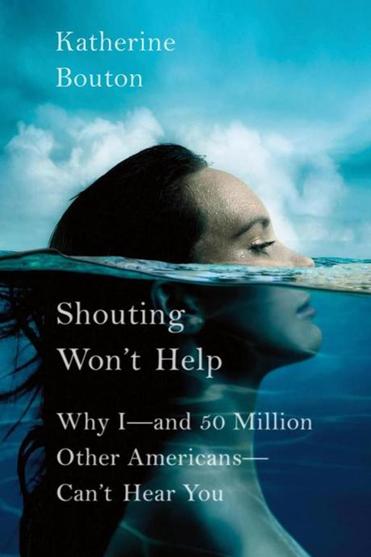
Shouting Won’t Help: A Book Review by Judy Bolton-Fasman

When Katherine Bouton was 30 years old she suddenly lost the hearing in her left ear. As she notes in her new book, a mix of memoir and reference guide for the hearing impaired, Bouton was suddenly among the 48 million Americans, or 17 percent of the population, who have some degree of hearing loss.

In “Shouting Won’t Help,’’ journalist Bouton puts a human face on these numbers by chronicling her own long, steady descent into deafness — a word that she claims to describe her “invisible disability.’’ Using her own personal narrative as a kind of locus, she explores the medical and environmental causes of deafness, the social stigma attached to it, technologies to help, and professional challenges faced by those with hearing loss. To broaden her tale she ends each chapter with a short piece titled “Voices,’’ which profiles the stories and hardships of various other sufferers.

shoutingwonthelp

In Bouton’s case it took almost three decades to come to terms with what was happening to her. But, as she reports from the front lines, denial is pervasive among people when they begin to lose their hearing. A statistic from the National Institute on Deafness and Other Communication Disorders reports that only one in five people who would benefit from a hearing aid uses one.

Bouton stubbornly refused to acknowledge how difficult it had become for her to hear. Hearing loss and its consequences invariably bring on stages similar to grief. Denial gives way to anger and family often bears the brunt of that anger. Bouton almost lost her marriage while she tried to keep her hearing loss and the inevitable depression that went along with it at bay.

Next comes acceptance. But before Bouton gets to acceptance she gives her readers a bevy of statistics that illuminate but occasionally slow down her book. She’s at her best when she addresses her dilemma through her own story.

The reader struggles beside her as she goes deaf and scrambles to hear what’s being said at a work meeting or a Broadway show. “Even when I do understand what is being said,” she writes, “the effort of trying to hear eclipses my ability to think. My brain is so preoccupied with translating the sounds into words that it seems to have no processing power left over to dig into the storerooms of memory for a response.”

Bouton eventually got a cochlear implant in her left ear and spent many frustrating visits to her audiologist upgrading the hearing aid in her right. She freely admits that she’s not a cooperative patient. The implant was slow to take, and she was embarrassed to have it embedded in her skull.

Her vanity, she reports, “exasperated” everyone around her and she had a hard time wearing the implant. Her persistent denial led to her departure as culture editor at The New York Times, where one boss questioned her ability to be “a team player.” And still Bouton could not bear to think of herself as a person with a disability and consider the protections and prospect of accommodations guaranteed by the Americans with Disabilities Act.

It’s understandable why Bouton studded her book with studies and statistics. She has taken it upon herself to educate the public about hearing loss and fittingly ends with a description of a collaborative project dedicated to finding a biological cure for hearing loss over the next decade. But her fascinating memoir deserves more attention because she has an equally important life story to impart.

Published in the February 18, 2013 edition of the Boston Globe


523-0765 by Judy Bolton-Fasman

523-0765.

Until last month, the phone number was in my family for almost half a century. But call the number today and you’ll hear a terse message that it has been disconnected. It took fifteen years for 523-0765 to become a non-working number. The drawn out campaign that my sister, brother and I waged to have my parents sell their two-story colonial—the house on the lovely corner lot—began when my late father’s Parkinson’s disease no longer allowed him to climb the stairs. We pleaded with my mother, who was healthy then and quite a bit younger than her ailing husband, to move into an apartment – one floor, no stairs.

The idea of giving up the ancestral home in Connecticut was anathema to my mother, who had already forever left her first home in Cuba.  Like houses that had been in one family for decades, my parents’ place burst at the seams with memories that were good and bad and ugly and beautiful. There were fights and reconciliations and moments of pure love. There were the deaths of parents and grandparents. There were great hi-fi blasting parties where my parents danced rumbas and drank Cuba Libres. There was my wedding grown that I hung on the living room lintel the night before my nuptials. There were grandchildren who toddled around the house.

But the house also teemed from years of hoarding that my mother mistook for protecting memories. I didn’t understand that even a few years ago. I only knew that she hung on to tests that she administered as a high school Spanish teacher in the ‘70s and ‘80s, and she saved every single greeting card anyone ever sent to her. She saved her children’s baby clothes—clothes practically disintegrated from age. There was my prom gown, the dress I graduated high school in. My mother’s wardrobe grew exponentially, particularly after my father died, She ordered clothes from the Home Shopping Network and catalogues I never heard of. She had more clothes than she could possibly wear in this lifetime and piles of them encroached on every bit of available space in closets and atop empty beds. .

Maybe that is a sign of age—an unkempt house filled with stuff. Or maybe it was a bulwark against leaving. When my father died ten years ago, the house was still habitable and my mother swore she wasn’t budging. The heater broke down and had to be replaced. The sump pump wasn’t up to the task of keeping the basement dry. Weeds shot through cracks in the driveway. The shrubs were overgrown. The window air conditioners—streaked with bird droppings—wheezed asthmatically. The wall opposite the banister was forever scarred after my father’s chair lift was removed. The house was, in a way, diseased. And that disease was progressive. My mother could not take care of the house and the house could no longer shelter her safely.

She argued this was the home she had made with her husband, and for better or worse, she was staying until death did part her from it. We must have looked like the most negligent children in the world as the neighbors watched her haul her pails out every Sunday night, or noticed that her sidewalk was not shoveled after a big snowstorm. She lied to us and said her lawn man did snow removal. She lied to us that she had a lawn man. She lied to prevent her own removal from the house.

My mother’s health deteriorated. At first her gait was halting. Bad knees is what she told us. She refused to use a cane and we lived in fear that she would fall and break a hip, or worse, hit her head. Still, she refused to move, to live near my sister and me in Boston. Hartford was her home. She knew the television stations and the best place to get tuna salad. She was not budging and by the end of her run in the house she was not walking. Once again a chair lift was installed. My siblings and I were bewildered. This was déjà vu all over again.

And then one day my mother couldn’t manage her house anymore, couldn’t care for herself. She called me panicked that she was feeling very unwell. What should she do? I called an ambulance. She’ll tell anyone who will listen that that hospital stay was the beginning of the end for her. I will tell anyone who will listen that the phone call I made for the ambulance saved her life.

Here’s what my siblings and I had to do to save my mother further. During her extended stay in the hospital and rehab center, we used the power of attorney that we had wrested from her the year before. We sold the house with her grudging acceptance. She knew it was time. We promised to salvage pictures and other mementos. She decided to go to an assisted living facility in Connecticut because leaving the area would cause unbearable changes like watching a different local news anchor.

rotaryphone

She was disappointed when she couldn’t take 523-0765 with her to the next town. I was devastated. It turns out the house move was as hard on me as it was on my mother. I left the old rotary phone when we cleaned the house out. After all these years, she was still renting it from the telephone company.


This essay was originally published on http://www.ba50.com. To read more articles like this click on the link and subscribe.

Praying With the Women of the Wall by Judy Bolton-Fasman

What passes for contraband at the Kotel—the Western Wall, Judaism’s holiest site—both saddens and flummoxes me. If you are a woman praying on the postage-stamp sized real estate relegated to us at the Wall, you are forbidden to wear a tallit—a traditional prayer shawl or tefillin—the leather phylacteries worn during morning prayer. If you are a woman attempting to pray at the Western Wall, you must do so quietly, unobtrusively, so that even God must cock an ear to hear your petitions.

Once a month a group of women gather together at the beginning of the new Hebrew month—Rosh Chodesh—to reclaim their rights to practice Judaism as they see fit. They are known as Women of the Wall and the most risqué thing they do is to wear religious garments that have escaped a guard’s notice or been handed off to them by men. True, these women are from the more liberal branches of Judaism. Many of them, though not all, are Americans. There’s also inevitability to these gatherings. The women pray wearing a prayer shawl or phylacteries while Israeli police officers cool their heels waiting to arrest them after the service. Arrest at the Wall, interrogation at the police station, and then dismissal of all charges. That’s the drill.

So why was this past Rosh Chodesh ushering in the month of Adar different from previous months? Two reasons. Included among the group of 200 who came for the monthly assembly were some of the paratroopers who recaptured the Wall from Jordanian control in 1967. And this time Rabbi Susan Silverman, a close friend and mentor of mine, and her daughter Hallel, were arrested at the Wall. Along with eight other women they cycled through the usual arrest, interrogation, release rotation with the caveat that they not return to the Wall for two weeks. That means that they will be back just in time for Rosh Chodesh Nisan, the month during which Jews will celebrate Passover, the quintessential holiday of freedom. This irony of timing is obvious, but too tempting not to point out.

Rabbi Susan Silverman and Hallel Abramowitz-Silverman at the Western Wall

Rabbi Susan Silverman and Hallel Abramowitz-Silverman at the Western Wall


The question of who is a Jew in Israel has been superseded by the dilemma of how a Jew can pray at Judaism’s holiest site. When Rabbi Silverman was arrested she told the media that her detention was tantamount to “spitting at Sinai.” Specifically, the people spitting at Sinai are the ultra-Orthodox who, with Israeli taxpayer’s money, run the Western Wall Heritage Foundation. The Wall, which belongs to Jews all over the world, is managed by 15 men who presumably have or had mothers

What makes this fight for the right to congregate and pray all the more poignant is that Women of the Wall is not advocating for egalitarian prayer per se. As Anat Hoffman, the group’s chairwoman recently told the Forward, “Women of the Wall is fighting for a change in the ‘women’s section’ at the Kotel. The organization’s petition to Israel’s Supreme Court, filed six weeks ago, would dismantle the Western Wall Heritage Foundation, which controls the space.”

This is an important distinction. Women of the Wall understands that the prayer areas in front of the Wall will remain bisected for the foreseeable future. The men’s side will be boisterous and celebratory while the women silently pray. All the women are asking for is the right to wear traditional Jewish garb if they choose, as an expression of their faith.

I don’t think we can stand idly by anymore in a world where a woman’s tallit is confiscated at the Kotel. We cannot stand for women being arrested because they choose to outwardly demonstrate their covenant with God. A prayer rally is being planned in New York City on Rosh Chodesh Nisan, which falls on Tuesday, March 12. It’s time for Jewish women all over the world to stand in solidarity with our sisters in Israel who will risk arrest and humiliation at the Wall that morning.

It’s time for the Jews of Boston to plan a rally too. Perhaps we can commemorate Rosh Chodesh on the steps of our synagogues or temples. Or maybe it’s as simple as attending a morning minyan that day with kavanah or the intention that things must change for our daughters and the daughters of those 15 men who have hijacked the Western Wall in the name of a God who surely must disapprove of their misogyny.


The Secrets of Happy Families by Judy Bolton-Fasman

With the rise of the digital age, and parents caught between raising children and trying to help their own parents, best-selling author and New York Times columnist on contemporary families Bruce Feiler decided that it was time to write a new playbook for the 21st century family. The Secrets of Happy Families: Improve Your Mornings, Rethink Family Dinner, Fight Smarter, Go Out and Play, and Much More brings together Feiler’s personal experiences as the father of young twin girls with his skills as an investigative reporter to find new sources and innovative ways to strengthen family ties.

SecretsofHappyFamilies

Feiler has his work cut out for him. A few years ago New York Magazine published a story, which exposed parenting as one of the least happy experiences in life. The reaction was both outrage and empathy. Was bringing up children really making us miserable? Feiler counters that assumption with a 2010 Pew Study that found that three-quarters of adults said that family was the most important part of their lives. That same 75 percent further claimed to be very satisfied with their home life and 80 percent of the respondents said that they were closer to their family today than their family of origin. So what’s going on?

Are we really happier in the midst of parenting wars where tiger moms are duking it out with more lax French mothers? Feiler credits some of our happiness to positive psychology, the basis of the trendy happiness movement. But Feiler is anything but trendy. His research is solid, his findings sensible. And he has forever endeared himself to me by not mentioning Gretchen Rubin’s The Happiness Project.

According to Feiler, like successful businesses successful families have the ability to adapt. In Silicon Valley, Feiler explored a concept called “agile development.” He describes it as “a system of group dynamics in which workers are organized into small teams, each team huddles briefly every morning to review progress, and the team convenes for a longer gathering at week’s end to critique how it’s functioning and make changes for the future.” Within a family, agile development can translate into a weekly family meeting in which each member discusses what went well that week, what could be improved, and what he would commit to work on for the week to come.


The family meeting is not only a natural outlet for communication; it leads to other healthy activities like eating dinner together. I firmly believe in the salutary effects of the family dinner. I’ll risk repeating well-known research about eating together because I think the facts are so critical to reiterate for families with children still at home. Children who eat with their families are less likely to drink, smoke, do drugs, get pregnant, commit suicide and develop eating disorders. Yet according to UNICEF, Americans still rank 23 out of 25 when it came to teenagers eating dinner with their parents at least a few times a week. That’s a missed opportunity because dinners create perfect conditions to talk to one another. Dinners are also the ideal setting in which to develop resilience in children of all ages by sharing stories about parents and grandparents. Can’t have dinner together? Then gather for breakfast or dessert.

One of my favorite sections of Feiler’s book, was about “cultivating a strong intergenerational self” in children. Children should know that they are a part of a larger family continuum. If they know they come from somewhere, they are more likely to know where they are heading in life, which brings me to the chapter on grandparents. As Feiler notes, countless studies have shown the extraordinary influence that grandparents, particularly grandmothers, have on their families. Even infrequent visits from grandparents can increase the chances of a child having a healthier relationship with her parents. A grandmother’s support reduces stress and exhaustion in a family.

Finally, just when I thought I had heard everything there was to say about fighting fairly in families, I learned a few new things. It’s a given that how you fight is important to resolving conflict, but I picked up a few pointers such as monitoring pronouns. For example, using “I and we” during an argument suggests togetherness versus the accusatory “you.” Feiler encourages not only listening to someone else’s side of the story, but also being genuinely curious about their version of events. A “he said, she said” argument should segue into a third story created together by the opposing parties.  That’s a precursor to compromise.

There are other takeaways in The Secrets of Happy Families. Feiler looked to Warren Buffet’s banker for advice on allowances, the Green Berets for planning the perfect family reunion and successful coaches for team building. Yet throughout this entertaining and informative book, Feiler’s message is imbedded in three crucial rules that transcend time and place: Adapt all the time, talk a lot, and yes, go out and play.