The Race to Nowhere

Vicki Abeles means well. She is a mother who wanted to give her three children all the advantages she never had as a child. As a result, she and her children weathered long school days followed by a daily onslaught of extracurricular activities. Sound familiar? But somewhere along the way her best intentions went awry and she realized that she and her children were running in, what she descriptively calls a “race to nowhere.”

Out of frustration, Abeles picked up a camera and made a movie, her first, about the never-ending marathon in which we have inadvertently sponsored our children. The resulting film, The Race to Nowhere, alternates between a cautionary tale and an overreaction to what happens when kids and parents are trapped by their own ambitions.
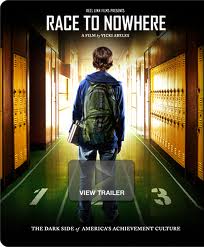
When it came out two years ago, Abeles’ film was screened in various upscale locations followed by question and answer periods. The high-achieving Boston suburbs where I live are the perfect laboratories to test Abeles’ theories. In the question and answer period I attended, a group of educators in the audience said how unfair it was to adjust their lesson plans simply for the sake of delivering high MCAS scores. “It is,” said one of the women, “like putting the cart before the horse.”

There are no surprises in Abeles’ film. Dedicated teachers are thwarted by school boards. One exemplary English teacher felt so beleaguered by the Oakland, California school system that she left teaching altogether. The woman openly wept on camera about leaving her students to fend for themselves in a mediocre school system.

The camera pans to a Stanford University freshman confessing that he regurgitated information for tests in high school only to be woefully unprepared for his freshman year of college. Then there are the befuddled parents and students who have no idea how to get off this exhausting treadmill. Fewer activities, an adjusted academic schedule? If only it were that easy.

In the middle of all this angst is a heart-breaking interview with a mother whose 13 year-old daughter Devon committed suicide after getting a bad grade on a math test. I think back to a column I wrote about Amy Chua, the original tiger mom, wouldn’t accept anything less than an A from her daughters. The Tiger Mother roars and her cubs fall into line. And yet I have to believe that it was more than poor test results that tragically sent Devon over the edge.

I worry about my children and the academic loads they carry. Anna was a three-season athlete in high school and often didn’t get to her homework until after dinner. Nothing annoyed her more than when I ask her how the homework situation is. She’d tell me the work is there and she would get through it no matter how long it took. Most nights I didn’t think she had an unreasonable amount of homework for a student as committed as she was. Yet I still fret about sleep-deprivation and the onslaught of emotional challenges she’s beginning to face as a college studentl.

Adam is no stranger to buckets of homework. His school prides itself on creating young men of character and discipline. Part of cultivating that persona is a full curriculum. For example, most nights he’ll be assigned up to 25 math problems. Although I hate homework as much as the next parent, I don’t think his assignments are busy work or aimed at “survival of the fittest.”

Sara Bennett is among those advocating education reform in Abeles’ film. She co-wrote a treatise with the self-explanatory title: The Case Against Homework. Like Abeles, she was a concerned parent who saw her children struggling against the overwhelming tide of worksheets and reading assignments in middle school.

According to Bennett’s research, a child needs to do only 5 math problems to catch on to a concept. Tell that to Amy Chua whose older daughter was once bested in a math competition. Chua’s solution was to have her daughter complete 200 (no there is not an extra zero) math problems a night for 10 days. That’s 2000 problems. That’s a lot of math. That’s a long race.

I wasn’t surprised to see Wendy Mogel make a cameo appearance to warn about the myriad ways our kids are stressed out. For Abeles and company, Mogel’s latest parenting book, The Blessings of a B-, is an island of calm in the madness of running after perfect SAT scores and padding resumes to resemble the CV of a Nobel prize-winner.

As parents we all too often walk that tenuous line between encouraging our children to be their best and demanding perfection from them. What goes loudly unsaid throughout the film is that entrants in the “race to nowhere” are more often than not socioeconomically privileged. All I can say in the face of these tense times is to hug your kids often. Set a realistic course that takes them towards a fulfilling, healthy future because the alternatives are too upsetting to contemplate.
Moving Waters: Racelle Rosett’s Debut Short Story Collection

Racelle Rosett, an award-winning television writer whose credits include “thirtysomething” and “Blossom,” has just published her first volume of fiction, “Moving Waters: Stories.” Rosett’s notable successes with the short story include winning the Moment Magazine-Karma Foundation Prize for Jewish short fiction and the Lilith Fiction Prize. Her work has also appeared in “Tikkun,” “Ploughshares,” the “New Vilna Review,” and “Jewish Fiction,” among other publications.

The title story of “Moving Waters” explores sexuality in all its permutations, including the end of a marriage and the healing effects of immersing in the mikveh. Later, in “The Unveiling,” a young widow’s makeover coincides with the unveiling of her husband’s tombstone. In other stories Rosett ponders the efficacy of lamed vavniks — the 36 righteous people who keep the destruction of the world at bay — and the prohibition of saying God’s name out loud. In a recent interview with the Sisterhood, Rosett discussed her new collection of literary fiction and explained how this latest chapter in her writing life has reflected a deep examination of her Judaism.

BOLTON-FASMAN: You wrote for television for almost three decades. How has that type of writing influenced your literary voice and short stories?

ROSETT: I look for stories in the same places — in moments of transition, places where a character struggles and finds her way. But writing for television is more collaborative. The stories [in “Moving Waters”] represent a very personal exploration. In them, I was immersed in a world that held a lot of contradictions and I needed to get inside of them to make sense of it all.

Your title story is about fluidity in sexuality and individuality. Why did you lead off your collection with the image of a mikveh?

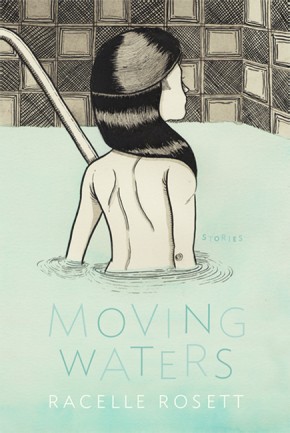
There are two answers to this question. I did a reading from “Moving Waters” for “Zeek” last fall and met a wonderful young artist named Will Deutsch, who heard the title story and shared some of his work with me. His artwork depicting immersion into a mikveh was so tied to what I was doing that I immediately imagined his work adorning the book’s cover. I loved the idea that at first glance the image looked as much like a swimming pool as a mikveh, which underscores the theme of the book that we are in two worlds at once—the ancient and modern.

I also felt drawn to the image of Deutsch’s mikveh because I felt as if I were literally stepping into a pool. I hope this is the experience for the reader in the sense of stepping into the lives of these characters and being engrossed in their world. I also hope readers will be moved to reclaim and redefine mikveh as a ritual that is relevant and useful in contemporary life. I am compelled by the idea of reclaiming and redefining mikveh as a ritual that is relevant and useful in contemporary life. In many communities Mikvah is now being used as a demarcation of transition — to heal from losses like infertility and divorce as well as celebrate new lifecycles like adoption and recovery.

Your stories reflect an intensive interest in Judaism. Can you say something about your own Judaism and how it has influenced your work?

What is most surprising to me is that like the characters in my book, Judaism became relevant to me unexpectedly. I brought Shabbat into our family lives as a way of impressing the idea of community and rest on my children. I did that to anchor them in a place where many forces are competing for their attention.

Do you consider yourself a Jewish writer in the sense that Judaism inspires and moves your stories along?

I certainly feel that [Judaism] informs the stories in “Moving Waters.” My characters embody what I most value and want to keep from my tradition. I think as you mature in your faith you’re constantly holding it up to the light and reappraising it. I was watching “Weeds” recently and there was a plot line with a rabbi and the idea of struggling with yetzer h’rah — the Evil inclination. You write from a place that is shaped by everything you are. Having said that, I may write a story or a script in which the characters are not Jewish but my belief about the world will not change.

Do you still write for television?

I do. I’ve had an ongoing role in television over the years as a consultant working with writers I love. Several months after I completed the story collection I met an extraordinary young woman and I was compelled to write a script about her that is still in the works.

What’s on your agenda this fall?

I’m doing a number of visits to temples and Jewish Book Festivals as part of a Jewish Book Council author tour. I love visiting Jewish communities and seeing their dynamic and energetic engagement. For example, I attended a service in San Francisco that, in addition to being in a beautiful setting, was entirely relevant both socially and politically. It was thrilling to see the kind of deliberate participation not held over from generational guilt but was about bringing together a community in a purposeful and joyful connection.

Swimming in the Sea of Parenthood

There are a few universities and colleges in this country from which I could never hope to graduate. These schools require matriculated students to pass a swimming test. I do not know how to swim. And I am terrified of making my way into water in which I cannot stand with my head above the surface.

Before World War II, passing a swimming test was part of the curriculum in many US universities and colleges. But by 1982, passing a swimming test was mandatory in less than 10 percent of them. Anna is matriculating at one of the holdout schools. Not a problem for her. I made sure that both of my children learned to swim at a very young age.

And, yes I’m aware that in the old-fashion parlance of the Talmud, a father is required to teach his son three things: The Torah, a trade and how to swim. That’s as great a blueprint for success as I could have hoped to devise. It presents a child with opportunities for spiritual fulfillment, financial security and self-protection.

My girl has to swim a few laps and then off she dives into her college career. I can remember the first time she put her face in a pool. She was 4, and my husband wisely said it was time for her to learn to swim. Off went my little girl to summer camp, where she’d have proper lessons. I never went to summer camp, and we all know the consequences of that missing link in my life.

I wasn’t so sure I wanted my little girl to go to a big-kid camp. But it was a camp that had a prekindergarten division with the sweet name of Owls’ Nest. Within days, she was proficient in the survivor’s float (known as the dead man’s float until someone wised up). Soon enough, she flipped over and floated on her back. I was amazed. I was relieved. My kid could swim. Almost.

The next summer my daughter graduated to two hours a day of instructional swim. Rain or shine – minus thunder and lightning – she was in the pool learning the breaststroke and the crawl. This was one way I measured that my girl was getting bigger and stronger. But then one day she got in the car and expressed my worst nightmare: “Today my counselor jumped into the pool with his clothes on to save me.” Then she asked me something mundane like what was for dinner that night.

When I got home, I found a message from the camp. Anna was never in danger. Her counselor saw that she had ventured into the deep end and scooped her up before she was literally in over her head. The word “save” was not mentioned. Later in the evening, my girl started grumbling that she didn’t want to go back to camp, and she certainly didn’t want to swim. I, the nonswimmer, knew she had to get back in that pool.

I’m reliving the arc of my child’s swimming story because it mirrors my feelings about my first child going to college. Once upon a time, swimming was completely new to her. It was a skill that challenged her and, at moments, frightened her. Ultimately she triumphed, and now, like the old cliché, she swims like a fish.

As for me, I still struggle mightily, learning to tread water in the shallow end. Right after Anna’s scare in the pool, I thought the camp was trying to cover up that she almost drowned. But soon after, I realized that she was never in danger. It just looked that way. So much parental worry stems from emotional perception.

Thirteen years later my little girl is going to a big school. I daresay she’ll pass her college swimming test. To say this is a time of transition for our family is a bit like thinking of Moby Dick as a big fish. But I have made sure she can swim. Take that as you will and apply it to other skills. I believe that my husband and I have invested in her academic success by supplying her with an education in which she has been challenged and has ultimately thrived. So, I suppose you could say that we’re well on our way to teaching her a trade by giving her a college education.

On the spiritual side of things, all we can do is hope that her Jewish day school career will emerge at various flashpoints during her college years. You can’t teach a child to be observant or to take the Torah into her heart. You can only instruct her in Torah so that she can make meaningful choices about her spiritual life.

And so it began with the doggy paddle in the shallow end of the pool at a preschool summer camp and ends with swimming laps in an Olympic-size pool in a large university. That’s as good a metaphor as any, about parenting a child who is leaving home.

A Visit to Poland with a Camera and a Tombstone: Evan Kleinman’s ‘We Are Still Here’

The family was warm, familiar, Jewish. The grandparents’ English was charming, old-fashioned – glazed in a Yiddish accent.

Meet the Kleinmans, the focus of Evan Kleinman’s new documentary. The 28-year-old filmmaker turned the lens on himself to make the aptly titled “We Are Still Here,” about his trip to his grandparents’ Poland – a Poland that held sweet memories turned bitter and unimaginable.

Kleinman’s paternal grandparents grew up in shtetls near Krakow and were deported to concentration camps. On screen, his grandmother remembers her time in the Warsaw Ghetto and how she volunteered to go to Bergen-Belsen with her best friend.

Although Kleinman’s film records his particular legacy trip – a return to his roots with his father, mother and younger sister – it’s a universal home movie. The message of the film is that every Jew survived the Holocaust. This shared survival is what led to the founding of Boston 3G in 2009, the sponsors of the Boston debut of Kleinman’s film last week.

The group’s name, 3G, stands for the third generation of survivors. The group is made up of people in their 20s and 30s, most of whom are the grandchildren of survivors.

Liz Bobrow’s involvement in Boston 3G stems from her close relationship with her paternal grandparents. Both of them are Holocaust survivors whom Bobrow remembered as “very different from my other set of grandparents.

“While they loved me just as much, they were different,” she added. “They spoke with an accent and had funny quirks like always making sure I had enough to eat. I also recognized [as a child] that we didn’t have the big family reunions with my father’s side as we did with my mother’s side.”

Bobrow, Boston 3G’s president, also noted that this third generation has the “unique privilege of connecting with the survivors in a different way from the second generation. While our parents have become caretakers of the survivor generation, we are able to focus solely on who these people are and their incredible stories of survival. It gives the survivors comfort seeing that their stories are not being forgotten, that we are still telling them so many years later.”

“We Are Still Here” was organized around the central event of taking a tombstone back to Poland – a stone to mark Leib Kleinman’s grave. Leib was Evan’s great-uncle, his grandfather’s kid brother who died in a small concentration camp in central Poland.


“The stone is heavy,” the grandfather tells his grandson. The younger Kleinman has set up the context of his film so well that it’s clear that the weight of the tombstone is as difficult to bear as the history of the Jews in Poland.

But in an e-mail interview, the New York native was ebullient about his grandparents and unequivocal about their positive influence on him:

“They are the most powerful and inspiring people I know, and I wanted to be able to share them with other people and with future generations of my family. By doing a film it provided us with an exercise that would bring us closer together, capture our story, and also perhaps bring closure for them because they had not seen these places in 70 years. When my grandfather revealed to me that he could pinpoint the place where he buried his brother I felt beyond compelled to make sure his brother was memorialized.”

Kleinman’s preparations for the trip to Poland are as poignant as the trip itself. His grandfather sketches a map to help his family find his house in the small town of Sediszow. The grandson dutifully brings the map with him to Poland, and it’s almost miraculous when it proves to be useful and accurate.

In Poland, the four Kleinmans move through the country in a hazy dream. But their disorientation is frequently punctuated by moments of triumph. They find a birth certificate of another greatuncle. They find Leib’s burial place through determination and his brother’s description of a place he hadn’t been to in more than seven decades.

Kleinman is similarly scrupulous in showing that the buildings in Poland are a mixture of the old and the new. The observation is a living, breathing subtext of his portrayal of his family and the intense family history attached to them.

Kleinman’s film was also presented last month at the Museum of Tolerance in New York City as well as at a number of film festivals. Since the film’s debut, Kleinman has been gratified by the positive responses from his third generation of survivors.

“Many have voiced to me that the film inspired them to explore their own family history,” he said. “Also, many have told me that my family even reminds them of their own families.”

It’s the ultimate recognition for a young man who movingly portrays his third generation as “living links” to history.

Judy Bolton—A Mom Detective Who Kept Her Kids Safe in Cyberspace

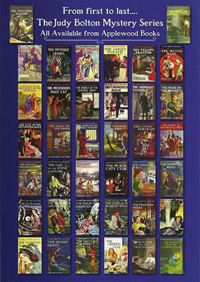
I share my family name, as well as a penchant for snooping, with “Judy Bolton, Girl Detective,” Fictional Judy was the star of her own mid-twentieth century mystery book series. Judy lived smack dab in the middle of Pennsylvania where, surprisingly enough, there was no shortage of mysteries to solve. In all thirty-eight of her books, her snooping was always for the good and welfare of her family and friends. When I became a mother, I snooped for the good and welfare of my children.

Now that they are older, I don’t snoop in my kids’ lives very much. And I have never snooped because I have an unsavory curiosity about other people’s lives. (Though I will sometimes eavesdrop at the table next to me in a restaurant to figure out if a couple is on a blind date). I snoop for interesting stories. I snoop for inspiration to write those stories. I snoop to unknot the mystery of other lives as well as my own. Snooping comes with the territory of being a writer.

While I had no qualms about rummaging around in my children’s lives, it occasionally got me into trouble. When my daughter was 12 she said that I worried over nothing and that I didn’t trust her. Shealso  said that I was nosy.

It’s true. I do worry over nothing until I have something about which to worry. She’s right that I didn’t trust her when she was the tender age of 12. But I didn’t trust because she was too young to understand how quickly the world can turn scary and dangerous.

I prefer to think of myself as curious. And once upon a time my curiosity mostly focused on my children’s computer activities or the dialed and received log on their cell phones. When my children were old enough to have screen names, I ran a benevolent dictatorship. This meant that I was not always right, but I was never wrong. Each month they were required to show me any on-line friends’ lists.

The first rule was that my kids had to know everyone personally—in the flesh—anyone with whom they had an on-line relationship. All the better if I knew them too, but I hadn’t met all of the sleep-away camp buddies. So for 12 and up, I trusted, but only just a little. Under 12, I had to know everyone on a list. No exceptions. This rule, in place like cement, was instituted to prevent my kids from coming into contact with someone they had never met. This rule, to use a word that we used early and often since the dawn of pre-school, was non-negotiable.

I also reserved the right to walk in at any time that my children were on the computer and ask with whom were they chatting on-line or what was new on Facebook. Speaking of Facebook, they had to friend me or do without it. If the spirit moved me, I would also ask what they had just typed. Did I mention that I ran a benevolent dictatorship?

All bets were off for a virtual chat room. This was expressly forbidden and would result in the revocation of computer privileges until the age of twenty-five.

Before they were freshmen in high school and old enough to have laptops, my kids had individual accounts on our family computer so they could access the Internet for homework and pre-approved game sites. Each of their accounts had a filter so that a typo would not send them to God knows where in cyberspace. I always knew the passwords to their accounts or to anything else in their lives. If they somehow managed to get on to a commerce site and try to buy something, the dictatorship was no longer benevolent. Luckily, this never happened.

My children never seriously abused their Internet privileges because they knew I meant business. As generous as I am with them, and believe me I am still generous to the point that it sometimes annoys my husband, they knew that I would not tolerate any infractions with regard to the Internet. Just ask my son about the time he hacked into my account and wrote an e-mail to his teacher to excuse him from an assignment. His third grade grammar gave him away and the teacher immediately notified me that he was e-mailing her under my name. What followed were not good days for my boy.

But I never fully warmed up to being a dictator—benevolent or otherwise. I took unique pride in saying that my children were spoiled, but not rotten. Yet, when it came to snooping for their wellbeing, I held my ground.

I think my parents, particularly my father, named me with the hope that I would develop a curiosity that was both intellectual and empathic. Building on my father’s dreams for me, I taught my children to be as curious and responsible as my fictional doppelganger.

Breaking Up Is Hard to Do

Dear Teen Me:

When you were growing up in the late 1970s and early ‘80s, it was easy to have a skewed view of love, especially with all those pop love songs you listened to — and inevitably dreamed would come true. If only there had been a meeting for you like the one I went to last week, dedicated to healthy teenage relationships. If only the adults around you had understood what I know now: that some consider teen dating a public health issue.

Today, the Boston Public Health Commission has a program called [Start Strong](http://www.startstrongteens.org), currently the largest funded national initiative aimed at preventing relationship violence and abuse among young people by promoting healthy relationships. Start Strong’s mission is powerful in its simplicity: “Stop teen dating abuse before it starts by using older teens to educate pre-teens.” To emphasize that message, the Commission has sponsored a co-ed gathering of teens for three years running called *Break-Up Summit*. This year, the event took place at Simmons College in Boston, Massachusetts, and focused on cheating as a catalyst to unhealthy relationships turning violent.

This kind of initiative didn’t exist when you were growing up — when boys were boys and girls were expected to be nicer than nice. My generation directly reaped the rewards of the Women’s Movement. Still, for many us, sexual liberation was steeped in guilt and bewilderment at how far we could go and, simultaneously, how badly a relationship could end.

At this year’s conference, teens attended workshops that helped them explore the landscape of healthy relationships, including “Breaking-Up In The Internet Age,” “The ‘What Are We?’ Conversation,” and “It’s Complicated.” In one breakout session, they debated what behavior constituted cheating and what behavior was perfectly innocent. Yes, they said, you can go out to a platonic dinner with a friend of the opposite sex. Actions that fell into a gray area were more difficult for them to agree on. “Flirting is a way of life, it’s healthy,” said one young man. “Dancing with a guy at a party even if your boyfriend’s there isn’t right,” said a young woman. Perhaps consensus is not the point. Teens need to build their own definitions of fidelity and respect.

But how often does that really happen? Today, teens are having sex at a younger age and with more partners. Their relationships are also driven by hormones and developing brains, which means they may not understand why they do what they do and feel what they feel. The drama, the moods, the end-of-the-world heartache — I wish you had known that they didn’t have to be standard issue for teenage relationships.

At the conference, I heard a lot of terms bandied about, like “hooking up,” “friends with benefits,” “just friends” and “full-blown dating.” It made me realize that while the language has changed, human nature hasn’t. One of the more potent metaphors a teenage girl used to describe cheating was a crumpled piece of paper. That’s what cheating does to a relationship, and though the deception may be followed by forgiveness, that sheet of paper will always have wrinkles.

When the program organizers displayed pictures of world-famous cheaters, some of the boys whooped when they saw Tiger Woods. And while there was not a single woman in the montage, the audience was abuzz discussing “Twilight” star Kristen Stewart’s [tearful apology](http://www.huffingtonpost.com/2012/07/25/kristen-stewart-apologizes-cheating-robert-pattinson_n_1702836.html?utm_hp_ref=entertainment&ir=Entertainment) for cheating on Robert Pattinson. Young women, in particular, seemed to admire Stewart for responding quickly by taking responsibility for her actions. Others were bitterly disappointed in her for cheating on Pattinson in the first place. As one girl wondered, aren’t women supposed to be above that?

Maybe it’s the characters she plays, but for me, Stewart embodies the notion of a fairy tale. The version of romance she projects isn’t real — just like the Top 40 songs that inspired and disappointed you, Teen Me, all those years ago. I know it’s confusing and upsetting to consider that fairy tales don’t exist, but in time you will understand that grappling with a strong, healthy relationship — with its inevitable peaks and valleys — is more romantic than an unattainable “happily ever after.”

And so what I want to say most of all, Teen Me, is something I never knew at your age: It gets better, and until it does, there are resources out there. There are people who want to help you extricate yourself from a bad relationship. That is the biggest takeaway of the Break-up Summit. If only you had been guided to realize that love is not a Top 40 song, I would have been spared suffering that was neither noble nor useful.

Love,

(Much) Older Me

Should I Stay or Should I Go?

This is an excerpt from an essay published on the New York Times Motherlode Blog in September of 2010

SHOULD I STAY OR SHOULD I GO?
Judy Bolton-Fasman

I’ve spent a lot of time in front of a blank computer screen fantasizing about having more time to devote to my book. I’d heard of mother writers who act on their fantasies and take up residencies in various artists’ colonies where weeks can run into a month or two.

I long ago resigned myself to deferring my vision until my youngest went off to college. Six years. I could deal with that. I’d be old enough to belong to AARP, but young enough not to collect Social Security.

I didn’t end up waiting six years. One of my favorite authors was slated to be the writer in residence at an artist’s colony in Florida. The timing couldn’t have been more inconvenient for me. If my application was accepted, I’d be gone for half of May and the first week in June. I was deeply conflicted, but not conflicted enough to keep me from applying to spend three weeks and travel 1,260 miles away from my children.

I was accepted to the residency.

To read the rest of the article please clink on the link below:

http://parenting.blogs.nytimes.com/2010/09/14/a-room-of-moms-own/

Mourning Aurora by Judy Bolton-Fasman

Terry Tempest Williams is an extraordinary writer. She recently published a memoir inspired by boxes of journals her mother bequeathed to her – all of them blank. There was not a single word on those fresh, white pages. They were, as Williams wrote, “paper tombstones.”

That’s what I visualize—paper tombstones—as I invoke the dead and the wounded for this column. They are the victims of the wave of hate and terrorism of the past couple of weeks. The youngest victim at the movie theatre in Aurora, Colorado, where a madman opened fire on an unarmed audience, was six years-old. All she did to tempt death was sit next to her mother at the midnight premiere of The Dark Knight Rises—the latest Batman movie. Her fate was intertwined with 11 other people, some of whom died shielding their loved ones.

Here we are again, reading names. Piecing together life stories from the snapshots and accompanying biographical summaries. Here we are again in another “there but for the Grace of God Go I” moment.

And there are more names to remember. A suicide bomber attacked a tour bus of Israelis vacationing in Bulgaria. Five were flown home for burial and 33 more were wounded. Geopolitics boils over and once again Jews are targeted.

It’s a brutal time.

God has come up a lot in discussions with my kids over the Aurora tragedy. I dare say at this point Spiderman and Batman are more divine to them than a seemingly absent God. It’s not surprising. A movie featuring these two superheroes is not just a blockbuster; it’s what the industry calls “a movie event.” It’s a phenomenon. Think about Gotham City, Batman’s stomping grounds. It’s a deeply dark place with psychopaths at the ready behind every building.

A masked gunman armed to the teeth. The bewitching hour of midnight. Sex and violence on the screen. I don’t think for a moment that The Dark Knight Rises short circuited the killer’s brain. But the movie provided a horrifying backdrop. Reading the bewildering amount of commentary about the Aurora massacre, I remembered that President Reagan’s would be assassin, John Hinckley, Jr., was obsessed with the movie Taxi Driver. Loner to loner. Was it a deadly case of transference? Were Hinckley and the Aurora gunman seeking fame, attention, intensely negative admiration? Notice that I won’t name the gunman in Colorado. In this post-Internet age, I won’t make him easier to find on a search engine.

But in the aftermath of this tragedy, how do continue to live with any kind of normalcy? Thanks to Rabbi Harold Kushner’s deceptively simple, brilliant insight we know—we accept to some degree—that bad things happen to good people. Rabbi Kushner wrote his best-selling book from the rubble of his own heartache—his son, Aaron, died in his mother’s arms two days after his fourteenth birthday from a rare genetic disease. It’s no wonder that Rabbi Kushner’s title has a permanent place in our lexicon; he has put a name to a phenomenon so perplexing, so universal. People cling to the notion that tragedy is not deserved. God is far too complicated to want a tit for a tat. God is rarely in those details, I tell my kids.

I’m not wise or worthy enough to understand why God does the things that God does. I do know that when tragedy strikes as it did last week in Aurora and Bulgaria, I don’t believe God is vengeful or sadistic or masochistic. I try to convince Adam, in particular, that God has His reasons for stepping back to observe what human beings, purposefully created in God’s image, have wrought. I don’t know what those reasons might be. I only know that it’s a crazy, twisted, scary, beautiful world out there. Maybe God needs to see what we do next. We are, after all, in a relationship with the Almighty. Pass that along to the children, but don’t forget to talk through the anxiety and fear generated by the Aurora shootings. Don’t plaster this experience with “paper tombstones.”

In Terry Tempest Williams’ Mormon community she notes that the women keep journals and bear children. Her mother’s blank pages are an act of rebellion.  “How do you know your mother didn’t write her entries in invisible ink?” a woman asked Williams at a bookstore reading.

Williams said she wasn’t keen to find out if her mother had pulled a stunt like that. “My mother’s journals are words wafting above the page,” Williams writes in her memoir. Just like the spirits of the innocents that were violently murdered last week in Colorado and Bulgaria.

The Unluckiest Poet in America

Last week The America Library of Poetry was more than “fanning the flames of literacy” at our house.  The Library, sponsor of free poetry contests for kids in kindergarten through twelfth grade, had finally picked this year’s winners. Adam was not among them.

Image

He had been so hopeful after he was notified this summer that he was still in the running for the grand prize. To confirm that he was a serious contender, his poem would appear in a volume of other entries set for publication in December. For $35 my son would forever have his own personal copy of his first work to appear in print.

September 30th.  Adam noted the date on our family calendar. It was the day the winners would be published on the Library’s Web site. He visited the site several times a day throughout September, trolling for hints of how his poem was faring in the contest. Nothing. He was nervous. I was nervous for him because I knew all too well what was coming down the pike.

It’s hard not to take rejection personally. And, boy oh boy, did my son take it personally. I was out when he logged on to the Web site on the evening of September 29th. When I checked my BlackBerry there it was—Adam’s righteous (or self-righteous) indignation that his poem was not among the winners.

My son-turned-critic berated the winning poem in his age category as “a sure sign of uncreativity (sic) and poetic weakness. You rhyme when you can’t be vivid or use figurative language.” Ouch. Who made him the poetry maven?

Welcome to my world Adam. I’ve got a collection of lovely rejection letters from editors at some of the best publications in this country. And you know what? When I started out, I clung to those hand-written two line notes like a life preserver. “Not quite right for us. But send more.” These days I get rejections mostly through email and they’re not nearly as exciting. Ten point Arial dilutes the urgency, the optimism embedded in the rushed handwriting of those earlier notes.

My near misses don’t make me all that angry anymore; they make me determined. Fiercely determined (maybe that’s constructive anger) to show every editor who has rejected me that they were flat out wrong.

In the meantime, Adam needed some perspective because frankly he is not, as he claimed in the heat of the moment, the best children’s poet in America. I know because once upon a time I thought I was the best children’s novelist not only in America, but the world. I was so sure of it that when I was nine I sent my first “book” to a legal publisher I found in the yellow pages. The CEO was charmed and he called my parents to tell them so.

I told Adam the truth about the writing life—albeit one that was dipped in maternal honey:

Congratulations! Every single accomplished and talented writer has been rejected. If he or she hasn’t been rejected he is not remembering correctly. Some of those poems were not as good as yours. But some of the poems were just as good or better. The judges are not “impaired.”  However, judges are human and they have their preferences.

I followed up with a call to home. Ken answered and I asked him if Adam was still upset. My husband had no idea what I was talking about. “He didn’t place in the poetry contest,” I said. “He hasn’t said a word to me,” Ken said. “He saves that stuff for you.”

Yes. I’m the more reactive parent, the mushier parent. While every kid needs a mushy parent, that same parent must take precautions against becoming too malleable. Adam needed to understand that he may have deserved to place in that contest, but so did the actual winners.

The Adam I came home to bore no resemblance to the raging poet who fired off that earlier e-mail. I asked if he would like to read through some of the winning poems with me. I read the Grand Prize Winner aloud and he agreed that it was a very accomplished poem. I pointed out that the poet was a senior in high school. And as for that rhyming poem that took first place in his age category? I said that I thought it worked. We read that one out loud too and he reluctantly agreed.

A few minutes after we had discussed the winning entries, Adam sent me a contrite e-mail. He explained that he felt “angry and unappreciated” when he pounded out the first message. After the disappointment passed (isn’t it great to be twelve?), he asked Ken and me never to work for The America Library of Poetry. Employees and their families are not eligible to enter the contest. Only a true writer would be so optimistic and yet such a glutton for punishment.

Congratulations, Adam. You’ve arrived.

Dear Sarai: A Letter to a Young Israeli Soldier

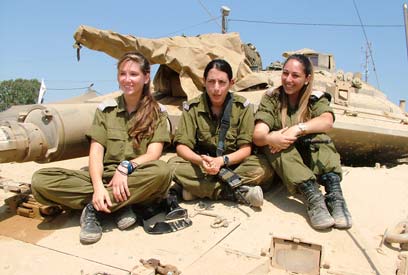
In anticipation of reviewing  a collection of linked stories coming out in September called  The People of Forever Are Not Afraid a collection focusing on three young women doing their mandatory service in the Israeli Defense Forces–I revisited an epistolary essay I wrote after I met Sarai, a young Israeli army officer. Sarai was mostly skeptical about peace for her country. But towards the end of our conversation I heard a glimmer of hope in her voice. Here’s the letter I dedicated to her after our encounter four years ago.

Dear Sarai,

There is a lot on your young shoulders. Twenty-one years old and you’re already an officer in the Israel Defense Forces.

Thank you for defending Israel. Thank you to your mother for sending you out into the world to do this work for the Jewish state, and for Jews everywhere. Back home in Boston descriptions of what you and your unit do sound surreal. People will shake their heads in disbelief as much as in admiration that your unit—18 and 19 year-old young women—monitors the Israel security barrier and the surrounding area 24 hours a day, 7 days a week.

“It’s only a job for girls,” one of your charges proudly says. “Because girls can multitask better than boys.”

Girls with long, shiny ponytails—the same ponytails I see swinging up and down the soccer field when I watch Anna play. They’re eating the same junk food teenagers everywhere eat. But these teens munch on potato chips while wearing their country’s uniform and focusing on their monitors. They blink as often as the guards at Buckingham Palace. The room where they work is uncannily silent.

I wonder what your subordinates think of the American visitors cheering on one of the girls as she follows a suspicious character and then communicates with soldiers in the field to pick him up for questioning. It’s stunning to realize that the decision is hers alone on who warrants a closer look. And it’s even more stunning to know that the soldiers on the ground have only her judgment to rely on. She’s the one who guides them if they have to crawl around brush and barbed wire to capture a suspect. If things go badly, hers is the last voice a soldier hears in his earpiece.

Sarai, your charges are only four years older than my daughter. I wouldn’t blame you if you were resentful that my daughter and her friends are relatively carefree. I can understand if it bothers you that American groups observing your work sometimes relate to it as if watching a video game. Please be patient with us. The first Gulf War was beamed into our living rooms like a remote video game. But that was in 1991. You were only 3 years old and the soldiers now in your charge were babies. None of you remember being bundled into your safe rooms.

I was so sad when you said you’ve lost all hope for peace. You chide your friends for being unrealistic, even naïve about peace between Jews and Arabs. You say it’s because you’ve seen too much. I can understand why it disheartens you to see 5 and 6 year-old Palestinian children throwing rocks through the fence at your fellow soldiers.

But your hopelessness coupled with those Arab children’s burgeoning hatred are also casualties of the Israeli-Palestinian conflict.

I’d like to share a personal story with you. When I was a little older than you I worked for a civil rights organization where my job was to monitor right-wing extremists. You have infrared cameras and the latest communications equipment to do your job. I collected my information by reading hate rags put out by the Ku Klux Klan, neo-Nazis, skinheads and Holocaust revisionists. I was 25-years old and had never encountered such raw hatred. I monitored these right-wing extremists for 3 years. I knew where every Klan cell was in the United States.

After reading so much hate material day in and day out, it skewed my vision of the world. A few hate-mongers led me to believe that the United States was a country full of racists and anti-Semites. I had to pull out of that job to get my bearings again. Maybe you need to do the same after you honor your commitment to the army.

Sarai, your name tempts me into midrash. Sarai was Sarah’s name before God changed it. Perhaps this is a before moment for you. Maybe you’re more pessimistic as a younger Sarai. But I think you’ll find your optimism again. I saw a glimmer of that optimism when I asked you why witnessing the conflict up close wouldn’t want to make you work that much harder for peace.

Even though you were stunned by the question, I saw an older, wiser Sarai briefly emerge. “I never thought about it this way,” you said. “I need some time before I can answer you.”

While you are thinking my dear Sarai, I want to leave you with a saying from the Talmud. “You are not required to finish the task, but neither are you free to absolve yourself from it.”

I know that your duties as an officer in the Israel Defense Forces wear on your soul. Remember that you don’t need to solve every problem you encounter. But please marshal your strength, your experience—and yes—your optimism to work for peace.