Dragon Mothers and Grieving Parents by Judy Bolton-Fasman

There is no one fiercer or scarier or more real in this world than a dragon mother. Dragon mothers are mothers who grieve for children who have died or are terminally ill. Dragon mothers breathe fire and scorch everything in their path.

Emily Rapp is a dragon mother, a term she coined two years ago in a stunning essay simply entitled “Dragon Mothers.” Rapp is the mother of Ronan, an almost three year-old boy who died last month from Tay-Sachs disease. In her new memoir The Still Point of the Turning World, Rapp writes that at nine months her son was diagnosed with Tay-Sachs during a standard eye examination. The specialist had seen Ronan’s particular symptoms only once before.

RappBook

Rapp was shocked. During her pregnancy she had been tested twice for Tay-Sachs, and both times the test came back negative. She later learned that a standard Tay-Sachs screening covers only the nine most common mutations. Rapp, who is not Jewish, and her husband, who is, were carriers of a rare mutation. To put this in perspective, fewer than 20 children in the United States are born each year with Tay-Sachs to parents who, like Rapp, tested negative and thought they could cross that worry off their lists.

While Still Point is an elegy, it is also a remarkable book about the signposts of grief. Rapp writes that, “Ronan and I were on this singular path of motherhood-sonhood: one of us knew that the other would not survive. I was supposed to be guiding Ronan through this life and then out of it and into whatever came next, but much of the time I was flailing around in the unfathomable.”

The death of a child is unfathomable and I don’t have sage words for someone who has gone through the agony of burying a child; I can only look to Emily Rapp as my guide.  She asks her own excruciating question: “How do you parent without a future?” At first I avoided reading Rapp’s book and tried to skirt the topic of grieving parents altogether. But I found her narrative both raw and compelling and uplifting—things I wanted to share. I learned that parenting without a future is both a despairing and optimistic act. “My task as [my son’s] myth writer,” says Rapp, “was still to understand my son as a person and a being who was independent of me and yet dependent on my actions, my attention, my love.” Rapp’s words also point to the ultimate lesson that Ronan taught his mother: Children do not exist to honor their parents; their parents exist to honor them.

Having a child confirms our mortality and, as Rapp notes, the truth about life is that “it exists side by side with death.” I think the way that we Jews say the Kaddish for a child shows how acutely aware we are of this intimate pairing of life and death. While one is obligated to say the Kaddish for a parent for 11 months, a parent is only required to say the Kaddish for a child for 30 days. There are practical reasons for that short formal period of mourning that hark back to a time when infant mortality was high, making the recitation of the Kaddish necessarily truncated. There was also the practical consideration that spending almost a year saying the Kaddish is difficult for parents who also have other children to care for. Yet grief doesn’t have an end-date.

Upon hearing about someone’s death for the first time, Jews say Baruch Dayan HaEmet—Blessed are you G-d who is the true judge. But how can one utter those words when a child has died? The theologian C.S. Lewis asked “Where is G-d during one of the most disquieting symptoms [of grief]?” I turned to a wise friend for advice about G-d’s seeming absence. “If you will allow,” she wrote to me, “I will offer instead of Baruch Dayan HaEmet the words, HaMakom Yinachem.  May you find comfort in the embrace of God, who, while we may never understand the tragedies of the world God has created, is ‘with’ us in the sadness.”

My friend’s words make me think about the limits of empathy. C.S. Lewis takes that notion a step further. “You can’t really share someone else’s weakness, or fear or pain,” he writes. By way of illustration, Rapp adds “You can’t really test the strength of a rope until you’re asked to hang from it over a cliff. There have to be stakes.”

I think Emily Rapp is asking her readers for something deeper than empathy or sympathy. She raises the stakes by asking us to “look straight at [death] without blinking.” Perhaps openly grappling with death is the radical act of empathy we are obligated to bestow on grieving parents and dragon mothers.

 

Sticks and Stones: Emily Bazelon’s Defeating the Culture of Bullying and Rediscovering the Power of Character and Empathy by Judy Bolton-Fasman

Emily Bazelon has written an important book in which she contends that many of the root causes of bullying in schools can be defeated. She takes schools to task through the stories of three teenagers who experience the extreme toxicity of bullying.

Monique McClain is an African-American middle school student in Connecticut whose woes began in that incubator of bad behavior—the school bus. As seen in Lee Hirsch’s affecting documentary Bully, the bus is literally the vehicle where violence and cruelty mushroom like a noxious cloud. Monique experiences the random nastiness of two eighth-grade girls, which has a domino effect off the bus. The bullying is so bad that she eventually withdraws from school. After her mother and grandmother vociferously advocate for Monique, she’s permitted to enroll in a magnet school. Was Monique bullied out of her school or was she rattled by the everyday girl drama that young teenage girls conjure? In Bazelon’s view it was a bit of both.

Jacob Lasher is a gay boy from upstate New York who endured taunts and physical aggression, but also played the part of the provocateur. Although he may not have seen it that way, Jacob’s strong identity as a gay boy educated his teachers and the clueless superintendent of his school district about gay teens and the risks they face. A 2009 survey found that 85 percent of kids who identify as LGBT (Lesbian, Gay Bisexual or Transgender) reported that they had been verbally harassed at school. Forty percent had been physically harassed because of their sexual orientation and 20 percent had been physically assaulted.

Jacob’s story also explores the psyche of his tormentor Aaron. Aaron is what is commonly referred to in psychology literature as the bully-victim. Bully-victims are as prone to depression and suicide as their counterparts. They hope their extreme behavior changes other kids’ perceptions of them, making it clear that they don’t want to be picked on. Jacob eventually prevails in a lawsuit against the school district, which forces teachers and administrators to implement safety measures for LGBT kids.

Through Jacob’s story, Bazelon makes three crucial points about mitigating the effects of bullying for gay kids. Parental support is essential in shepherding these teens through a tough time. She also notes “we have to hold two ideas about gay teens in our minds at once—they are more at risk, and yet most of them will be okay.” Her final point is something that I fervently believe in—that a Gay-Straight Student Alliance in a high school can be one of the “strongest bulwarks a school can erect against anti-gay harassment. LGBT students at these schools tend to experience less victimization, skip school less often and feel a greater sense of belonging.”

sticksandstones

Bazelon’s book grew out of her extensive reporting for Slate about Phoebe Prince’s suicide in South Hadley, Massachusetts. Phoebe, the third teenager profiled in the book, was a pretty freshman at South Hadley High School who arrived earlier that summer from Ireland. She immediately attracted the attention of the captain of the football team and the ire of his on-again, off-again girlfriend. Phoebe’s popularity with older boys miffed other girls at school too. A few of them began a campaign of harassment that ended in Phoebe hanging herself in her bedroom closet.

I wrote about Phoebe Prince’s death two years ago. At the time I called the South Hadley administrators and teachers criminal for the way they ignored Phoebe’s distress. Bazelon went to South Hadley expecting to find the “black hearted monsters” that I portrayed in my column. Instead she found shades of gray and she reports on the case through the point of view of one of the six teenagers initially indicted on criminal charges for Phoebe’s death. Like her peers, Flannery Mullins underestimated Phoebe Prince’s vulnerability. Although I stand by much of my initial impressions of the bullying that played a part in Phoebe’s suicide, I learned from Bazelon that many factors contributed to Phoebe’s tragic death. She had a history of depression and cutting and she easily fell into high-risk relationships with boys prior to arriving in South Hadley.

In Bazelon’s view “an overzealous prosecutor decided to reduce all the complexity [of the case] into one clean narrative: Phoebe Prince was bullied to death.” What I didn’t take into account in my article was Phoebe’s difficult past, the fluidity of teenage relationships as well as the reality that the correlation between bullying and suicide is complicated. It’s true that kids who are bullied are more likely to think about or attempt suicide. But in the end it comes down to a chicken-and-egg question. Are kids who are depressed more susceptible to the effects of bullying or does bullying cause kids to become suicidal?

Then there is the relentless, 24-hour world of the Internet, which presents a challenge to schools. At Monique’s former middle school, there was a concerted effort to report inappropriate pages to Facebook to little or no avail. At a private Catholic girl school, Bazelon reports, an extraordinary example of peer mentoring in which senior girls helped freshman and sophomores prune their Facebook pages.

A Pew Center Survey from 2011 estimates that 15 percent of teens that are ages 12 to 17 said they were harassed on-line. With 800 million users, Facebook is the largest social networking site in the world. Reports estimate that 20 million teens and preteens are on Facebook and one million of them took the time to report bullying and harassment on the site to little effect. Bazelon visits Facebook’s offices in Silicon Valley and discovers that the site has done shockingly little to keep kids safe. “As a parent,” writes Bazelon, “I wish I could tell you that FB gets it, that it’s a company willing to forego short term profits for the sake of safe-guarding the privacy and well-being of its young users. But I can’t.”

A negative comment on Facebook or texting an inappropriate picture cannot only spread like wildfire, but has a kind of permanence to it that can follow someone forever. Despite the overwhelming problem that the Web perpetuates when it comes to bullying, parents still have a big role to play in deterring their children from doing the wrong thing. Bazelon reports that for a 2009 study, researchers asked middle school and high school students what would prevent them from bullying on and off-line; parental discipline was first on the list.

Bullying may never go away. But I firmly believe that schools can and must transform their cultures into ones in which bullying is unacceptable. Teachers and administrators would do well to begin with the adage that, “If it’s mean, then intervene.” And as the subtitle of Bazelon’s trailblazing book says, developing character and empathy in our children is the strongest antidote to bullying.

Lena Dunham’s Hannah Horvath Meets Elizabeth Wurtzel by Judy Bolton-Fasman

Last week I was marooned on my couch with a virus and finally watched the first season of Girls, Lena Dunham’s HBO drama about 20-somethings finding their way in New York City. Dunham is very serious about her enterprise, and even the show’s light-hearted moments — which are few and far between — are laden with meaning. At times, watching the series felt more like homework than entertainment.

But I had heard so much about Hannah Horvath, Dunham’s alter ego, that I needed to meet her myself.  Like many women in middle age, I wasn’t resistant to looking back at my youth. I’m not the like the doctor who examines Hannah for an STD, who swears she’d never want to go back to her 20s. If anything, I’m jealous of the limitless sky, the time that drains into more time of your 20s. Maybe that’s glossy hindsight, but it’s also the raw truth.

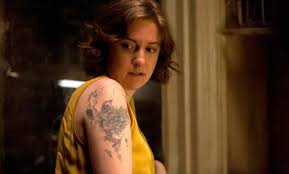
Lena Dunham as Hannah Horvath

Lena Dunham as Hannah Horvath

I loved that Hannah, who is an aspiring writer, is no wunderkind. She’s so plodding and so damned inexperienced. She spends more time talking about writing than actually tapping out the personal essays she aspires to write. She has feckless boyfriends and a job in a coffee shop tellingly called Café Grumpy (an actual café in Greenpoint, Brooklyn—think Tom’s Restaurant, the real-life Upper West Side diner featured in Seinfeld) that sort of pays the bills. She’s in the quagmire that a lot of 20-somethings are in, but she doesn’t seem hopelessly stuck.

Elizabeth Wurtzel, another writer famous for exploring the 20-something state of being, is a 180-degree turn away from Dunham. At 45, Wurtzel is less nostalgic and more obsessive about being trapped in her 20s mindset. I can’t tell if Hannah’s young adult cluelessness is an object of derision or envy for the middle-aged Wurtzel, best known as the enfant terrible behind the best-selling memoir “Prozac Nation,” which she published two decades ago at the age of 24. The book launched her into celebrity and enabled her to make a “career out of my emotions.”

If only Hannah Horvath were so lucky. If only I had been that lucky (or savvy enough) to profit from my own anxiety and depression. There was a huge advance for Wurtzel’s second book, the one where she appeared topless on the cover with her middle finger prominently extended. What else could the book be called but “Bitch,” a rant about sexually manipulative women? Who wouldn’t be a little jealous of that kind of success in one’s twenties? But then again, who wouldn’t be terrified of losing her edge after peaking so early?

The bottom line is that Wurtzel is a cautionary tale for Hannah and her pals. In her recent [New York Magazine essay](http://nymag.com/thecut/2013/01/elizabeth-wurtzel-on-self-help.html), Wurtzel made it clear that she’s not only afraid of growing up, she’s also terrified of getting older. And who can blame her? After all, at 45, she’s still living in a crummy apartment with a nutty landlady and she’s “always in love—or else I am getting over the last person or getting started with the next one.” The only justification she comes up with for her Never-Never Land existence is that she still fits into the same clothes she wore at 24. I’ll keep my two kids and the extra thirty pounds, thank you.

Hannah thinks she is the voice of her generation. At least that’s what she tells her parents as she appeals to stay on their bankroll. And Wurtzel still thinks she’s the voice of her generation. In yet another sad essay for [Harper’s Bazaar](http://www.harpersbazaar.com/beauty/health-wellness-articles/looking-better-at-45-than-25#slide-1), Wurtzel writes that she wouldn’t have dreamed of going on parental welfare at Hannah’s age. “Even with my Harvard degree, when I ran out of money while writing my first book, I was happier to serve cocktails in high heels than to get money from my mom. And now I walk miles in Marnie’s five-inch platform T-straps.” It’s a shame that the quest for early independence only leads to an ability to tolerate high heels in middle age.

Which brings me to Wurtzel’s puffed-up assertion that she’s in better physical shape than someone “about half my age.” She’s in the kind of shape that comes easily to a woman who hasn’t worried about someone other than herself. She holds up Michelle Obama and Sarah Palin as women who are in “amazing physical condition, and [that] have a personal style and coruscating charisma.” Oh Elizabeth, only you could find that kind of superficial common ground between these women.

Hannah doesn’t glitter or charm in Wurtzel’s world. She’s the 20-something that Wurtzel has in mind when she decries the “slovenliness” of today’s young women. By her own calculation, Hannah is 13 pounds overweight. As far as I can tell, she never blow-dries her hair and she almost always leaves the house without lipstick.

Watching those episodes of Girls back to back, I realized how far women have come from my second-wave feminism to Hannah’s fourth-wave feminism. Hannah doesn’t feel guilty about sleeping around, she doesn’t think that men foisted the sexual revolution on women so they wouldn’t have to marry them and she doesn’t hear even a faint ticking of her biological clock.

Unlike Wurtzel, I don’t think Hannah will indulge in a string of one-night stands in middle age or be stuck in an overheated apartment in “the dungeon equivalent of a neighborhood.” And she surely won’t cling to the girl she once was, because once upon a time she looked and did exactly as she pleased. That’s the true beauty of her generation.


A Men’s Campaign to End Violence Against Women – White Ribbon Day by Judy Bolton-Fasman

My Dearest Son:

I have no doubt that you will grow up to be a good man because you have been raised by the best man I know. That is why it is so important to me that you know that today is the Sixth Annual White Ribbon Day in Massachusetts. Men, like Dad and your uncles—and other men from various walks of life—will converge at the State House to declare publicly that each of them is accountable to end the ongoing violence against women.

whiteribbon

Accountability can seem daunting to a young teenager like you. But don’t be scared by accountability in life. Relish it. Instead, be alarmed by the lack of accountability, particularly when it comes to treating women with full human dignity. I know that you think a lot about human rights for all people, and one of the most fundamental rights in this world is for women and girls to be safe in their communities and their homes.

You’ll be interested to know that the White Ribbon Campaign (WRC) was created in 1991 by a small group of Canadian men with a focus on what men could do to end domestic violence and sexual assaults. The first White Ribbon Day grew out of their campaign to commemorate the second anniversary of the murder of fourteen women in Montreal at the hands of one man. Today, the WRC is active in 60 countries and according to Jane Doe, Inc.—The Massachusetts Coalition Against Sexual Assault and Domestic Violence—more than 5 million signatures have been garnered all over the world in support of WRC’s mission.

We’ve been on the Jane Doe site together and I saw how affected you were by the fact that anyone who is abused can quickly click out of the site without a trace of a visit if he or she is discovered looking for information. That safety measure opened my eyes too. WRC calls on all men to stand up against crimes against women, and yes it is a crime to be controlled and frightened into submission. Autonomy is one of the greatest gifts that you can cultivate in your children.

WRC is very clear that this is a men’s campaign where the focus is promoting positive male role models. This means that the campaign is for you, for your future. Your father and I don’t want you to live in a world where women are afraid for their lives. We don’t want you to live in a world where you feel hopeless and helpless to help the women around you.

Your father is a gentle man and that is his greatest strength. That kind of role modeling is the most precious gift that he can give to you. I know that you understand that there are all sorts of boys. Strength and thoughtfulness, bravery and sensitivity, artistry and athleticism are not mutually exclusive. Men are so pressured not to show a softer side. I hope and pray that by the time you are a grown man, society will reward men’s difference instead of humiliating them into ill-fitting stereotypes.

There is a formal pledge that you can take through WRC to end all violence against women and men alike. And there is that white ribbon you can wear. You may wonder why the color white. In all of the reading I’ve done about WRC’s commitment to healthy relationships, gender equality and raising boys with a new vision of masculinity, I haven’t specifically seen an explanation for why the color white was chosen. White has a lot of traditional associations that connote a fresh start. White is also the result of mixing all the colors of the rainbow. It’s every color, which is a rich metaphor for acceptance. White is also deeply illuminating, which is what I hope you will be—illuminated, educated, proactive and ever so gentle on this White Ribbon Day, and every day.

This piece was originally published as an op-ed in the Boston Globe’s The Podium


523-0765 by Judy Bolton-Fasman

523-0765.

Until last month, the phone number was in my family for almost half a century. But call the number today and you’ll hear a terse message that it has been disconnected. It took fifteen years for 523-0765 to become a non-working number. The drawn out campaign that my sister, brother and I waged to have my parents sell their two-story colonial—the house on the lovely corner lot—began when my late father’s Parkinson’s disease no longer allowed him to climb the stairs. We pleaded with my mother, who was healthy then and quite a bit younger than her ailing husband, to move into an apartment – one floor, no stairs.

The idea of giving up the ancestral home in Connecticut was anathema to my mother, who had already forever left her first home in Cuba.  Like houses that had been in one family for decades, my parents’ place burst at the seams with memories that were good and bad and ugly and beautiful. There were fights and reconciliations and moments of pure love. There were the deaths of parents and grandparents. There were great hi-fi blasting parties where my parents danced rumbas and drank Cuba Libres. There was my wedding grown that I hung on the living room lintel the night before my nuptials. There were grandchildren who toddled around the house.

But the house also teemed from years of hoarding that my mother mistook for protecting memories. I didn’t understand that even a few years ago. I only knew that she hung on to tests that she administered as a high school Spanish teacher in the ‘70s and ‘80s, and she saved every single greeting card anyone ever sent to her. She saved her children’s baby clothes—clothes practically disintegrated from age. There was my prom gown, the dress I graduated high school in. My mother’s wardrobe grew exponentially, particularly after my father died, She ordered clothes from the Home Shopping Network and catalogues I never heard of. She had more clothes than she could possibly wear in this lifetime and piles of them encroached on every bit of available space in closets and atop empty beds. .

Maybe that is a sign of age—an unkempt house filled with stuff. Or maybe it was a bulwark against leaving. When my father died ten years ago, the house was still habitable and my mother swore she wasn’t budging. The heater broke down and had to be replaced. The sump pump wasn’t up to the task of keeping the basement dry. Weeds shot through cracks in the driveway. The shrubs were overgrown. The window air conditioners—streaked with bird droppings—wheezed asthmatically. The wall opposite the banister was forever scarred after my father’s chair lift was removed. The house was, in a way, diseased. And that disease was progressive. My mother could not take care of the house and the house could no longer shelter her safely.

She argued this was the home she had made with her husband, and for better or worse, she was staying until death did part her from it. We must have looked like the most negligent children in the world as the neighbors watched her haul her pails out every Sunday night, or noticed that her sidewalk was not shoveled after a big snowstorm. She lied to us and said her lawn man did snow removal. She lied to us that she had a lawn man. She lied to prevent her own removal from the house.

My mother’s health deteriorated. At first her gait was halting. Bad knees is what she told us. She refused to use a cane and we lived in fear that she would fall and break a hip, or worse, hit her head. Still, she refused to move, to live near my sister and me in Boston. Hartford was her home. She knew the television stations and the best place to get tuna salad. She was not budging and by the end of her run in the house she was not walking. Once again a chair lift was installed. My siblings and I were bewildered. This was déjà vu all over again.

And then one day my mother couldn’t manage her house anymore, couldn’t care for herself. She called me panicked that she was feeling very unwell. What should she do? I called an ambulance. She’ll tell anyone who will listen that that hospital stay was the beginning of the end for her. I will tell anyone who will listen that the phone call I made for the ambulance saved her life.

Here’s what my siblings and I had to do to save my mother further. During her extended stay in the hospital and rehab center, we used the power of attorney that we had wrested from her the year before. We sold the house with her grudging acceptance. She knew it was time. We promised to salvage pictures and other mementos. She decided to go to an assisted living facility in Connecticut because leaving the area would cause unbearable changes like watching a different local news anchor.

rotaryphone

She was disappointed when she couldn’t take 523-0765 with her to the next town. I was devastated. It turns out the house move was as hard on me as it was on my mother. I left the old rotary phone when we cleaned the house out. After all these years, she was still renting it from the telephone company.


This essay was originally published on http://www.ba50.com. To read more articles like this click on the link and subscribe.

The Secrets of Happy Families by Judy Bolton-Fasman

With the rise of the digital age, and parents caught between raising children and trying to help their own parents, best-selling author and New York Times columnist on contemporary families Bruce Feiler decided that it was time to write a new playbook for the 21st century family. The Secrets of Happy Families: Improve Your Mornings, Rethink Family Dinner, Fight Smarter, Go Out and Play, and Much More brings together Feiler’s personal experiences as the father of young twin girls with his skills as an investigative reporter to find new sources and innovative ways to strengthen family ties.

SecretsofHappyFamilies

Feiler has his work cut out for him. A few years ago New York Magazine published a story, which exposed parenting as one of the least happy experiences in life. The reaction was both outrage and empathy. Was bringing up children really making us miserable? Feiler counters that assumption with a 2010 Pew Study that found that three-quarters of adults said that family was the most important part of their lives. That same 75 percent further claimed to be very satisfied with their home life and 80 percent of the respondents said that they were closer to their family today than their family of origin. So what’s going on?

Are we really happier in the midst of parenting wars where tiger moms are duking it out with more lax French mothers? Feiler credits some of our happiness to positive psychology, the basis of the trendy happiness movement. But Feiler is anything but trendy. His research is solid, his findings sensible. And he has forever endeared himself to me by not mentioning Gretchen Rubin’s The Happiness Project.

According to Feiler, like successful businesses successful families have the ability to adapt. In Silicon Valley, Feiler explored a concept called “agile development.” He describes it as “a system of group dynamics in which workers are organized into small teams, each team huddles briefly every morning to review progress, and the team convenes for a longer gathering at week’s end to critique how it’s functioning and make changes for the future.” Within a family, agile development can translate into a weekly family meeting in which each member discusses what went well that week, what could be improved, and what he would commit to work on for the week to come.


The family meeting is not only a natural outlet for communication; it leads to other healthy activities like eating dinner together. I firmly believe in the salutary effects of the family dinner. I’ll risk repeating well-known research about eating together because I think the facts are so critical to reiterate for families with children still at home. Children who eat with their families are less likely to drink, smoke, do drugs, get pregnant, commit suicide and develop eating disorders. Yet according to UNICEF, Americans still rank 23 out of 25 when it came to teenagers eating dinner with their parents at least a few times a week. That’s a missed opportunity because dinners create perfect conditions to talk to one another. Dinners are also the ideal setting in which to develop resilience in children of all ages by sharing stories about parents and grandparents. Can’t have dinner together? Then gather for breakfast or dessert.

One of my favorite sections of Feiler’s book, was about “cultivating a strong intergenerational self” in children. Children should know that they are a part of a larger family continuum. If they know they come from somewhere, they are more likely to know where they are heading in life, which brings me to the chapter on grandparents. As Feiler notes, countless studies have shown the extraordinary influence that grandparents, particularly grandmothers, have on their families. Even infrequent visits from grandparents can increase the chances of a child having a healthier relationship with her parents. A grandmother’s support reduces stress and exhaustion in a family.

Finally, just when I thought I had heard everything there was to say about fighting fairly in families, I learned a few new things. It’s a given that how you fight is important to resolving conflict, but I picked up a few pointers such as monitoring pronouns. For example, using “I and we” during an argument suggests togetherness versus the accusatory “you.” Feiler encourages not only listening to someone else’s side of the story, but also being genuinely curious about their version of events. A “he said, she said” argument should segue into a third story created together by the opposing parties.  That’s a precursor to compromise.

There are other takeaways in The Secrets of Happy Families. Feiler looked to Warren Buffet’s banker for advice on allowances, the Green Berets for planning the perfect family reunion and successful coaches for team building. Yet throughout this entertaining and informative book, Feiler’s message is imbedded in three crucial rules that transcend time and place: Adapt all the time, talk a lot, and yes, go out and play.


Recognizing Signs of Abusive Dating Among Teenagers by Judy Bolton-Fasman

I wish February had been Teen Dating Violence Awareness Month when I was growing up. I might have realized that in the era before e-mails or cellphones, my boyfriend’s demand that we speak on the telephone every night was unreasonable. I was in college and my life revolved around those phone calls.

At 18, I thought his behavior demonstrated intense love for me. Young and inexperienced, it never occurred to me that he wanted to control me. In my mind, this was love and love always hurts, doesn’t it? All I had to do was listen to a pop song or watch a soap opera to see that a love worth having was often portrayed as painful, or at the very least, something mostly difficult to endure.

To read the rest of this post please click on : http://parenting.blogs.nytimes.com/2013/02/15/recognizing-signs-of-abusive-dating-among-teenagers/#more-43701

Painting a Child’s Spirituality by Judy Bolton-Fasman

Rabbi Sandy Sasso told the following story at Temple Emanuel in Newton:

There were two brothers in town who were always getting into mischief. One day the rabbi got a hold of the younger brother and asked him to face up to his misdeeds by asking him “where is G-d?” In an increasingly stern voice the rabbi asked the boy “where is God” three times until the young lad ran home and hid under his bed covers. When his older brother found him, he asked what his brother was hiding from. The little boy replied “G-d was missing and the rabbi thinks we did it!”

Rabbi Sasso the author of twelve books for children—many of them award winning—recently addressed the ways in which G-d is absent in children’s lives as the weekend scholar-in residence at Temple Emanuel. Rabbi Sasso, who is also a congregational rabbi in Indianapolis with her husband Dennis, tackled children’s religious imaginations and identities in sermons, talks and readings.

According to Rabbi Sasso, the vast majority of youth think there is a spiritual dimension to life, yet only 14 percent of these children feel as if someone is helping them with their spirituality. That number roughly correlates to the adult statistic in which one in five people claims that there is no assistance available when trying to cultivate a spiritual life.

Rabbi Sasso illustrated the interplay of spirituality and religion using a recent Torah portion. Moses’ revelation on Mount Nebo, in which he is profoundly changed internally as well as externally, is a spiritual experience. The Ten Commandments is the religious expression of that deep and holy occurrence. Religion, explained Rabbi Sasso, serves as a “container to hold spirituality and we must learn how to connect the larger questions of life to spirituality.”

Questions lead to open conversations and according to Rabbi Sasso even very young children have the skills to engage in larger, profound inquires about the role of G-d in their lives. The difficulty in talking about G-d may lay at the feet of parents and Jewish educators. “Don’t let your own worries and misgivings stand in the way of conversations about G-d,” said Rabbi Sasso. “What you don’t believe anymore can be an effective way to allow yourself to rethink your beliefs. It’s okay to be unsure. You don’t have to have all the answers and remember that these answers are not ‘googleable’.” To that end, Rabbi Sasso advised adults to “get in touch with what awes you, or as the poet Mary Oliver says, tap into ‘appreciation swelling into astonishment.’”

Parents looking for ways to broach a conversation about G-d, particularly with younger children, would do well to read “G-d’s Paintbrush” to them. Rabbi Sasso noted that her intent in the book was “to broaden children’s creative lives when thinking about G-d.” Illustrated in rich primary colors, “God’s Paintbrush” asks the ways in which G-d is concrete and present in a child’s life.

GodsPaintbrush

I wonder if G-d has a big lap to curl up in, just like my Mom’s, and strong arms, just like Dad’s to lift me up and catch me when I fall.

I wonder if G-d has strong hands to hold me tight, just like Mom’s and big shoulders, just like Dad’s to carry me when I am tired.

What makes you safe and warm and loved?

Most of us grew up with the standard names and images for G-d such as King or Lord or Father, but G-d has many different names and images. For a little boy in Rabbi Sasso’s congregation, whose mother was dying of breast cancer, G-d was “Healer.” For a woman whose mother was dying G-d was a comfortable bathrobe. Later that year when the woman’s mother passed away, she felt closer to G-d by wearing her mother’s old robe. Rabbi Sasso was not advocating for jettisoning traditional prayer. She emphasized that the language of the prayer book is an important connection to community and the Jewish people at large. After all she noted, “in our tradition there are 70 names for G-d.”

Most touching for me was Rabbi Sasso’s wisdom on connecting social justice issues to a child’s spiritual coming-of-age. “You cannot have social justice in Darfur,” she said, “when a child is being isolated in school. Bullying is very much a social justice issue. Take a stand on immigration, but also welcome the new neighbor. Inclusivity is part of Tikkun Olam—repairing the world.”

We would do well to remember that as parents we are the single most important influence in our children’s lives. We don’t need to be rabbis or academics to explain G-d to our children. Rabbi Sasso recommended to start simple. State your own ideas about G-d without cluttering those ideas in abstract or philosophical language. As she pointed out, “Noah was an amateur and the builders of the Titanic were experts.”


Parenting the Ritalin Generation: An Interview with Bronwen Hruska by Judy Bolton-Fasman

Bronwen Hruska gained national prominence last August as a mother and activist when she published an opinion piece in The New York Times called “Raising the Ritalin Generation.”

BronwenHruska
The piece was a clarion call to parents to closely assess the accuracy of a child’s Attention Deficit Disorder (ADD) or Attention Deficit Hyperactivity Disorder (ADHD) diagnosis. Hruska outlined her own son’s tumultuous journey when he was misdiagnosed with ADD at the age of 8. Two years later, Hruska and her son decided that the treatment was not only unnecessary, but had also been unwarranted. Hruska, the publisher of SoHo Press, recently published her first novel, “Accelerated,” through Pegasus Publishers. Part thriller and part social commentary, “Accelerated” is a brilliant, complex story about the consequences of over-diagnosing children with ADD and ADHD.
Q: There have been a number of articles, including your own, written about ADD and ADHD. Why do you think there’s an increase in interest?

A: With diagnoses of ADHD increasing 5.5 percent every year in this country, I believe we’re finally at a tipping point. As of 2010, 5.2 million children had been diagnosed with the neurological disorder. If that’s not an epidemic, I’m not sure what is. And I don’t believe that the increase in diagnoses has anything to do with a decreased attentiveness of children overall. There was an article in The Atlantic earlier this year that cited a study by a team of Penn State psychologists in The Journal of Attention Disorders that stated, “Children are no more or less inattentive and impulsive today than in 1983.” But schools and doctors routinely recommend medication for “Inattentive-type ADHD,” which means simply that in distracting situations, such as school, these children find it more difficult to focus. And with more and more children being medicated to help them succeed academically (as opposed to help manage the symptoms of the disorder), more children are at risk of suffering from the real and often scary side effects of the psychotropic medication that has been downplayed by the medical community as “safe.”

“Accelerated” examines the consequences of over-diagnosing children with ADD and ADHD. As medicating kids becomes more and more common, so does the general sentiment that if your child isn’t on medication, he or she is at a disadvantage. It’s the same mentality that created the phenomenon of “juicing” in athletics. We’re ratcheting up the level of competition in school with performanceenhancing drugs.

Accelerated

Q: “Accelerated” is told from a dad’s point of view. Would it have been a different book if the protagonist had been a single mother?

A: I wanted Sean Benning to feel very outside of the Manhattan private school community where his son Toby goes to school. Not only did Sean grow up in Troy, N.Y., but he’s also one of the only fathers in the estrogen-heavy circle of mothers that make up the vast majority of parents responsible for drop-off and pickup at The Bradley School. Without a community of parents to share information with, Sean feels even more at sea when the school strongly suggests that “a little bit of medication could turn everything around for Toby.”

Q: Third grade seems to be the time kids (especially boys like fictional Toby and your own son) are diagnosed with ADD. Why the zealousness? Is it warranted?

A: Schools tend to crank up the scrutiny in 3rd grade. As a parent, I was grateful that teachers were paying attention, making sure nothing fell through the cracks. But in their zealousness I worry that teachers are so determined to find something, anything, that they often err on the side of overkill. Don’t forget, 3rd grade is also the time when children are expected to sit still for longer periods of time, transition quietly between classes and cut the silliness. And the truth of the matter is that some children (especially boys) at 8, 9 and 10, who are perfectly within the developmental norm, still find this challenging.

It’s important to understand that Attention Deficit has become the go-to diagnosis. Sanford Newmark wrote in The Wall Street Journal this fall that many doctors making the diagnoses aren’t distinguishing between normal developmental immaturity and ADHD. These misdiagnoses could account for as many as 20 percent of the current ADHD diagnoses in the U.S., or about 900,000 children.

That said, for kids who do suffer from Attention Deficit, medication could truly turn things around for them. One adult, who was diagnosed late in life, told me that as soon as he took that first pill, the white noise in his head (a noise he’d never even noticed) turned off and he was finally able to complete projects he started, including reading books. It changed his whole life, and he wished he’d been diagnosed as a child. My worry is that kids who are simply not ready for the expectations of accelerated curricula are being diagnosed with a disorder. The flipside, of course, is that in poorly funded regions, children are being medicated so they can succeed within a broken school system with too few teachers.

Q: I read that boys are being treated like “defective girls” with regard to diagnosing ADD and ADHD. Do you think this has some validity or is it just an inflammatory statement?

A: Just look at the statistics. Boys are 2.8 times more likely to be diagnosed with ADHD than girls. If 13.2 percent of all boys have been diagnosed with the disorder (as opposed to 5.6 percent of girls), I’d say that we need to determine what the barometer for “normal” is. In “The War Against Boys,” Christina Hoff Sommers looks at how the education system was overhauled in the wake of Carol Gilligan to accommodate the specific learning styles of girls and as a result has left boys in the dirt. I think that schools now do value traits that are more traditionally female, and leave little room for the very normal (and different) developmental style of boys.

Q: Medication doesn’t carry as much of a stigma as it used to. Are we changing the way children develop with so many ADD and ADHD diagnoses?

A: I want to be careful because, again, I believe that for kids who do suffer from ADD and ADHD, medication can actually help them to develop on a level playing field with kids who don’t suffer from it. But when so many kids are taking medication to enhance their academic performance, it really does send a powerful message to an entire generation. We’re teaching our kids that challenges should be met and problems solved by swallowing a pill.

Too often, due to extreme pressure from an accelerated society that demands everything be better, faster and more impressive, kids aren’t being allowed to do the hard work of growing up, getting organized and learning what’s expected of them. Also, if a young child is put on medication and it’s deemed to be “working,” parents are loathe to take them off of it, and as a result will never know whether their child has “outgrown” the attention issues. Instead, dosages continue to be raised as the child grows, and soon kids are selling their prescription medication as study drugs in college where Ritalin and Adderall and other focus drugs are as commonly used the way No Doze was used when I was in college.

Q: How does your novel help parents grappling with the decision to give their kids Ritalin or even to seek out help?

A: The reason I started the novel was to explore the impossible position in which so many parents find themselves – deciding whether or not to medicate. When my son’s 3rd-grade teacher suggested we get him evaluated, it was a no-brainer. Of course, I wanted to catch anything that might be an issue. Of course, I’d trust the school if they thought there was a problem, and I’d trust the doctor who did the evaluation. But there’s a moment when, as a parent, you’re torn between your gut and the experts. There is both too little information out there and too much (if you’re looking on the Internet). You don’t know who or what to trust, and parents aren’t talking about it. There’s this feeling of being alone at sea – you feel like your child is the only one going through this.

As I started researching the topic for my novel, I realized that there were approximately 10.5 million parents having to make this very same decision. I thought it was crazy that no one was talking about it, sharing information, anecdotes, research. Simply knowing how many kids were getting this diagnosis made me think about my son’s diagnoses differently.

I’m hoping that parents read “Accelerated” and continue the dialogue. Whether they like what it has to say or hate it, I want people to tell each other their stories. Just talk. It’s a powerful thing.

Parenting a Child Far From the Family Tree by Judy Bolton-Fasman

“Parenting is no sport for perfectionists,” writes Andrew Solomon in his rich tome, Far From the Tree: Parents, Children and the Search for Identity. Solomon’s 700-plus- page book—an 11-year undertaking—is a vivid portrayal of children who are born or grow up in ways that their parents never expected. The book is also a memorable catalogue of how parenting can be one long mystery tour that often mixes utter desperation with boundless joy.

Image

Consider the heart-breaking example of the mother of an autistic child who, Solomon reports, has only spoken four times in her life. But each time her response was “appropriate to the situation.” Given that brief glimpse into her daughter’s psyche, the mother frets that her child’s soul is trapped in her body. How many of us have felt that way when a child has lost his way or becomes a stranger to us?  How many of us have turned to our partner after we brought home our new baby and said, “Now what?”

What to Expect When You’re Expecting always struck me as an ironic title for an advice book for pregnant women. There is no primer for what happens when the doctor sees an abnormality on the twenty week sonogram and your child may be a dwarf. Or amniocentesis shows an extra copy of chromosome twenty-one and your child has Down Syndrome. Maybe your baby is closing in on turning a year old and doesn’t look you in the eye. He hasn’t uttered a word yet. That happened with Adam. We were lucky parents. It turns out that he was severely far-sighted. At ten months he wore his first pair of glasses and a few days later he crawled on his own.

But parenting isn’t just about happy endings. It’s often about the little victories within the bigger battles. Solomon is intimately acquainted with what happens when a child doesn’t meet parents’ expectations. He was dyslexic as a child and came out of the closet as a teenager. Far From the Tree grew out of a 1994 article that he wrote about deafness for the New York Times magazine. In the course of researching and reporting, he realized that issues surrounding deafness were not unlike the challenges that he faced as a gay man. A few years later, he saw the same pattern after watching a documentary on dwarfism. He eventually expanded his theory on identity and outsider status to include Down Syndrome, autism, schizophrenia, children conceived during rape, and children who become criminals.

While this may seem like a hodgepodge of various conditions and situations, Solomon unites them by distinguishing between vertical and horizontal identities. Vertical identity is handed down through the generations such as religion or racial identity. If a child’s parents identify as black in all likelihood so will that child. Horizontal identity arises from a break between the reality of a child’s life and the parents’ experiences. For example, a deaf child navigates the world very differently than her hearing parents. I found it fascinating that Solomon included prodigies alongside conditions that have otherwise been stigmatized throughout the centuries. The mother of a child who entered college at the age of nine was as bewildered as the parents of a disabled child.

Solomon explores family dynamics, seeking common ground among families who find themselves with children they never expected. Most of the parents were grateful to have the children they had. What might have been initially frightening or insurmountable for these parents had been transformed into a deep, bedrock love for their children.  In a recent interview on Salon.com, Solomon noted:

“I found that there is so much that [these family’s] experiences have in common—that process of accommodating, accepting, loving, even celebrating a group. It didn’t matter whether we were looking at what the child did, as we were in the crime chapter; or how the child was born, in the Down Syndrome chapter. That was consistent. And it had a lot in common, in my view with the experience I had negotiated as the gay child of straight parents. And so I think that sense of difference is actually something that almost everyone has in common, rather than something that isolates people.”

In Solomon’s view reproduction is an imprecise term. On the very first page of the book he talks about having children as an act of “production.” We just don’t know who or what we’ll produce as parents. And if we have toss aside perfectionism for imagination and acceptance, the one thing we’ll get in return is realizing that love for a child is like no other love in the world.