The Perils of Re-Entry by Judy Bolton-Fasman

If you grew up in the 1960s or 1970s, it seemed like there was a spaceship launch every week. A rocket was followed by a plume of smoke, and off the brave astronauts would go into the unknown, possibly bumping into God.

Launching a spacecraft is one thing. Bringing it safely back to earth is another kind of business. Launch and re-entry have been on my mind quite a bit this past month when Anna returned from her first year of college.

As Ken and I launched our girl into higher education last August, the venture made nervous astronauts out of the three of us. It was a bit of a bumpy start, but that did not last too long and soon enough, Anna was orbiting her new world 300 miles away. She had a successful launch and last month, we all had to reverse course for her to re-enter our atmosphere.

Depending on your perspective, this return was either a setback or a simple change of venue. I’d say it was a little of both. Just as spacecraft re-entry can be a very tricky business, so is getting your college freshman acclimated to home life again. Note that when an object enters the earth’s atmosphere it experiences a few forces, including gravity and drag. Gravity has a natural pull on an object and will cause the object to fall dangerously fast. Think of this as your college freshman reluctantly comes back to home life, reacting to the natural yet disturbing force of your parental gravity.

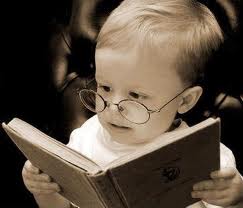
Moving back home can prove to be a challenge for college students.
The earth’s atmosphere contains particles of air that a falling object hits and rubs against as it descends to the earth, causing friction. The object experiences drag or air resistance, which slows it down to a safer entry speed.

You and your returning freshman will have your own version of friction. True enough, your child will experience drag and air resistance, but in the end will not be happy to adjust her life to a safer entry speed. Again, take a lesson from physics in understanding that friction in relationships is, at best, a mixed blessing. In addition to causing drag, it also causes intense heat.

In researching the particulars of space-shuttle descents, I came upon some physical realities that make re-entry safer, and in the case of a college student returning home for the summer, a bit smoother. Any astronaut will tell you that re-entering earth is about attitude control. In the case of space flight, this is not a psychological term, but instead refers to the angle at which the spacecraft flies. I submit that similarly adjusting one’s view of welcoming your college student back home also has to do with attitude control. You and your child are in your own private descent back to family life, and how you adjust the angle of your relationship is the key to success.

Don’t make a rookie mistake and think that loving phone calls and happy Skype sessions while your child is at school will translate into a seamless transition back home. In reality, we parents are the ground crew to our children’s ongoing launches. You and I both know that she’s still under heavy parental support, but it doesn’t feel that way to a daughter who has been in charge of her own schedule for the past nine months. Your child believes she is a high-flying adult living on her own.

We can cull further lessons on our kids’ return to home life by understanding the descent of a space shuttle. In order to leave its orbit, a spacecraft must begin the process of slowing down from its extreme speed. The parties, the 2 a.m. pizza call, the constant flow of company, all of that comes to a screeching halt back at the ancestral home. Just as a spacecraft flips around and flies backward for a period of time to slow down, your college student will need to thrust her life out of orbit to return back to your home base.

The descent through the atmosphere can be a bumpy ride. Once a spacecraft is safely out of orbit, it turns nose-first again and enters the atmosphere in a position akin to a belly flop. The nose is pulled up to what is called an angle of attack, which stabilizes the descent. The lesson to learn here is that friction is inevitable and even necessary to guarantee a safe landing.

spaceship
Landing a space shuttle today is a lot different from landing one of the Apollo missions, of my childhood. In those days, the astronauts returned to earth in their command module and made a dramatic splash in the ocean. Today’s shuttle lands more like an airplane and glides into a landing strip, deploying a parachute to slow it down.

In the end, does the re-entry of your college student look like the big splashdown of one of the Apollo missions or is it the smooth computer-assisted glide of a shuttle landing? We’re still working it out at our house, and the return back from dorm living vacillates between the two, feeling as mysterious as the heavens.


Judy Bolton-Fasman’s Review of Traveling Heavy: A Memoir in Between Journeys By Ruth Behar

TRAVELING HEAVY: A Memoir in Between Journeys by Ruth Behar. Duke University Press. 225pp. $23.95

So much of Ruth Behar’s life story resonates with me. My mother is Cuban, and to paraphrase Winston Churchill, I may be half Cuban and half American, but there are so many times I feel completely Cuban. When I finally went to Cuba last fall, it was like returning to a place to which I had never been. I am the Cubana that Ruth Behar describes in her fascinating new memoir, “Traveling Heavy: A Memoir in Between Journeys,’’ one that is part of an “intensely diasporic people.”

Behar was born in Cuba in 1957 and left the island as a small child. By any measure she is an American success story. With a PhD from Princeton University, Behar is a self-described anthropologist who “specializes in homesickness.” She’s also a MacArthur grantee and a chaired professor at the University of Michigan who has been recognized for her groundbreaking work in Spain and Mexico. Like me, she’s the offspring of the union of Ashkenazi and Sephardic Jewish families.

Image

Behar introduces the reader to her dual ancestry with talismans of Jewish and Cuban heritages and old family photographs. She writes, “In Cuba, the union of my mother, the daughter of polacos, and my father, the son of turcos, was viewed as practically an intermarriage.” That displacement within her own people forges a unique empathy for the communities that she studies and their stories that she records.

As a young graduate student Behar was assigned to a village in Central Spain, a country that is one of the “many abandoned places” in her history. Like my mother, Behar’s father traces his lineage back to medieval Spain. Yet on that early trip she hid her Judaism.

“An instinct of fear and self-preservation had led me to decide not to reveal to the village people that I was Jewish. . . . I figured they’d be more deeply shocked to discover I was a descendant of the expelled Jews of Spain.”

Three decades later, Behar returns to Spain as a proud Jew for the worldwide reunion of the Behar clan in Béjar, home to a notable Jewish community before 1492. In what she describes as the first world summit of Behars, she meets people with her surname who came from North America to Australia and she finally lays claim to her Sephardic roots. In Spain she and her fellow Behars “travel light, letting ourselves be blown back to our scattered destinations.”

But in Poland, another homeland, she travels heavy. Her beloved grandmother, Baba, entrusts her with a thick memorial book from Goworowo, a town near Krakow. The book details a community annihilated by the Nazis, and includes her great-grandfather’s unpublished memoir. Knowing that her granddaughter the anthropologist is also a chronicler of family lore, Baba entrusts the book to Behar, and she takes it with her on her misty, gray tour of Poland as both a guide and talisman.

But Cuba is where Behar travels light with happy memories. Compared to the heaviness of Poland, Cuba is a place that she says, “resonates with joyous images of cigars, mojitos, salsa dancing and pristine beaches. . . . Cuba is seen as a multicultural Caribbean island where Jews were never persecuted.”

Although the majority of Jews left Cuba in the years after Castro took power, there remained a remnant community, which over the past decades has been revived due to the largesse of the American Jewish community. Behar looks at the revitalization of Cuban Jewish life as an anthropologist, but her personal journey back to the island she left as a little girl is the heart of this “memoir I snuck in, between journeys.”

Published in the May 7 Edition of the Boston Globe

Wonder: A Consideration of RJ Palacio’s Book for Jewish Disabilities Month by Judy Bolton-Fasman

If you read only one book this year with your kids, that book should by Wonder by R.J. Palacio. The book moved me to tears. The story begs to be read aloud with kids because you’ll want to stop after each short chapter to catch your breath and discuss the clear-eyed issues of bullying and notions of beauty that it raises.

Wonder

Wonder is the fictional story of August Pullman, a ten year-old born with a profoundly disfigured face as a result of chromosomal abnormalities. August, or Auggie as he is known, has endured 27 surgeries that may have scarred his face, but have not touched his pure and sweet soul.

Auggie is homeschooled until his parents decide it’s time for him to enter the greater world via the fifth grade at Beecher Prep. Middle school is an emotional minefield particularly for a kid like Auggie. What makes Wonder unique is that Auggie not only has inner reserves to draw on, but also has a family who supports him. This is not to say that his family is perfect, which is one of the very affecting and real touches that abound in the story. Fissures develop in his parents’ relationship over what is best for their son. How many of us as parents have disagreed with our partners about raising our children.

Palacio’s gentle realism unfurls into optimism.  Stories about unusual kids who crave to fit in with their peers are often heart breaking. They come with a particular kind of loneliness that can be dystopian in its fear of abandonment and isolation. Auggie has a particularly tender relationship with his older sister, Olivia. This is a sister and brother who deeply love each other. But Olivia is very human too and when she enters high school she seizes the opportunity to start anew. That fresh beginning includes not being the sister of the kid with the ugly face. At one point, she goes to great lengths to exclude Auggie from attending a play at her school. One of the notable things about Wonder is that there is no judgment. Palacio not only empathizes with Auggie, but also with the people in his life.

No amount of direction from the well-meaning middle school principal prepares Auggie’s classmates for his disfigurement. When Auggie first arrives in school, his classmates avoid him. No one wants to sit next to him in class or be his lab partner. He’s shunned in the lunchroom until a classmate named Summer takes him under her wing. Summer is a fascinating character. She’s one of those sturdy girls who doesn’t aspire to be in the popular crowd. Girls like that aren’t as rare as some young adult literature would have us believe. Summer doesn’t have a disability and she’s not agonizing over how to fit in. She’s simply herself and at the end of the day she wins over her classmates without being invited to the right parties.

And then there is Jack, Auggie’s ally in school. Jack had been selected by the principal to shepherd Auggie through his first few days of school. The task is wrenching for Jack who is genuinely torn between liking Auggie and fitting in with classmates who refuse to touch Auggie for fear of getting “the plague.” Auggie and Jack’s relationship takes a sharp turn when Auggie overhears Jack telling another student that he would rather be dead than look like Auggie. Therein is one of the great takeaways of this book.  There are people who love Auggie who are not always kind to him, showing the range of humanity inherent in all of us.

In a recent interview with Slate magazine, Palacio explained that the idea for Wonder came to her after she and her two young sons saw a girl with a facial condition similar to Auggie’s at an ice cream parlor. Her three year-old began to cry and her older son was shocked. Palacio immediately left with her kids to spare the little girl’s feelings. But the incident haunted her and she pondered what she could have done differently. “I was really disappointed in my response,” she said.

It took me a whole book to figure out the answer, which has since been confirmed for me by parents of kids who look like Auggie. I wish I’d had the courage to turn around and look at the girl at the store. Even if my son kept crying, I should have just said, “I’m sorry, my son’s not used to seeing people like you. What’s your name?”

By the end of the book the characters have regrouped, as many kids in middle school are apt to do. Auggie’s perseverance pays off and most of his classmates have softened their attitudes. Grit is a critical message to impart to our kids, but perhaps more importantly so is kindness.

Sh’ma – Listen by Judy Bolton-Fasman

Sh’ma Yisrael Adonai Elohanu Adonai Echad.

shma
Even an assimilated, lip-synching Jew like my father knew those first six words of Judaism’s central prayer—a prayer tucked into Jewish liturgy morning, noon, and night. Words that are emblazoned on the Jewish psyche.

The prayer of prayers, that’s the Sh’ma. It’s the prayer that turns the tables on the petitioner by asking her to stop and to listen—to stop and to hear. It’s the prayer I said as a child every night before I went to sleep. It’s the prayer that was always punctuated with my mother’s breathless “amen.” My father, on the other hand, stood at his usual spot by my door doing exactly as the prayer asked. He listened. He heard.

Saying the Sh’ma during the day becomes a cry, a plea from God to listen, but I’ve said the Sh’ma so many times in my life when I meant: Listen. To me. God. There is no one else to turn to. And I, in turn, at different stages in my life, have strained to hear God’s still, small voice. But in the end, I know that I have God’s ear, even as God remains silent. Silence is God’s voice, just as water is God’s color.

When I recited the Sh’ma each night, the six short words cleared space and reined in time. The Sh’ma created a spotlight of comforting silence. It was the spotlight of the hall light that my parents left on, illuminating a path to the bathroom or their room.

Sh’ma Yisrael Adonai Elohanu Adonai Echad.

I implored God, with all of my heart and soul, for someone to stop and hear me.

I also bargained with God for joy and gladness. What if I promised to stop flushing my vitamins down the toilet or to cease hitting my sister in the middle of the night because she was asleep and I wasn’t? Would God give me the sweet silence of a family listening to the television or riding contentedly in the car? Would God finally send quiet and its silent partner, peace, to my unhappy family?

The Sh’ma has always been a prayer of the night for me—a time when strictly defined identities blurred into dreams or nightmares. Yet, at night, identities can also be blurred into something softer, sweeter. At night, my strict, seat belt-wearing, MacArthur-sunglassed father would often stand vigil at the foot of my bed, looking out the window, presumably to keep track of the weather. But, really, he was there to listen, to monitor my asthma. My father came to my room like an explorer—flashlight in one hand, a pitcher of water in the other. He’d fill up the vaporizer to steam me back to health.

When my ragged breathing eventually calmed down, my father hummed his preferred liturgy—Viennese waltzes and Gilbert and Sullivan operettas. Listen. Hear. Understand my soul, he telegraphed with his music. For me to breathe normally was to hear his favorite tunes, to be lulled by them. Listening to him was a crystalline, multi-faceted moment when I was in synch with him. My silent recitation of the Sh’ma spun around us like the delicate yet strong silk of a spider’s web.

I thought I had outgrown the Sh’ma as a teenager. I fell asleep to Top 40 crackling from an AM transistor radio I hid under my pillow. I swapped prayer for Sylvia Plath and Emily Dickinson. At night, I was the ghost of Cathy from Wuthering Heights, pretending to scratch at my bedroom window, asking for God to listen to me. I stopped listening for God.

Sh’ma Yisrael Adonai Elohanu Adonai Echad.

When I finally had my own children, I took out the Sh’ma like a favorite childhood blanket. I’d calm my squirming, crying children with the shhh of Sh’ma. That shushing also soothed me into believing that God was listening again, that God was hearing my prayers again. The Sh’ma was a call around which every other prayer and wish rallied. A prayer beyond words. The Sh’ma announced God’s presence to me.

Sh’ma Yisrael Adonai Elohanu Adonai Echad.

The Sh’ma was the first movement of a Symphony of Silence. It was movement towards God’s embrace. I have heard snippets of that symphony throughout my life. I heard it when I fell in love with my future husband. I heard it when the heads of my children crowned inside of me. I heard it in jarring moments during my father’s long, slow death. Every one of his incremental declines was like the short steep falls from which I would awake just before I hit the ground.

I yearn again and again for a primal connection to God. The older I am, the more I realize that establishing a connection to the divine is surprisingly prosaic. Prayer takes practice, and practice is repetition to which we always say “amen.” In Hebrew, the word for practice shares the same root as the word for amen—both of them reach back to the Hebrew word for faithemunah. I like this mingling of the work-a-day and the divine. It feels very real to me.

Sh’ma Yisrael Adonai Elohanu Adonai Echad.

When my father died, and I said the Kaddish, the mourner’s prayer, every evening for a year, I said the Sh’ma along with it. Once again, I was a child; the Sh’ma was a touchstone in a dark, bewildering night, and God was listening.

This essay was originally published by the Hadassah-Brandeis Institute

How to Parent a Kid Smarter Than You Are by Judy Bolton-Fasman

The first rule is to never let the kid see you sweat. When your kid is smarter than you are (and aren’t all kids smarter than their parents), perfect your comeback. This is critical. Think of it as a one-size-fits-all response, although in reality your retort will be more like one-size-almost-fits-all. Mine is: “Save it for the Supreme Court.” My children often run concentric circles around me in an argument. I never succumb to temptation and tell them “Because I’m the mother.” This is lame—you know it, and your kid knows it.

Bribery works; I’m not above it and neither should you be. It has circumvented many stalled arguments in my house.  Just about anything is bribable with younger kids. Finishing all your peas, successfully going to the potty, staying in bed until a parent is ready to wake up. Promise him a toy, a movie, a playdate at Chuck E. Cheese. I think it’s a fair tradeoff for a bit of peace and quiet. Older kids are trickier and more expensive to bribe. But for your kid, who is almost certainly smarter than you are, bribery might be the way to go before her logic exhausts you. Yes, that shirt at Urban Outfitters can be yours. There are exclusions: no electronics or personal digital assistants. Does your 15 year-old really need an iPhone? Is he expecting breaking news from his stockbroker?

smartkid

The kid who is smarter than you are can jump and twist through loopholes like a gymnast. And don’t be surprised when your kid finds these loopholes in your arguments quicker than a tax accountant. Be prepared to plug those holes even if you have to be irrational. But don’t threaten to lock your kid in his room until he’s 35. Hyperbole makes you look foolish. Remember you’re the parent and you have the final word, but don’t tell that to your kid.

Homework is a convoluted problem in our house. My children do it, but sometimes the distractions of YouTube and Facebook extend doing homework into the wee hours of the morning. When I threaten to take away the computer, Adam will gleefully tell me that he can’t do homework without access to the Internet. I grudgingly admit that this is partially true since assignments are posted on-line. And yet just when I think I’ve cornered him—can’t you make note of your assignments and then work off-line—he’ll walk right through a gaping loophole and mutter something about teachers posting work at different times. He makes it sound as if his teachers are living in different time zones.

Under no circumstances should you say, “I’m not made of money” or “I don’t have a money tree in the backyard.” Your smarter-than-you-are kid will point out simple biology. People are composed of flesh and blood and cells and DNA. Trees only bear fruit, silly Daddy. And whatever you do, don’t spell. It doesn’t matter how young the child is. Somewhere along the line, this child who is so much smarter than you are, learned to spell while you were distracted.

If speaking in a foreign language is an option for you, don’t assume your kid won’t understand—especially if your smart kid is learning that language in school. Unless it’s your first language, when your kid asks you how to say words like “engulfed” or “mission accomplished,” you probably don’t know. Take me as an example. I speak a kitchen Spanish and I read the language at a fourth or fifth grade level. Your very smart kid knows this when he asks you to help him translate a Borges story. After all, it’s fun for them to see you squirm in a language that was once your secret code.

When you tell your very smart daughter that to be treated like an adult she must act like an adult, she’ll say something like she can legally buy cigarettes and a lottery ticket. Refrain from telling her that in the old country she would have been running a farm and pregnant with her second child at her age. You’ll look and sound ridiculous. (Remember hyperbole always backfires with the smarter-than-you-are kid).

Don’t lie to your child about your checkered past. Since this is a family paper, suffice it to say your kid knows you had boyfriends or girlfriends and that you may have tried cigarettes in the past. Simply tell the child that you are happily married or more mature and that you are a former smoker. All you can do is pray that your kid doesn’t repeat your folly by justifying that if you did that stuff so can she.

Please note again that retorts rarely work so don’t make a sweeping statement like “Someday you’ll understand when you’re a parent.” Kids can’t see that far ahead. You’re smart enough to know that. And you’re smart enough to know that your very smart kid is just that—a child or a young adult casting about for experience. Remember that, please, because you’re the parent and you have to.


Not the Boy Scouts of My America

My children knew to speed ahead of me the other day when I spotted a scoutmaster and his troop at a rest stop on the Massachusetts Turnpike. They knew I had been building up a head of steam about the Boy Scouts of America all weekend.

Before I tell you about Ryan Andresen, a 17 year-old boy denied his Eagle Scout award because he’s gay, we need to go back to this past summer when the Boy Scouts once again came out as the homophobic organization that it is by reaffirming their policy of excluding gay boys and men from their troops. To give you a sense of the BSA’s creepy mission, the organization describes itself as “one of the nation’s largest and most prominent values-based youth development organizations.” The BSA claims to help boys develop character and assume responsibilities that, one presumes, go beyond helping little old ladies cross streets. This is an organization that proudly asserts that it “has helped build the future leaders of this country by combining educational activities and lifelong values with fun.”

But not if you’re gay. The Boy Scouts have put considerable thought and effort into discriminating against gay boys and men. Last July the Associated Press reported that, “after a confidential two-year review, the Boy Scouts of America emphatically reaffirmed its policy of excluding gays.” The BSA double speak that came out of this weird, top-secret cabal croaks that while it doesn’t “proactively inquire about the sexual orientation of employees, volunteers, or members, we do not grant membership to individuals who are open to avowed homosexuals or who engage in behavior that would become a distraction to the mission of the BSA.” Before we move on remember that the BSA’s mission is to teach values and have fun. Whose values they espouse is anyone’s guess. But I think it’s important to point out that homosexuals don’t take a vow to be gay. Homosexuals are born that way. They have no more control over whom they are attracted to than they do over their eye color or anything else having to do with genetics.

Now that we have that basic biology lesson out of the way, I want to get back to Ryan Andresen from San Francisco. Ryan joined the Boy Scouts when he was six-years old and was recently up for Scouting’s highest honor—the Eagle Scout award—after he completed his Eagle Scout Project. Ryan had mounted a 288-tile “wall of tolerance” in a middle school to support victims of bullying.

According to a community newspaper in northern California, shortly after Ryan came out this summer he was denied his Eagle Scout badge. His mother Karen Andresen was not going to stand by and watch her son be bullied by the BSA. She took Ryan’s cause to national television and told an NBC reporter that

I want everyone to know that [the Eagle award] should be based on accomplishment, not your sexual orientation. Ryan entered Scouts when he was six years old and in no way knew what he was. I think right now the Scoutmaster is sending Ryan the message that he’s not a valued human being and I want Ryan to know that he is valued … and that people care about him.

As of this writing over 350,000 people care enough about Ryan to sign a petition Karen Andresen posted on change.org which says in part that, “when leadership in Troop 212 (San Francisco Bay Area) found out that Ryan was gay, the Scoutmaster said he refused to sign the official paperwork designating Ryan as an Eagle Scout.”

I am among the thousands of people who care about Ryan. I am among the thousands of people who don’t want our children to suffocate in a closet, who are fed up with telling our young people to paper over their identities with “don’t ask, don’t tell” policies.” Shaming our children for who they are is wicked.

I don’t doubt that there are good men in scouting who care about the boys under their tutelage. In fact, the man that my children were so sure I was about to harangue was collecting donations for our troops in Iraq and Afghanistan on a Sunday afternoon. I asked him if his good works were also on behalf of our gay troops. He didn’t miss a beat when he told me he knew exactly what I was referring to. He had read about Ryan Andresen too and disagreed with the decision not to award him his Eagle Scout badge. “We don’t discriminate in our troop,” he told me.

Yet he wears the uniform of an organization that actively bans openly gay boys and men from participating. It’s time that we do more than sign Karen Andresen’s petition to protest against the recalcitrant Boy Scouts. Until the BSA changes its anti-gay, anti-humane policy, no synagogue, church or school should sponsor a Boy Scout troop.

If you think I’m being extreme, just substitute the word gay with Jewish or Catholic or Latino and then get back to me.


Grandparent Wannabees and Daughters’ Fertility

I am not a grandmother — yet! But my friends who are blessed with grandchildren tell me that grandparenthood is equal parts pure love and complete wonder. Some even tell me they wish they could have skipped parenting and gone straight to grandparenting. I can’t wait.

Or maybe I can.

According to an article published last May in The New York Times, eager grandparents are taking their daughters’ fertility into their own hands by paying for egg freezing. In today’s world of reproductive technology, it’s never too early to harvest viable ovaries for the delicate, sometimes elusive eggs that represent potential grandchildren. As parents watch their single daughters get older, they worry that their children will age out of their reproductive years. Biological clocks are not simply ticking, they’re booming as loudly as Big Ben.

Before I get into the details, I should note that freezing your daughter’s eggs is not an extreme alternative for a particular kind of mother. Back in the day, when I was closing in on 30 without a single marriage prospect, I don’t doubt that my mother would have considered taking me to a fertility clinic for the sake of her own grandmotherhood. Truth be told, I love that I have a feasible option in case my daughter’s baby timeline is not exactly in synch with mine — or biology’s. And if she’s on the other side of 35 without a partner, she can still be a mother if she so chooses.

Perhaps at this point I should mention I may be getting ahead of myself: My daughter is only 18.

In that same New York Times article, Rachel Lehmann-Haupt, a journalist and the author of “In Her Own Sweet Time: Unexpected Adventures in Finding Love, Commitment and Motherhood,” calls the negotiations that happen when grandparents advocate for egg-freezing “the post adult-birds and the-bees-talk.” It’s telling that the article does not mention that after years of romantic disappointments, Lehmann-Haupt decided to freeze her eggs at 35. As she recounts in her book, at $15,000 it was not a cheap choice, but for her, it was an essential alternative.

Lehman-Haupt came of age in the mid-90s, when another journalist, Sylvia Ann Hewlett, caused a stir with her book, “Creating a Life: What Every Woman Needs to Know About Having a Baby and a Career.” Hewlett set 35 as a firm age by which to have a first baby. She may have had biology on her side (after 35 a pregnancy is routinely treated by physicians as high-risk), but her ideas couldn’t be reconciled with modern love and 21st-century life. Lehmann-Haupt saw Hewlett’s clarion call to start a family earlier as a hard proposition and was determined to draw “a new roadmap of [women’s choices].”

Lehmann-Haupt’s decision to take charge of her fate and freeze her eggs is part of a growing social revolution chronicled on Web sites like RetrieveFreezeRelax.com, founded by Jennifer Hayes, and Brigitte Adams’ Eggsurance.com. Hayes notes that most women “are still under the impression that the process has a very low success rate. That was true five years ago. Not so anymore.” Eggsurance.com, the more impressive of the two sites for its depth of knowledge — including step-by-step guidance for women who freeze their eggs — has a tag line that sums up the goals of women who want to take explicit control of their fertility: “For proactive women who want to ensure they have the option of having children — just not now.”

For all the progress that reproductive technology has made in the last decade, the American Society for Reproductive Medicine still considers egg freezing experimental. But as the science continues to be refined the label is bound to change, and so too are the emotions attached to the process. What hasn’t changed is that a significant number of women want to become mothers — and they will go to great lengths to make that happen. Egg freezing was still an unproven technology when Lehmann-Haupt was in her early 30s, but I predict it will eventually become the gold standard that frees women to become mothers regardless of their timing or relationship status.

I may be ready for grandchildren, but I am, in every permutation, pro-choice. If that includes my daughter bypassing motherhood for her career and her passions, then that’s her business. I just want to go on record as saying that I am available for babysitting when the time comes.

Swimming in the Sea of Parenthood

There are a few universities and colleges in this country from which I could never hope to graduate. These schools require matriculated students to pass a swimming test. I do not know how to swim. And I am terrified of making my way into water in which I cannot stand with my head above the surface.

Before World War II, passing a swimming test was part of the curriculum in many US universities and colleges. But by 1982, passing a swimming test was mandatory in less than 10 percent of them. Anna is matriculating at one of the holdout schools. Not a problem for her. I made sure that both of my children learned to swim at a very young age.

And, yes I’m aware that in the old-fashion parlance of the Talmud, a father is required to teach his son three things: The Torah, a trade and how to swim. That’s as great a blueprint for success as I could have hoped to devise. It presents a child with opportunities for spiritual fulfillment, financial security and self-protection.

My girl has to swim a few laps and then off she dives into her college career. I can remember the first time she put her face in a pool. She was 4, and my husband wisely said it was time for her to learn to swim. Off went my little girl to summer camp, where she’d have proper lessons. I never went to summer camp, and we all know the consequences of that missing link in my life.

I wasn’t so sure I wanted my little girl to go to a big-kid camp. But it was a camp that had a prekindergarten division with the sweet name of Owls’ Nest. Within days, she was proficient in the survivor’s float (known as the dead man’s float until someone wised up). Soon enough, she flipped over and floated on her back. I was amazed. I was relieved. My kid could swim. Almost.

The next summer my daughter graduated to two hours a day of instructional swim. Rain or shine – minus thunder and lightning – she was in the pool learning the breaststroke and the crawl. This was one way I measured that my girl was getting bigger and stronger. But then one day she got in the car and expressed my worst nightmare: “Today my counselor jumped into the pool with his clothes on to save me.” Then she asked me something mundane like what was for dinner that night.

When I got home, I found a message from the camp. Anna was never in danger. Her counselor saw that she had ventured into the deep end and scooped her up before she was literally in over her head. The word “save” was not mentioned. Later in the evening, my girl started grumbling that she didn’t want to go back to camp, and she certainly didn’t want to swim. I, the nonswimmer, knew she had to get back in that pool.

I’m reliving the arc of my child’s swimming story because it mirrors my feelings about my first child going to college. Once upon a time, swimming was completely new to her. It was a skill that challenged her and, at moments, frightened her. Ultimately she triumphed, and now, like the old cliché, she swims like a fish.

As for me, I still struggle mightily, learning to tread water in the shallow end. Right after Anna’s scare in the pool, I thought the camp was trying to cover up that she almost drowned. But soon after, I realized that she was never in danger. It just looked that way. So much parental worry stems from emotional perception.

Thirteen years later my little girl is going to a big school. I daresay she’ll pass her college swimming test. To say this is a time of transition for our family is a bit like thinking of Moby Dick as a big fish. But I have made sure she can swim. Take that as you will and apply it to other skills. I believe that my husband and I have invested in her academic success by supplying her with an education in which she has been challenged and has ultimately thrived. So, I suppose you could say that we’re well on our way to teaching her a trade by giving her a college education.

On the spiritual side of things, all we can do is hope that her Jewish day school career will emerge at various flashpoints during her college years. You can’t teach a child to be observant or to take the Torah into her heart. You can only instruct her in Torah so that she can make meaningful choices about her spiritual life.

And so it began with the doggy paddle in the shallow end of the pool at a preschool summer camp and ends with swimming laps in an Olympic-size pool in a large university. That’s as good a metaphor as any, about parenting a child who is leaving home.

Review of Hostage: A Novel by Elie Wiesel

For over half a century, Elie Wiesel has eloquently expressed the moral, spiritual, and physical fortitude it took to survive Auschwitz. “Night,” his classic memoir about the atrocities of the Holocaust — both personal and universal — not only established a literary canon, but also unequivocally proved the transformative power of words.

Fifty-seven books later, Wiesel’s writing is no less influential. “Hostage,” his newest work to appear in English, is a novel set in 1975, just three short years after a radical Palestinian group murdered 11 Israeli athletes at the Munich Olympic Games. Yet terrorism is still not integral to the American lexicon and acts of terrorism are wholly foreign, literally and figuratively, to Americans.

Shaltiel Feigenberg’s random abduction in Brooklyn, N.Y., forever jettisons any notions of American safety or even normalcy. Shaltiel is the eponymous hostage, and through his stream of consciousness, Wiesel focuses on the raw motivation of his abductors. Although taking a hostage in New York is more profitable than in Tel Aviv or Paris or London, Shaltiel’s captors are not looking for money: “That they could get more easily and with less risk. Others give the money. They are interested in playing their part in the life and history of Islam.” They are interested in glory and immortality.

Who understands that impetus better than a storyteller? Shaltiel Feigenberg is a professional storyteller, a man who reveres language and memory. Like the Torah from which he derives inspiration, his work honors both written and oral histories. A reader may come to the novel thinking that a storyteller as the main character, particularly a character that has so many obstacles to overcome, strains credulity. But this is a multilayered story, encompassing large swaths of history, which Shaltiel weaves into the novel.

Shaltiel’s tormentors, a radical Italian mercenary and a dedicated Palestinian revolutionary, have dubbed his kidnapping “Operation Storyteller.” Notable as the first “operation [carried out] on American soil,” this kidnapping also demonstrates that terror, “that refined prison of modern times,” extends beyond the four walls of a cell to infiltrate the mind.

Wiesel uses Shaltiel’s abduction as a successful framing device. Intermittently tortured and taunted to disavow the Jewish people, Shaltiel has a lot of time and space to reflect on his life story. Born in Romania, he was a child prodigy at chess whose skill caught the eye of an SS officer. In an unusual arrangement, Shaltiel, his father, and cousin were hidden in the officer’s house in exchange for unlimited playing time with the boy. Although bloodless, the chess scenes are a form of mental torture and Shaltiel the child is acutely aware of how important it is to pace his victories over the German. “How can one entrust wooden pieces with the life and death of loved ones?” asks the young boy.

Wiesel’s ultimate aim — his life’s work — is to present the unique and organic lessons of the Holocaust to successive generations. To make testimonies of survivors available and cogent to a generation that may never meet a Holocaust survivor or personally hear testimony about the concentration camps. Through Shaltiel, the lessons of genocide gain traction and currency. “‘Never again’ becomes more than a slogan,” writes Wiesel. “It’s a prayer, a promise, a vow.”

But a novel about a terrorist act that took place almost four decades ago has its pitfalls. Shaltiel’s imprisonment feels oddly retrospective, blunting some of the heightened emotions. Yes, Shaltiel is treated brutally both physically and mentally, but the tension never reaches a fever pitch. Throughout much of the novel Shaltiel feels more like an envoy of the Jewish people than the victim of a brutal crime. And “Hostage” falls just short of psychological thriller or political novel. Ultimately, though, Wiesel’s story is a paean to the strength of memory and the words that express it. In the end, “Hostage” is its own renewed prayer, promise, and vow.

This review was originally published in the August 24, 2012 edition of the Boston Globe

Judy Bolton—A Mom Detective Who Kept Her Kids Safe in Cyberspace

I share my family name, as well as a penchant for snooping, with “Judy Bolton, Girl Detective,” Fictional Judy was the star of her own mid-twentieth century mystery book series. Judy lived smack dab in the middle of Pennsylvania where, surprisingly enough, there was no shortage of mysteries to solve. In all thirty-eight of her books, her snooping was always for the good and welfare of her family and friends. When I became a mother, I snooped for the good and welfare of my children.

Now that they are older, I don’t snoop in my kids’ lives very much. And I have never snooped because I have an unsavory curiosity about other people’s lives. (Though I will sometimes eavesdrop at the table next to me in a restaurant to figure out if a couple is on a blind date). I snoop for interesting stories. I snoop for inspiration to write those stories. I snoop to unknot the mystery of other lives as well as my own. Snooping comes with the territory of being a writer.

While I had no qualms about rummaging around in my children’s lives, it occasionally got me into trouble. When my daughter was 12 she said that I worried over nothing and that I didn’t trust her. Shealso  said that I was nosy.

It’s true. I do worry over nothing until I have something about which to worry. She’s right that I didn’t trust her when she was the tender age of 12. But I didn’t trust because she was too young to understand how quickly the world can turn scary and dangerous.

I prefer to think of myself as curious. And once upon a time my curiosity mostly focused on my children’s computer activities or the dialed and received log on their cell phones. When my children were old enough to have screen names, I ran a benevolent dictatorship. This meant that I was not always right, but I was never wrong. Each month they were required to show me any on-line friends’ lists.

The first rule was that my kids had to know everyone personally—in the flesh—anyone with whom they had an on-line relationship. All the better if I knew them too, but I hadn’t met all of the sleep-away camp buddies. So for 12 and up, I trusted, but only just a little. Under 12, I had to know everyone on a list. No exceptions. This rule, in place like cement, was instituted to prevent my kids from coming into contact with someone they had never met. This rule, to use a word that we used early and often since the dawn of pre-school, was non-negotiable.

I also reserved the right to walk in at any time that my children were on the computer and ask with whom were they chatting on-line or what was new on Facebook. Speaking of Facebook, they had to friend me or do without it. If the spirit moved me, I would also ask what they had just typed. Did I mention that I ran a benevolent dictatorship?

All bets were off for a virtual chat room. This was expressly forbidden and would result in the revocation of computer privileges until the age of twenty-five.

Before they were freshmen in high school and old enough to have laptops, my kids had individual accounts on our family computer so they could access the Internet for homework and pre-approved game sites. Each of their accounts had a filter so that a typo would not send them to God knows where in cyberspace. I always knew the passwords to their accounts or to anything else in their lives. If they somehow managed to get on to a commerce site and try to buy something, the dictatorship was no longer benevolent. Luckily, this never happened.

My children never seriously abused their Internet privileges because they knew I meant business. As generous as I am with them, and believe me I am still generous to the point that it sometimes annoys my husband, they knew that I would not tolerate any infractions with regard to the Internet. Just ask my son about the time he hacked into my account and wrote an e-mail to his teacher to excuse him from an assignment. His third grade grammar gave him away and the teacher immediately notified me that he was e-mailing her under my name. What followed were not good days for my boy.

But I never fully warmed up to being a dictator—benevolent or otherwise. I took unique pride in saying that my children were spoiled, but not rotten. Yet, when it came to snooping for their wellbeing, I held my ground.

I think my parents, particularly my father, named me with the hope that I would develop a curiosity that was both intellectual and empathic. Building on my father’s dreams for me, I taught my children to be as curious and responsible as my fictional doppelganger.