The Banana on the Seder Plate

bananabanana.jpgThe moment I saw artist Nicole Eisenman’s seder plate at the Jewish Museum gift shop in New York, I had to have it. Its simplicity gives way to cheekiness. Its bold black lettering and mud-red glaze give it a funky vibe. And the symbols on the seder plate are described in a straightforward, childlike language. My favorite description calls the charoset—the edible stand-in for the material the enslaved children of Israel used to make bricks—“cementy stuff.”

The most declarative symbol on the plate is the bone—the place for the zeroa, or roasted shank bone. That particular object is there to remind seder participants of the 10th plague—the killing of the Egyptians’ firstborn sons—and it screams for attention on this seder plate.

Nicole Eisenman Seder Plate with Pouch

And while this is a dream of a seder plate, there are newer ritual food objects to join the old standbys. The first is an orange. This is a tradition that goes back to the 1980s, when an early feminist Haggadah suggested the radical act of placing a crust of bread on a seder plate in solidarity with Jewish lesbians. Unfortunately the message was that gay Jews were made to feel as if they violated Judaism, like eating bread at Passover. So Susannah Heschel came up with the idea to replace the bread with an orange. In an essay she wrote a few years ago for the Forward, she explained:

“When we eat that orange segment, we spit out the seeds to repudiate homophobia and we recognize that in a whole orange, each segment sticks together. Oranges are sweet and juicy and remind us of the fruitfulness of gay and lesbian Jews and of the homosociality that has been such an important part of Jewish experience, whether of men in yeshivas or of women in the Ezrat Nashim.”

A relatively new tradition on my seder plate is the inclusion of cashews. This is the brainchild of Rabbi Wesley Gardenswartz, senior rabbi of Temple Emanuel in Newton. A few years ago, Rabbi Gardenswartz saw a sign in CVS asking customers to buy bags of cashews for our troops in Iraq. A CVS employee, whose son was on his second tour of duty there, spearheaded the idea. She explained that salted cashews kept the men and women serving in a desert climate hydrated. The next Shabbat, Rabbi Gardenswartz urged his congregation to honor our troops by including cashews on their seder plates.

Now comes the year of the banana. For 3,000 years the Haggadah has reminded us that we were once slaves, and it commands us to experience the Exodus from Egypt as if we had actually gone through it ourselves.

This is where the banana comes in. Like the slaves we were in Egypt, so too are we Syrian migrants fleeing for our very lives. We too are the parents of the little boys—brothers who were 3 and 5—who drowned on an Exodus gone horribly awry. Their mother drowned with them, but their father survived the harrowing journey. In his grief this father remembered how much his boys loved bananas.

Bananas are not easy to come by in war-torn Syria, but every day this father brought his boys a banana to share. Its sweetness was not only a treat, but also a symbol of his deep and abiding love for them. Is this man so different from us? Is he so different from our ancestors wandering in the desert? Did the Israelites make life a little sweeter for their children on their traumatic journey with bits of hard-to-come-by fruits?

In the spirit of Nicole Eisenman’s original plate, what would an updated seder plate convey about these new and sacred ritual objects? Here are my suggestions and their meanings:

  • Orange: cherishing one another
  • Cashews: solidarity
  • Banana: we are all migrants

What would you add to your seder plate?

A Letter to President Obama from the Daughter of a Cuban Exile

Dear Mr. President:

Your trip to Cuba is a dream, a miracle, a revolution to me. Never did I dare to fantasize that in my lifetime a sitting U.S. president would be shaking hands with Cuban officials at José Martí Airport — the airport my family used to escape Fidel Castro. Yes, Mr. President, I am a child of refugees. Although my Cuban mother came here just before Cuba’s iron curtain clanked shut, the same desperate, fierce homesickness that claimed my refugee relatives overtook her as well.

As a teenager, my uncle left Cuba two months after the failed Bay of Pigs invasion. Although on the older side, he was part of the Pedro Pan rescue operation — a CIA undertaking that arranged to airlift children out of Cuba. Many of them were placed with American families. My uncle was lucky. He had an older sister, my mother, waiting for him.

But he almost didn’t make it to America. He was on a Pan Am flight that was suddenly grounded by the Cuban military who claimed there was a draft dodger on the airplane. We’ll never know if it was my 19-year-old uncle they were after, because the pilot declared the aircraft sovereign American territory and took off without permission from the tower. My uncle shakes each time he tells the story.

I was born in my American father’s hometown in Connecticut in December of 1960 as diplomatic relations with Cuba were deteriorating. My grandmother, my Abuela, arrived from Havana to care for my mother and me. She adjusted to the Connecticut winter mostly by rocking me and singing me lullabies in Spanish and her native Greek. (Yes, Mr. President we are a family who hopscotched its way to the United States, but Cuba is where we left our hearts). After three months, she decided it was time to go back to Cuba. My mother pleaded with her to stay and family lore has it that she took the last Cubana Airlines flight out of Idlewild Airport.

I can’t begin to tell you how often I heard my mother softly cry, Hay Cuba, como te estrañò — Oh Cuba, how I miss you, how I long for you. That longing for Havana, for its sea wall along the Malecón — it colored my childhood. I finally walked the Malecón four years ago.

I was overwhelmed with emotion when I arrived at José Martí Airport. The ghosts of my grandparents, who finally left Cuba for good two years after I was born with one small suitcase between them, haunted me. I thought about how they shut the door of their home on almost three decades of life and set out for yet another migration. I went to their house in old Havana. I finally saw the marble stairs I had heard so much about. I saw the heavy wooden door my grandfather still had the keys to in his last exile. He carried those keys until the day he died, believing he was going back to Cuba. The current occupants were kind enough to let me in for a look. They wouldn’t take the money I offered them for their hospitality. They told me this was my home too, and I broke down and cried in front of them. Hay Cuba como te estrañe — Oh Cuba, how I missed you.

Mr. President, you will undoubtedly notice that Havana is like an aging beauty queen. So is my mother who is now marooned in a nursing home wheelchair. When she calls me to tell me that you are in her city, she can barely contain her excitement. Wistfully, she asks me if she will again see a Havana without a Castro in power before she dies. All I can tell her is that you made a return to her country feasible. No matter how remote the possibility that her health will allow her to go back, you have given her hope. Se lo agradezco, and I thank you with all my heart and soul that you have opened up prospects for peace with Cuba for my children.

Felicitaciones,
Judy Bolton-Fasman

This essay originally appeared on Cognoscenti, the ideas and opinion page of WBUR, Boston’s NPR news station — http://cognoscenti.wbur.org/2016/03/22/obama-in-cuba-judy-bolton-fasman

Barbie: New and Improved? by Judy Bolton-Fasman

I’d like to think that Mattel’s introduction of three new body types for the iconic Barbie doll — Petite, Curvy and Tall — is the company trying to make amends for the emotional tsunamis thin, busty Barbie has caused over the decades. To further diversify her, Barbie will also come in seven skin tones and sport 24 new hairstyles. There will be a redheaded Barbie, a curly-hair Barbie and even a Barbie with long blue locks. Yet according to a recent Time magazine cover story on Barbie’s transformation, in little girls’ minds, Barbie is still Barbie and they overwhelmingly identify her as blonde and thin.

The cynic in me knows that Barbie’s makeover was mostly a business decision. Barbie, pardon the very bad pun, is a cash cow. According to the Time article, she does a billion dollars in annual sales across more than 150 countries, and 92 percent of American girls ages 3 to 12 have owned a Barbie at some point.

I … was a short, chubby girl who wouldn’t dare to imagine even coming close to looking like Barbie. It didn’t make me sad exactly, just resigned.

But in the last four years, Barbie has seen her sales lag. In October, Mattel announced a 14 percent global drop in Barbie sales, the eighth consecutive quarter in which profits fell. Barbie’s poor performance is somewhat explained by the fact that Lego has introduced toys aimed at girls who are aspiring engineers and Hasbro has cornered the market on Disney Princesses; two years after “Frozen,” Elsa continues to be a top moneymaker for the company. Also, figure in the negative impression that many millennial moms have of Barbie.

Barbie and I go way back. She came into my life when I was 6-years-old and bedridden for three months. She was a gift from my aunt who also gave me some of Barbie’s exquisite miniature outfits. I went on to collect dresses, bathing suits, and my favorite — a bridal gown. I kept Barbie’s clothes in what I thought at the time was the most gorgeous wardrobe in the world — a small black patent leather case with a handle to transport her and her clothes anywhere and everywhere.

Barbie didn’t look like anyone I knew. That was not a surprise considering she had impossible measurements, perfect hair and immaculate makeup. I, on the other hand, was a short, chubby girl who wouldn’t dare to imagine even coming close to looking like Barbie. It didn’t make me sad exactly, just resigned.

This file photo provided by Mattel shows a group of new Barbie dolls introduced in January 2016. (AP)

Barbie was born fully grown with a checkered past in 1959. She was the invention of Ruth Handler, who named her after her own daughter. Barbie and Handler courted controversy from the beginning when Handler based Barbie’s body on a curvaceous German doll named Lilli. Lilli was often handed out at stag parties as a gag gift. Among Barbie’s other controversies is a book that accompanied her in 1963 entitled, “How to Lose Weight,” which included explicit instructions not to eat. Ten years after playing with my first Barbie, I took that advice and subsisted on Popsicles and saltines for a year.

I have no doubt that I was similar to the subjects in a comprehensive 2006 study of young girls 5 to 8. Researchers found that “early exposure to dolls epitomizing an unrealistically thin body ideal may damage girls’ body image, which would contribute to an increased risk of disordered eating and weight cycling.”

Bingo.

Barbie’s body transformation comes on the heels of a chameleon life in which she has had over a hundred careers ranging from rock star to presidential candidate. She’s been a medic in Operation Desert Storm. She’s been black, Hispanic and even a devout Jew. But after all these years, I still don’t see myself in any of those versions of Barbie. Like the little girls who test drove these new Barbies, I still identify her tiny waist and her perfectly coiffed blonde tresses as hallmarks of the Barbie I know.

And the new Barbies will not pierce her plastic mask of perfection. She still has no paunch, no wrinkles and no thick ankles. Damn her!

And the new Barbies will not pierce her plastic mask of perfection. She still has no paunch, no wrinkles and no thick ankles. Damn her! Only her wide hips constitute body diversity — hips that are the norm for most women. A number of commentators have noted that Barbie’s feet have finally been leveled off so she can now wear flats as well as stilettos. No doubt that will add to the over one billion pairs of shoes she has owned.

I imagine a day when we’ll see Barbie in a wheelchair, or using a walker, or walking on a prosthetic leg. But I suspect she’ll never need a hearing aid or an insulin pump. Her hair, all 24 versions of it, will never frizz. She will never have a pimple or even a freckle. Despite all the angst she’s caused, she remains maddeningly aloof. And she reminds us that women will always find something wrong with their bodies.


This essay originally appeared on Cognoscenti, the ideas and opinion page of WBUR, Boston’s NPR news stationhttp://cognoscenti.wbur.org/2016/02/04/barbies-new-body-judy-bolton-fasman

First They Came for the Muslims by Judy Bolton-Fasman

If things become absurd enough, out of control enough, and quite frankly tragic enough, then my friend N and I have a date to register as Muslims together. It will be my only acknowledgement of Donald Trump’s racist mandate to humiliate our Muslim sisters and brothers, our fellow Americans by asking them to wear a metaphoric armband.

The Holocaust continues to teach us lessons about inhumanity. It was not so long ago—in fact in many of our parents’ lifetimes—that Jews were required to come forward in Germany and then throughout Europe. What followed in just a few short years was one of the most horrific ruptures in history.

N and I met at the all-boys private school our sons first attended in seventh grade. Beyond the classroom, our sons gravitated to each other in the debate club, on the soccer field and in chorus. That was the year that my son, one of the few Jewish boys in the class, soloed ‘Deck the Halls’ in the annual Christmas Concert. N and I laughed at the irony. On the soccer field we talked about peace in the Middle East. N, originally from Pakistan, said how much she wanted to see all of the religious holy sites in Israel. Although I understand the rationale behind it, I didn’t have the heart to tell her that if we traveled together to Israel she would be searched and I would not. Perhaps she, in turn, didn’t want to think about the reception my Israel-stamped passport would receive in Pakistan and other Muslim countries. We were simply friends, confidantes and mothers. On Christmas, our boys were among the minority of the minority, not celebrating the holiday. They went to the movies and played video games at N’s house on Christmas Eve.Our boys are now freshman at large universities. But during those early soccer games, N and I wondered out loud if their friendship was a tiny step towards peace.

I tell you this not to demonstrate my liberalism, but to share my humanity. I panic when I think of the kind of world Trump and others want to impose on my children, on N’s children. I think of the plight of Danish Jews during the Holocaust. Contrary to popular legend King Christian X and his subjects did not wear a yellow Jewish star, but neither did the country’s Jewish citizens. No one was labeled.

I just came back from Israel. My time there was in the midst of a terror spree. N texted me to make sure I was safe. That is what our friendship is about—we put aside stereotypes and engage with each other as sisters, as mothers, as women. We’ll often bring up customs in our respective traditions that challenge us. N only covers her head in the mosque. I try and figure out the world through my egalitarian Judaism. N and her family spend Rosh Hashana and Passover with us—it’s a holiday that brings back to her special memories of her beloved elderly neighbor who taught her how to make gefillte fish. We’ve both tasted the bitter herbs of our traditions as well as the sweetness of hope that we find in them.

A writer once described herself as “complicated with Judaism.” I am also complicated with my Judaism as well as with N’s Islam. I repurpose Rev. Martin Niemölle’s famous, poetic speech about the cowardice of Germans who failed to speak against the Nazi persecution of the Jews to my own time. If I do not speak up for my Muslim friend, who will be left to “speak up when they come for me.”

This op-ed originally appeared in the December 11, 2015 issue of The Jewish Advocate

Introducing Abby Stein by Judy Bolton-Fasman

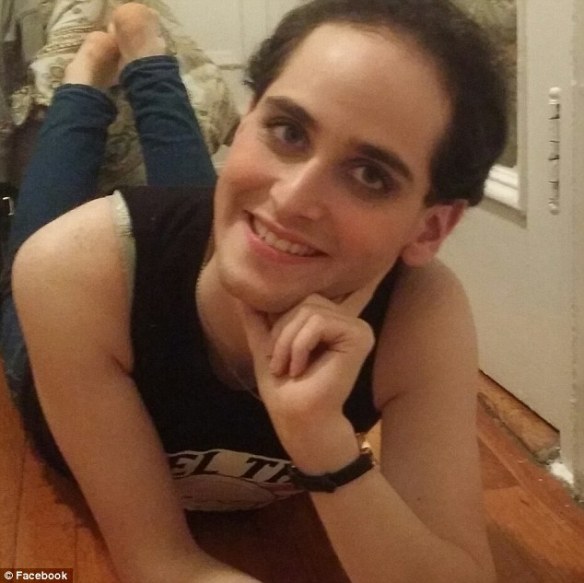
The first thing that Abby Stein wants the world to know is that she did not leave her ultra-Orthodox community solely to become a woman. Since she came out this past August, Stein has been garnering attention as the transgender ex-Hasid. Although she acknowledges that the two events in her life are “intertwined,” she says her initial leave taking from her Hasidic sect “had to do with beliefs. I was done with Judaism, and for over a year, I had nothing to do with it.

AbbyStein

Abby Stein

Stein chronicles her transgender experience and her religious transformation on her moving blog, The Second Transition. In one of her first posts she wrote, “[t]here is something amazingly relieving about ‘knowing’, knowing and coming to terms with the reality I have been trying to run away from for years — I am a girl.”

The Last Chapter by Judy Bolton-Fasman

This week in Jerusalem a new normal has taken over the city. It’s a tenuous calm that prevails until I notice a lone man walking towards me with his hands in his pockets and I instinctively pick up my pace. But friends here don’t see the new normal as a nod to peace. One woman tells me that she is more frightened now than she was during the second intifada when buses were being blown up. She could better calculate then the risk she was willing to take by shopping in a crowded market or riding the bus home from work. This time, there is no obvious calculus for safety. It is a time fueled by the arbitrariness of panic and adrenalin.

This was also the week President Clinton was in Tel Aviv to remember his friend Yitzhak Rabin on his 20th yahrtzeit. Clinton spoke in the square that commemorates the late prime minister—the square where an Israeli Jewish zealot gunned down Rabin. The various estimates I’ve seen of the crowd’s size for the memorial—numbers that range from 40,000 to 100,000—tell me that many Israelis not only mourn Rabin, but also mourn the dashed hopes for peace in the wake of his death. Clinton’s charge to the crowd— “to decide when you leave here tonight…how to finish the last chapter of [Rabin’s] story”—was pointedly singular in its directive.

Clinton’s words especially resonate during this current rash of violence—a violence that is both blurry and distinctive for its randomness. These polar states of fuzziness and clarity are also the underpinnings of coexistence in Jaffa, a mixed town at the southern edge of Tel Aviv. The Arabs call this very old city Arous al-Bahr—the bride of the sea. Arabs and Jews have always lived here together. Pre-statehood the majority was Arab, but in the beginning of 1948, even before Israel’s War of Independence, Jaffa collapsed when its wealthier Arab residents and community leaders sought refuge in places like Lebanon and Syria. Jaffa surrendered and was taken over by a Jewish majority. Today the city is part of the Tel Aviv-Jaffa municipality.

Coexist

Coexistence in Jaffa is neither violent nor friendly. There are no knives here, nor are there any olive branches. Jews and Arabs live alongside each other leading parallel lives, except for the Jews who step out to eat the famous hummus on Abu Hassan Street. Soldiers on furlough comfortably stroll the cobbled streets. The old flea market here has given way to trendy clothing shops and art galleries.

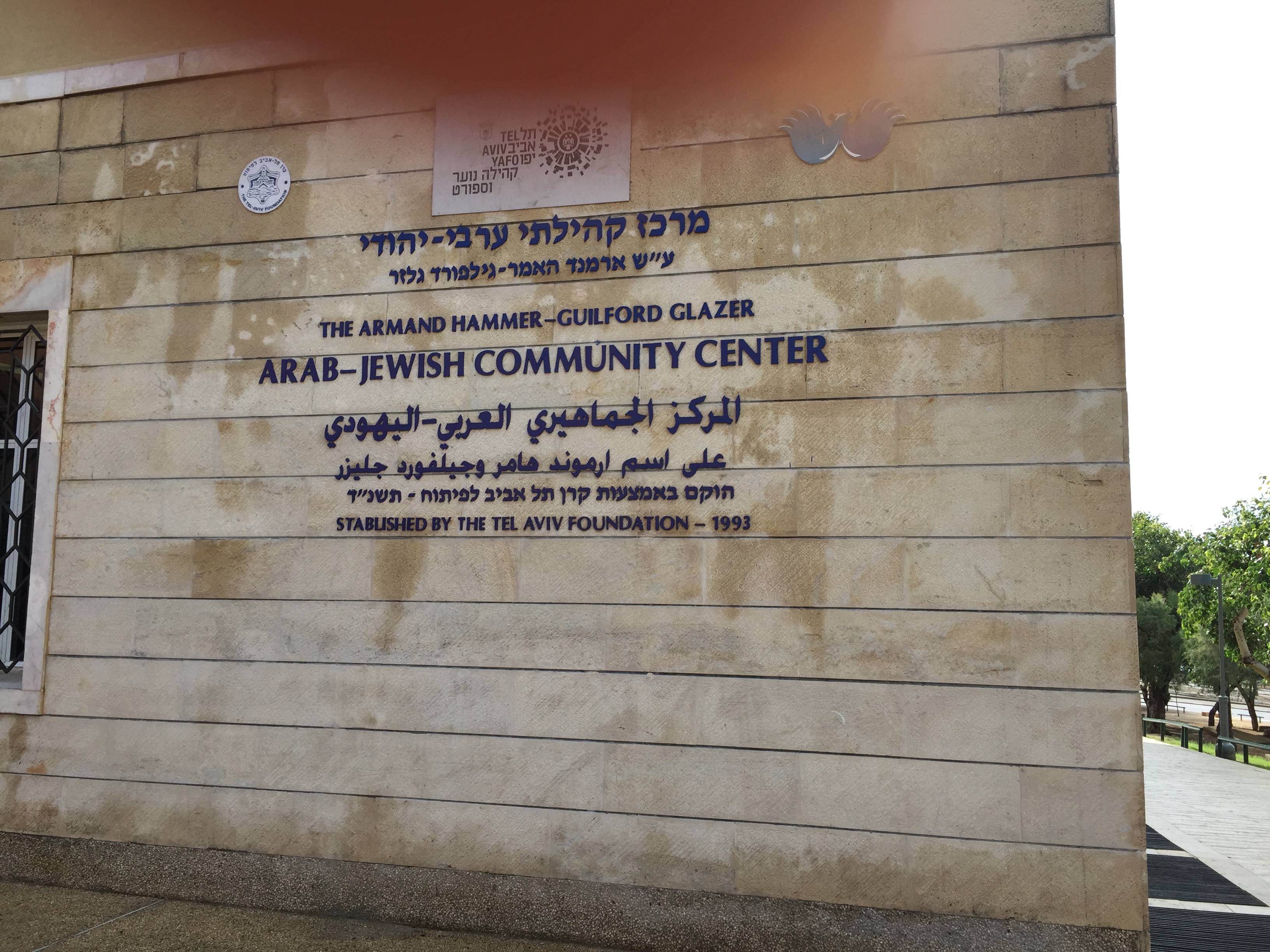
I brought an Israeli friend with me to Jaffa. He jokingly calls himself my fixer, which means he acts as both tour guide and steadfast translator during my afternoon in the city. We walk the streets of Old Jaffa taking in the sea, eating the freshest hummus I have ever tasted, and making our way to the Arab Jewish Community Center (AJCC) in the Ajami section of Jaffa. It’s a 20-minute walk from the city center and along the way we see another kind of blending—ramshackle houses just yards away from expensive condominiums.

AJCC2

Founded in 1993, the AJCC is a cornerstone of this Arab neighborhood. It aims for the look and feel of an American Jewish community center. It offers school children and teenagers after school programs called chugim or electives that range from dance, gymnastics and martial arts to tutoring in the newly constructed library.

The AJCC,, which also aims to undo the de facto segregation of Israeli society, is not unique in that quixotic goal. What is different is that the Tel Aviv-Jaffa municipality underwrites part of the center’s expenses. According to a staff member at the center no other overt peace initiative has that kind of city government funding anywhere in Israel.

In addition to the various chugim, the AJCC sponsors classroom exchanges between Arab and Jewish schools, a youth parliament that focuses on diplomacy and three choirs that perform their own ecumenical outreach. Numbers are important in these endeavors. The activities are purposely populated with an equal number of Arabs and Jews, and tolerance is the watchword associated with them.

It may just be a matter of semantics, but I bristle at the word tolerance. I hope and pray Israelis and Arabs go beyond tolerance to loving kindness and ultimately peace. But for now tolerance is how people survive in Jaffa. Still I give the AJCC credit. Its policy of tolerance encompasses a celebration of differences too. Children who would normally not interact with one another come together here. And the center also fills in a vacuum for Arab schools that lack the facilities and funding for extra-curricular activities.

As I left the center I fantasized that the philosophy behind the AJCC’s programs could one day be part of a different, better new normal in Israel. And as I reflect on President Clinton’s words, I think that maybe this is also the place to begin the last chapter of Yitzhak Rabin’s life story—a story that has yet to unfold.

The Situation by Judy Bolton-Fasman

Fear has been my companion in Jerusalem.

Last Sunday I went to the Kotel—the Western Wall–by myself. I was among the few people who braved the rain and the wind to pray and to wish and to marvel. But I was well aware of the boundaries around me. When I went into the Old City, I didn’t cross into the Muslim Quarter. When I walked around Jerusalem’s City Center, I noticed that taxi drivers advertised they were Jewish by flying the Israeli flag atop their cabs.

JudyWesternWall

The other day a Palestinian boy and his blind grandfather begged me for money. “Mrs., Mrs.,” the boy said in Hebrew. “Kessef, money.” I quickened my steps. “No money,” I said in my fractured Hebrew. “Please, Mrs.,” he said in his equally fractured English. He followed me all the way to the café where I was meeting friends. There he conducted a long, convoluted negotiation with my friend, which yielded him 20 shekels or about $5.

“I’m sorry he frightened you,” said my friend.

“I’m sorry I let myself be frightened by a little boy and his disabled grandfather.”

I felt a mixture of shame and relief.

This is the week of the anniversary of Yitzhak Rabin’s assassination by a Israeli right-wing, extremist Jew. This is also the week that Richard Lakin, an Israeli-American who was originally from Newton, Massachusetts, died of wounds he sustained when a Palestinian stabbed and shot him on a bus in Jerusalem. Lakin immigrated to this country decades ago with hope and optimism and advocated for co-existence and peace in this country.

I have promised my husband that I will not take public transportation on this trip. It’s a promise I easily keep because fear keeps me from boarding the Number 18 bus on Emek Refaim, a busy thoroughfare. During the second intifada in 2003, a suicide bomber blew up a Number 18 leaving ten people dead and over a hundred hurt.

I’ve taken to meeting colleagues and doing work in the Grand Café on Beit Lechem Road. Beit Lechem is Hebrew for Bethlehem. It means house of bread, and I have spent my mornings in a house redolent with the smell of bread and coffee and pastries. Every once in a while it occurs to me that it could also be a house of tragedy or even carnage. I tell myself that a stabbing or a suicide bombing is highly unlikely here. Things have been relatively quiet except for the occasional siren piercing the calm. That’s when my mind blows up my fear into the size of a balloon floating in the Macy’s Thanksgiving Day parade.

“Blood is flowing in the streets of Israel,” a well-meaning friend said to me just before I left. Her comment felt like a throwback to the first and second intifadas. But my Israeli friends are adamant that this is not an intifada. That would imply there is some organization behind this latest spasm of violence. But rather these scattered, random acts of violence are borne of pent up rage. A thirteen-year old Palestinian boy stabs an Israeli Jewish boy. A Jewish settler attempts to stab a peace activist, a rabbi who has accompanied a group of Palestinians harvesting olives on the West Bank.

A journalist friend says that this country runs on magical thinking. During the second intifada, her children were small and every morning she made sure to know what clothes they were wearing as a protection, a charm against getting a call to identify their bodies. In that same conversation she casually mentioned that Palestinians are throwing Molotov cocktails a few streets over from her house. She shrugged her shoulders and told me this is how it is these days.

Ireland had “The Troubles” and Israel has “The Matsav” — the situation.

There is an Israeli saying that, “If you were once burned by hot water, you will be afraid of cold water, too.” There is so much cold water rushing around me—Palestinian construction workers, women in hijabs, little Arab boys looking for a handout.

My fear is valid. My fear is exaggerated. I indulge in magical thinking to keep me safe. Maybe tomorrow I will not be afraid.

Three Sabbaths by Judy Bolton-Fasman

Jerusalem is a city with three Sabbaths—holy days that make for a long weekend often rife with prayers and recriminations. This is a beautiful, tense, chaotic, sometimes violent city that comes to a short peaceful halt during the call of the muezzin, the songs of a Shabbat evening, or the tactile recitation on the rosary.

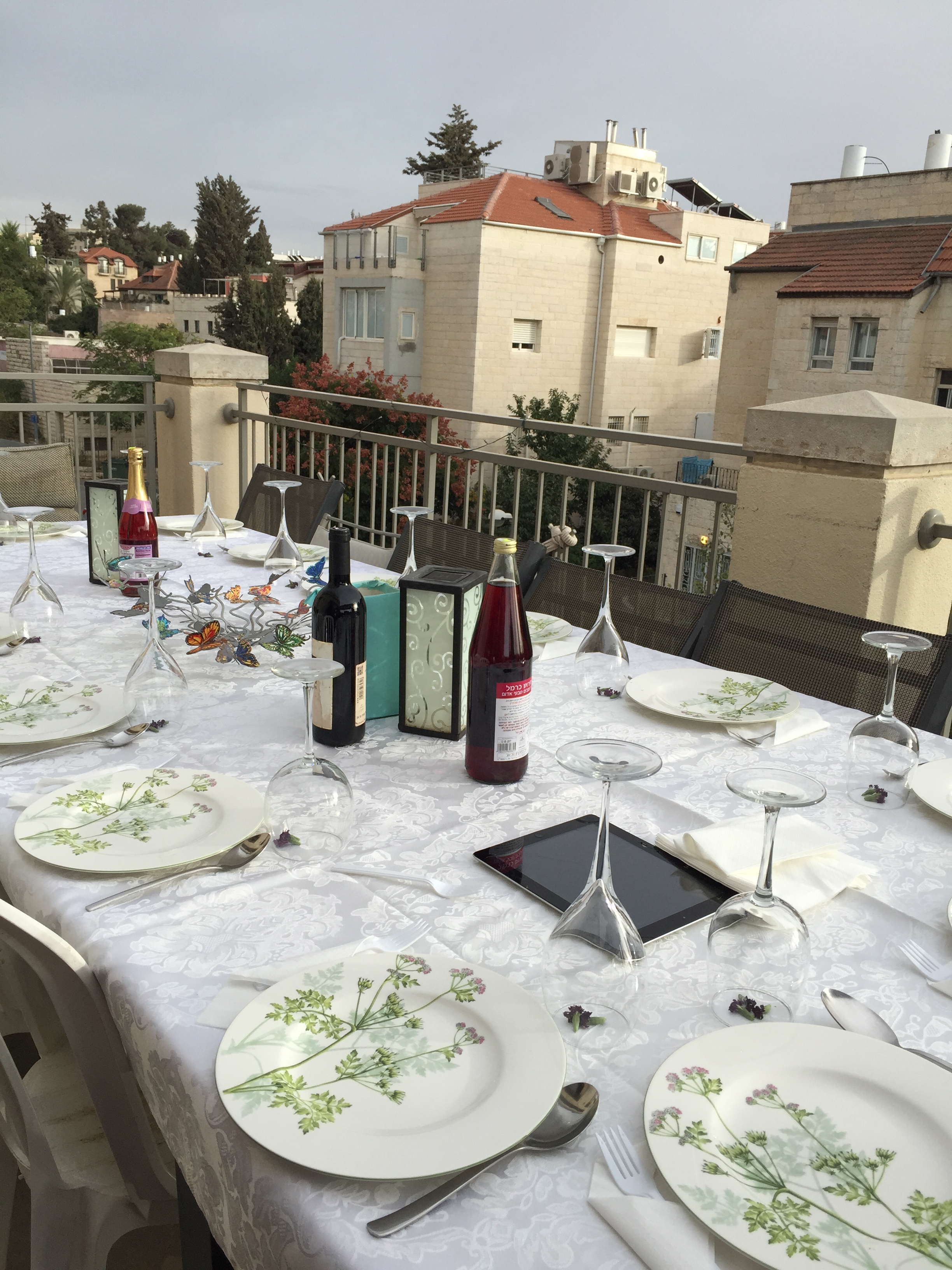
Prayer is a serious, pervasive business in Jerusalem. On a Friday night I sit alone on the terrace of a friend’s apartment in Jerusalem’s Baka neighborhood. The rush to finish all the preparations before the Shabbat siren goes off have left me exhausted and I’ve decided not to go to Kabbalat Shabbat services with my hosts. But Kabbalat Shabbat—the receiving of the Sabbath—comes to me anyway. I hear the traditional songs of the service saturating the night sky from a not too distant synagogue. In the lull, there is the Muslim call to worship, its minor key making the imperative to pray sound doleful. Prayer is a sad, provocative, life and death affair in this country.

Jerusalem Shabbat

One of the descriptors I’ve heard for this latest spasm of violence in Israel is “The Lone Wolf Intifada.” So-named because the Arabs stabbing Jews and the Jews beating Arabs are not acting in concert with any particular organization. This is vigilantism at its fiercest. Israelis are scared. Arabs are enraged. As one friend quipped, “When it’s quiet for 24 hours, we’re almost hopeful that the danger has passed. And then there’s a stabbing and the whole cycle of despair starts up again.”

Despair is not what I feel and yet I’m not hopeful either. At Friday night dinner my friends have a lovely tradition of passing around “angel cards.” Printed on each card are words, in Hebrew with English translation, like friendship, nourishment, synthesis, finding one’s way, truth. The words are a catalyst for conversation. But they are also resonant in the way they are both consoling and provocative.

My angel card bears the word refuah or healing. Refuah shelama—a complete healing—is the Hebrew phrase for wishing someone a full recovery. The most immediate explanation would be to state the obvious: Israel is ailing, hemorrhaging literally and figuratively. Only a refuah shelma can save her. But like the knifings that have been daily occurrences in this country for the past month, the wounds—physical and emotional—are deeper than ever. Later in the night, helicopters hover and sirens wail.

Jerusalem is under attack again, from within.

In Memory of Haptom Zarhum by Judy Bolton-Fasman

I do not speak Tigrinya or Arabic, but I speak the language of grief.

As soon as I was off the plane in Ben Gurion Airport, my best friend Susan and I locked arms, on our way to a Tel Aviv Park to join a memorial, a de facto shiva minyan for an Eritrean man.

That previous Sunday, Haptom Zarhum was killed in the chaos that followed a terrorist attack in a Beersheba bus station. An Israeli security officer shot Zarhum believing him to be the attacker. On the ground bleeding, Zarhum was beaten by an Israeli mob beat as he lay in a pool of his blood. He died shortly after from his wounds.

I do not speak Hebrew, but I speak the language of rage.

Haaretz, Israel’s English language daily newspaper, reported Haptom Zarhum’s death as a lynching. He was just 29 years-old.

In Levinsky Park, families lit white candles with their children. The candles were arranged in the shape of a cross. There was crying, there was keening. Women, with white scarves wrapped around their heads and holding babies, quietly wept. Men openly wailed.

Eritrean Memorial

“It’s good to be together,” an Eritrean woman conveyed to me in a fractured, earnest English.

There are about 40,000 Eritrean and Sudanese asylum seekers in Israel. The Israeli government is unresponsive to their pleas for asylum.

“Sometimes,” an American Israeli woman whispered to me, “I’m so ashamed of my country,”

The Pope’s Chair by Judy Bolton-Fasman

I thought I loved Pope Francis. Like many people I admired him for the way he shunned limousines, skipped out on a power lunch to eat with the homeless and insisted his accommodations always be humble. And while as the head of the Catholic Church he won’t endorse gay marriage, surely there were better people for him to meet on his first trip to the United States than Kim Davis.

Until that rendezvous with Davis, my affection for the Pope also stemmed from the fact that I am a Jew who graduated from an all-girls Catholic high school—the lone Jew in my class. Since then all things Catholic have fascinated me including the vestiges of the mid-50s Catholicism that were still omnipresent in my 1970s high school.

While it’s not typical for most American Jews to attend parochial school, it was a tradition in my family that spoke to our foreignness. My grandmother learned to crochet and speak French in a convent school in Greece. Nuns tutored my mother in literature when she was in high school in Cuba. When it was my turn, I was sent to the Sisters of Mercy at Mount Saint Joseph Academy, a seemingly odd choice for a girl from West Hartford, Connecticut.

It quickly became apparent that I had stumbled into an ecumenical experiment—not only for me, but also for the other girls in my class. I was notably exempt from wearing the school emblem on my blazer, a thick ornate patch of cloth that displayed a cross inside of a crown. I was allowed to sit out chapel services along with the handful of Protestants in my class.

The Mount had once been glorious, palatial. By the time I arrived, it was dull gray wood and fraying maroon velvet. A large crucifix with a half-naked Jesus nailed to it floated above the chalkboards of each of the rundown classrooms. Only a couple of hundred girls, down from an enrollment of a thousand in the Mount’s prime, rattled around the place.

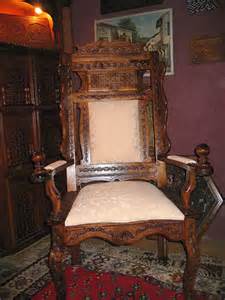
Despite the Mount’s decrepitude there was one room that seemed suspended in amber. In a first-floor parlor, a room whose graciousness lingered along with the cobwebs, there was a chair with an austere mahogany wood back and plush dark red seat, cordoned off with fancy braided ropes. It bore a plaque proclaiming that Pope Pius XII had once sat there during a visit to the school. Someone had obviously still taken great pains to polish the chair’s intricate arms and dust the seat.

By my senior year I had settled into the Mount. My classmates no longer expressed overt sympathy that I didn’t celebrate Christmas. Some had even happily tasted the matzah I brought for lunch on Passover. I was still different, but no longer an outsider. The Mount was my school too. And yet there was the very curious Pope’s chair, an abandoned piece of furniture that was worshipped. And so on a bone-cold winter day—uniformed and knee-socked according to the school’s dress code—I did the most defiant thing a Jewish girl at Mount Saint Joseph Academy could do: I snuck into that parlor and sat in the Pope’s chair.

I’d like to say that at the time I was striking a blow against Pius’ immoral silence during the Holocaust, but I did not know that bit of history until years later. I only knew that what I was doing was provocative, even blasphemous and it felt good.

The longer I sat in the chair, the more my palms perspired and my knees shook, until my lookout, Pauline, reported that the principal was marching down the hall towards us. I bolted out of the chair and hid behind the heavy curtain until it was safe.

My class, the class of 1978, was the last to graduate from the Mount, but the building is a historical landmark—its exterior has to be preserved in perpetuity. For the past decade it has been an assisted living facility with the elegant name of Hamilton Heights. It offers impromptu tours for Mount alumnae, and so on one of my trips back to West Hartford I decided to visit my old high school.

I used the front entrance, which was disorienting. Entering that way was strictly prohibited when I was a student. Tracy, the head of admissions for Hamilton Heights, greeted me in the foyer with a story about an older Mount graduate who came to see the place as a potential resident. She was so overcome with memories of the nuns rapping her knuckles with their rulers that she refused to get out of the car.

The school that had been in such a state of deterioration was now decorated in the false, institutional cheer of silk flowers and bright, cheap art. Tracy and I worked our way from the top of the building where the nuns once lived down to the basement cafeteria. The nuns’ quarters and classrooms had been converted into small apartments. The model apartment I saw encompassed the rooms where I had taken English and history. The gym was now the Alzheimer’s unit. The chapel was a meeting room; the stained glass windows representing the Twelve Stations of the Cross were intact.

On the first floor Tracy stopped at the doorway to a waiting room that I immediately recognized when she asked me if knew why it was called the Pope’s Room. I told her that Pope Pius XII had visited the Mount in the school’s glory years. “I once sat in his chair,” I admitted sheepishly.The Pope's Chair

Now when I see Pope Francis or pictures of his immediate predecessors sitting in various chairs, I think of that iconic Pope’s chair at the Mount. And while I thought this Pontiff had an abundance of loving kindness, (I’m certain he’d forgive me for being a teen-age outlaw), why doesn’t his love extend to our gay sons and daughters as the children of God that they are?