When Yom Kippur Prayers Don’t Help With Grieving by Judy Bolton-Fasman

My father was buried on the eve of Rosh Hashanah 2002 and the holiday began just a few surreal hours after I stood at his open grave. The shiva — the seven-day period of formal mourning — was cancelled to usher in the New Year. With a truncated shiva behind me, I debuted as a congregational mourner on Rosh Hashanah. It was the first time that I said the Mourner’s Kaddish. Arguably, the busiest day of the year in the synagogue, I stood up in front of 800 people to recite the Kaddish — effectively a love song to God whom I felt didn’t deserve my adoration.

The feminist, poet and liturgist Marcia Falk had a similar experience. In 1978, her father Abraham Abbey Falk died midway between Rosh Hashanah and Yom Kippur and her grieving was cut short by the advent of the Day of Atonement. After three days of shiva, Falk braced herself to mourn in a crowded synagogue. But the public face she tried to show faded away when she was confronted with the somber, terrifying words of the Un’taneh Tokef. The thousand year-old prayer, written by an unknown author in Northern Europe, is central to the Yom Kippur liturgy.

In a recent presentation at Brandeis University sponsored by the Hadassah-Brandeis Institute, Falk noted that her ambivalent relationship with the Un’taneh Tokef was the inspiration for her latest book, The Days Between: Blessings, Poems, And Directions of the Heart for the Jewish High Holiday Season.. “The Un’taneh Tokef” she said, “is a listing, a repentance. The message it conveyed to me, five days after losing my father, was that if he had been a pious, righteous and repentant man the decree would have been averted and he would not be dead. No one actually believed that, but nonetheless the words were hurtful and unhelpful.”

Falk described the experience of hearing the traditional Un’taneh Tokef as one that left her feeling “hollow” and then angry.

I remember feeling similarly distressed that the Yom Kippur liturgy did not address my grief. For Falk, though, it led her to her life’s work as a composer of a new Hebrew liturgy — a liturgy expressed in a gender-free, non-hierarchical language. In prose and poetry and prayer, Falk jettisoned the image of God as father, king and ruler and brought a more inclusive voice to wide attention in her opus The Book of Blessings: A New Prayer Book for the Weekdays, the Sabbath and the New Moon..

“The Days Between”, however, focuses on the ten days between Rosh Hashanah and Yom Kippur traditionally known as the Yamim Noraim — the Days of Awe. Falk calls these days by a gentler name: the Aseret Y’mey T’shuvah, the Ten Days of Turning, or Returning. In keeping with that welcoming spirit, there is no image of God as a judge or executioner in these pages. God is a spirit, a force, a benevolent presence in the world. In her rendition of the Un’taneh Tokef, Falk reflects her belief that “our mortality is the core of a spiritual life.” Her interpretation of the prayer begins: “Our lives are stories/inscribed in time./At the turning of the year/we look back, look ahead, see/that we are always/in the days between.

I was most affected by Falk’s rendering of Yizkor, the service of remembrance. She transforms Yizkor from a communal, one-size-fits-all liturgy into something more personal and meaningful by renaming it Ezkor, “I recall.” The traditional liturgy asks God to remember the souls of our dead, but Falk recasts the service as a personal journey in which recollections of our dead are individuated. “’I Recall,’ writes Falk, “offers a way to mourn while acknowledging the fullness of one’s experience.”

There are parallels between traditional liturgy and Falk’s prayerful renditions. For example, in Falk’s Ezkor service, her poem “Beneath the Shekhinah’s Wings” corresponds with Psalm 23. The phrase tahat kan’fey hash’khinah (beneath the Shekhina’s wings) is from El Maley Rahamim, God of Compassion, the hymn customarily recited at funerals.

As I read through Falk’s prose poems and “re-visionings” of the High Holiday prayers, I realized that she has written a machzor, a High Holiday prayer book, for the 21st century that is nothing short of revolutionary. This machzor begins with the beautiful, simple idea of exalting the world around us rather than limiting ourselves to the traditional extolling of God’s name as we do in the Mourner’s Kaddish. In “The Days Between” Falk encourages us to confront our mortality while delving into the richness with which we commemorate our humanity.

A traditional translation of the Un’taneh Tokef

On Rosh Hashanah it is written, and on Yom Kippur it is sealed.
How many will pass and how many will be created?
Who will live and who will die?
Who in their time, and who not their time?
Who by fire and who by water?
Who by sword and who by beast?
Who by hunger and who by thirst?
Who by earthquake and who by drowning?
Who by strangling and who by stoning?
Who will rest and who will wander?
Who will be safe and who will be torn?
Who will be calm and who will be tormented?
Who will become poor and who will get rich?
Who will be made humble and who will be raised up?
But teshuvah and tefillah and tzedakah (return and prayer and righteous acts)
deflect the evil of the decree.

This piece was originally published on the Sisterhood Blog of the Forward on September 30, 2014

Goodbye and Thank You to My Jewish Advocate Readers

Dear Anna and Adam:

Like all of the parenting columns I’ve written for The Jewish Advocate, this final one is dedicated to you. For eight years, with grace, humor and love, you have allowed me to chronicle you growing up. I’ve chosen to end my run as the Advocate’s parenting columnist because like you, I’ve aged out of the subject. I no longer do the hands-on parenting I once did. Anna, you are away for most of the year at college and Adam, you are on the cusp of leaving for school. And you drive! I’m no longer in a carpool – once a natural incubator for nurturing so many of these essays. Your conversations in the back seat inspired me to look further into issues like bullying, adolescent relationships and the general angst which your age group comes by naturally. But most importantly, your thoughts and ideas moved me to look deeper into my soul. Writing about you has led me to what Abraham Joshua Heschel calls moments of “radical amazement.” Simple moments like watching each of you walk into school when you were little.

Anna, I marvel at the young woman you have become. You epitomize wisdom and empathy. When I started writing this column you were 12 years old. These past eight years you became a bat mitzvah, you graduated from high school and you went to college. Attached to those milestones were other significant events, about which I promised you I would never write. That promise is forever. But I admire how you have negotiated relationships and academics with equal aplomb.

Adam, you are a gentleman and a scholar. When you’re around you won’t let me carry the groceries or bring in the pails. You’re as equally comfortable playing video games as you are discussing metaphors in “The Great Gatsby.” You are also the bravest person I know. You have always been forthright about who you are. I was never prouder of you than when you came out this year with such poise and dignity. But I also love that you’re still very much a kid.Nothing makes me happier than when you ask to come into my bedroom to read near me. It’s the best kind of parallel playing!

PuertoRico

I also take my leave of Advocate readers during the High Holiday season. As you might remember from your day school education, the days between Rosh Hashanah and Yom Kippur are called the Aseret Yemei Teshuvah, the ten days of repentance. Last year I did something a bit different to commemorate that time by participating in the 10Q Project. During those ten days, I answered an introspective series of daily emails from the folks at 10Q and Reboot, a Jewish cultural organization that seeks to reinvent and reimagine Jewish rituals and traditions. My answers were then locked in a virtual vault that will reopen three days before this coming Rosh Hashana. I thought it might be fun to answer a few of them here in relation to the parenting column and to you.

The first question was basic, expected, yet somehow hard to answer in the same way that writing this last column is turning out to be. “Describe a significant experience that has happened in the last year. How did it affect you? Are you grateful, relieved, resentful, inspired?” Among the significant experiences I’ve had with this column are invitations to talk to synagogue groups where – surprise – I talk about both of you! I’m so grateful to everyone who has followed my adventures in parenting. So grateful to people who have wished us well over the years. Without readers I’m just writing into a void. It thrills me that you and I are in the hearts of so many people.

Some of the 10Q questions went outside personal experience to “describe an event in the world that has impacted you this year. How? Why?” We talked a lot about the world, particularly about Israel, this past summer. Anna,you worried about how you would make the case for Israel on a college campus. Adam, you grappled with the events in Ferguson. As a family, we said Baruch Dayan Emet (words that are uttered upon hearing about a death) – God is the true judge – too many times in the past few months. You are young adults now with strong opinions of your own. My actions no longer make as deep an impression on you.You must decide for yourselves if God is the true judge or if you even believe in God.

But it was the 10Q question about the future that made me both anxious and hopeful. “Describe one thing you’d like to achieve by this time next year. Why is this important to you?” It’s time for me to take the energy that I’ve put into this column into other projects and causes that are equally dear to me.

But mostly, when I think about the future I think about both of you. I pray for all of us to be healthy, creative and productive. I now realize that has always been the subtext of my columns about the two of you. Everything I do, I do with you in mind. You are my muses. You are the loves of my life. And I thank God every moment of every day for you.

All My Love,

Mom

Advice from a Jewish Mother on Marrying THE ONE by Judy Bolton-Fasman

I’ve been thinking lately about a line in the blessing for every bar or bat mitzvah at my temple, which declares, “And may your proud parents be with you when, in your own time, you stand under the huppah with your beloved.”

The power of that sentiment rests with the key words, “in your own time.” On the face of it, the message is that we’re not rushing our children to marry. But when I dig a little deeper for the subtext of that phrase, I find how crucial marriage is in Jewish life and to Jewish continuity. Its import is such that we begin to remind our children about it on the cusp of puberty.

According to the rabbis and Susan Patton, timing is everything in the marriage arena. Who is Susan Patton? She’s the Jewish mother of two young men and “the Princeton Mom” who wrote a letter to the undergraduate women of her alma mater a couple of years ago, encouraging them to be actively looking for husbands while still in college. Patton’s letter, published in the Daily Princetonian, went viral and according to her new book, Marry Smart: Advice for Finding THE ONE,” it garnered over a 100 million hits on the Internet. From there it was a quick jump to the morning shows and then on to expanding her thesis into a 200-page book.

w-susan-patton-marry-smart-031914.jpgIt’s easy to criticize Patton. She writes in rhythm to women’s “ticking biological clocks,” which she mentions early and often in her book. She tells young women—women just entering college—to think seriously about their life plan if they want to have children. To be smart at 20 is to realize that in 15 short years marriage prospects and fertility are severely diminished.

Whether it’s true or not, Patton makes me want to scream, “Slow down lady!” She writes that, “It’s never too early to start planning for your personal happiness and looking for a husband who will respect you.”

Patton admits that her book is highly anecdotal—a forum really for her blunt instructions on how women can avoid ending up childless and sad in their thirties. Although she acknowledges that her methods are not for every woman, she blithely assumes that ever woman’s happiness is predicated on having a husband and children.

Patton’s advice not only seems plucked from a different era, it’s sexist for the way she puts the onus on women to hunt for mates in college as intensely as she-lions scour the jungle for food. Yet for marriage-minded young women, Patton makes sense to some degree. During the college years there is a ready-to-date collection of age-appropriate men who are intellectual and social equals. Where things get ugly is when Patton tells a young woman she’ll never look better than she does when she’s 20. And if she’s not looking her best she might endeavor to do so with the help of plastic surgery or a serious makeover. But chip away at some of Patton’s ludicrous and sometimes offensive layers of advice on how to reel in a man and I think you have a well-meaning, albeit misguided Jewish mother.

When I walked down the aisle at the age of 30, I knew that I had won the marital lottery. And it’s true that when I looked around at my reception, I saw that a good number of my 30-something girlfriends—gorgeous, smart, talented women who wanted to marry—still hadn’t found their besheirt, their destiny. Over the past couple of decades some have fallen in love and married, some have taken matters into their own hands and become single mothers and some have abandoned their dream altogether of having a family.

At my engagement party, one of my friends asked me “How did you know Ken had the potential to be so adorable?” It only took a good haircut and a trip to the optician to spiff up my handsome groom. Patton would call him a diamond in the rough. Maybe so. But he wasn’t very hard to spot when I was 29.

I probably could have skipped some of the adventures I had in my early 20s. But without those formative experiences would I have been ready for an amazing man like my husband? I can’t answer that with any certainty. Will I sit my own daughter down and tell her that 75% of her time on campus should be spent actively looking for a husband? I don’t think so. But I will echo some of Patton’s advice on our hooking-up culture and the emotional fall-out from meaningless sex. I won’t put it in the same irritating terms as Patton does when she invokes the old chestnut of why buy the cow when she’s giving away the milk for free. Our daughters are not cows.

The big takeaway from Patton’s bluster is that young women should not be afraid or bullied into thinking that wanting marriage and a family is a second-class alternative. What is shameful is not honoring all of the choices that women make for their happiness.

And yes, God willing, I do look forward to being a proud mama under the huppah.


In Memory of the Children by Judy Bolton-Fasman

Roee Grutman, Karen Douglas and Katie Stack: These are the names of the three Newton high school students who took their lives in the past four months.

What is happening to our children? Is the pressure so unbearable that they see suicide as the only alternative in their lives? And where is that pressure coming from? School, home, the playing field? Are their feelings of despair so deeply internalized that we, their parents, only see the usual adolescent angst? I don’t have answers – only deep sadness and raw fear.

There are always statistics to pair with any tragedy. In the case of teen suicide, the statistics are particularly sobering. The Centers for Disease Control (CDC) and Prevention report that for youths between the ages of 10 and 24, suicide is the third-leading cause of death. It results in about 4,600 lives lost each year.

Deaths from youth suicide are only part of the story. According to the CDC, more young people survive suicide attempts than actually die. A nationwide survey of youth in 9th through 12th grades, both in public and private schools, found that 16 percent of students reported seriously considering suicide, 13 percent reported creating a plan and 8 percent reported trying to take their own lives in the 12 months preceding the survey. There are also about 157,000 youth between the ages of 10 and 24 who receive medical care for selfinflicted injuries at emergency rooms across the country each year.

One of the more recent and visible projects addressing teen suicide has been the Internet-based “It Gets Better.” Founded by gay activist Dan Savage and his husband, the enterprise began as a response to the high suicide rate among LGBT (lesbian, gay, bisexual and transgender) youth by featuring gay adults in videos communicating that life improves as kids grow up. The campaign was so successful that there is a dedicated website with more than 50,000 videos made by adults of all sexual orientations encouraging kids to work through hard times because life always gets better.

Efrem Epstein knows about weathering tough times. As an adult, Epstein came out the other end of a severe depression and in gratitude for his recovery volunteered with the American Foundation for Suicide Prevention. In 2009 he was invited to participate in World Suicide Prevention Day, where he saw a number of diverse organizations present programs in their communities in support of suicide prevention. It was a light-bulb moment for Epstein, who realized that there was no Jewish organization dedicated to working on suicide prevention. “I knew I needed to create an organization with Jewish nuances in mind,” Epstein said in a recent interview. The result was the creation of Elijah’s Journey, so named for the prophet Elijah who asked God to take his life after a trying time. In response, G-d told Elijah to take a 40-day journey to rethink his life.

This is one of the text studies that Epstein teaches in synagogue groups, Limmud classes and Hillel programs. He says, “Developing text studies and programs using a Jewish lens opens up the lines of communication about suicide.” In his presentations, Epstein also points to Numbers 11 in which an overwhelmed Moses asks G-d to end his life. G-d advises Moses to surround himself with 70 elders who can share his burdens with him.

In addition to offering Jewish wisdom on the subject, Epstein notes, “These texts highlight the fact that suicide is not new. Biblical characters had suicidal feelings and it is becoming a lot less taboo in the Jewish community to talk about it. Part of the challenge that Elijah’s Journey has had has been to get the word out there. The issue has not been on the Jewish community’s radar. There are 1 million suicide attempts every year resulting in 40,000 actual suicides. But we have worked with synagogues of all denominations to convince the Jewish community that it is a critical issue for the community.”

To introduce its mission into homes, Elijah’s Journey is working on a document for Passover that families can read at their Seder when they open the door for Elijah. “We’re hoping that we can incorporate thinking about suicide prevention into the Seder ceremony,” says Epstein. There also plans to develop information for visiting the shiva house of someone lost to suicide.

For now, though, I’d like to take a moment to say the Mourner’s Kaddish for Roee Grutman, Karen Douglas and Katie Stack. May G-d comfort the families and friends who loved these young people among the other mourners of Zion and Jerusalem, and the entire world.

Mourner’s Kaddish

Yitgadal veyitkadash shemey raba

Be’alma di vera chir’utey

Veyamlich malchutey

Bechayeychon u’veyomeychon

U’vechayey di’chol beit yisrael

Ba’agala u’vizman kariv ve’imru amein Yehey sh’mey raba mevorach le’alam u’le’almey almaya

Yitbarach ve’yishtabach ve’yitpa’ar ve’yitromam ve’yitnasey

Ve’yit’hadar ve’yit’aleh ve’yit’halal

She’mey d’kud’sha b’rich hu

Le’eyla min kol birchata ve’shirata tushbechata ve’nechemata

Da’amiran be’alma ve’imru amein

Yehey sh’lama raba min shemaya ve’chayim

Aleynu ve’al kol yisrael ve’imru amen

O’seh shalom bimromav

Hu ya’aseh shalom aleynu ve’al kol yisrael

Ve’imru amein

Magnified and sanctified be Your name, O G-d, throughout the world, which You have created according to Your will. May Your sovereignty be accepted in our own days, in our lives, and in the life of all the House of Israel, speedily and soon, and let us say, Amen.

May Your great name be blessed for ever and ever.

Exalted and honored, adored and acclaimed be Your name, O Holy One. Blessed are You, whose glory transcends all praises, songs and blessings voiced in the world, and let us say, Amen.

Grant abundant peace and life to us and to all Israel, and let us say, Amen.

May You who establish peace in the heavens, grant peace to us, to Israel, and to all the earth, and let us say, Amen.

Hey Jude by Judy Bolton-Fasman

Fifty years ago the Beatles came to America and told gaggles of screaming teenage girls, “I wanna hold your hand.” But I first heard the song at my uncle’s wedding in 1967. I was the six year-old flower girl with the plastic daisy crown that wanted to dance all night because the Beatles told me that, “Yeah, you got that something.” When my uncle and I twisted and shouted all the way to the ground, I was the little girl who was certain that she twisted “so fine.”

 Beatles

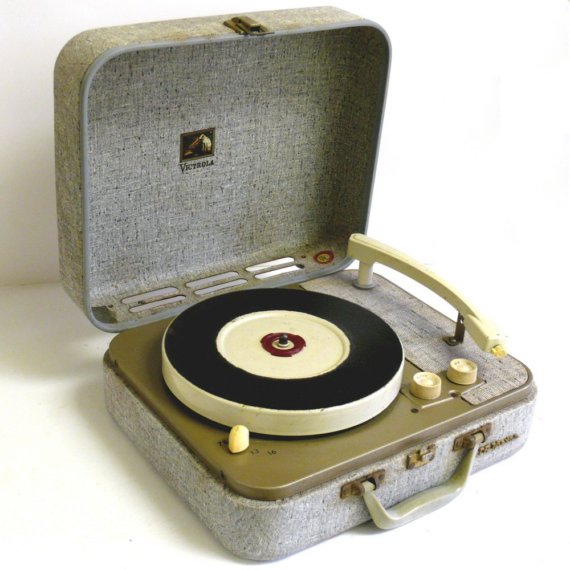
The gray suitcase record player that my uncle and my new aunt gave me for my birthday came with a 45 RPM record with Yellow Submarine on Side A and Eleanor Rigby on Side B. I played Yellow Submarine over and over, dancing and spinning and dizzying myself into black star-flecked space. “We all live in a yellow submarine.” But I also lived at 1735 Asylum Avenue in West Hartford, Connecticut, where my much older father had altogether different and old-fashioned taste in music.

Dad cued up Gilbert & Sullivan operettas, Straus waltzes and John Philip Sousa marches on the gleaming hi-fi console in the living room. On random Sundays, particularly in the summer, he marched my brother and sister and me around the house to the rhythm of Sousa’s brassy, piccolo-inflected music. Over the blare of tubas and trumpets, my father conducted us as we waved small American flags. Dad, the standard bearer of our patriotism, carried a large flag with only forty-eight stars.

Dad kept the car radio in the ’65 aquamarine Chevy Malibu tuned to WRCH, the station that claimed to play “rich music.” Neither classical nor popular, WRCH broadcast the cascading string music of Ray Coniff and Henry Mancini. Pop music occasionally poked through my father’s repertoire. He bought me 45 RPMs of  “The Ballad of the Green Beret” and “Winchester Cathedral.” I listened to the former with the reverence of taking in a prayer that I didn’t quite understand. The latter was a goofy vaudevillian tune with sliding whistles and muted trumpets.

My young Cuban mother sang Guantanamera, the de facto anthem of Cuban ex-pats the world over, morning, noon and night. Before I discovered the Beatles, the Cuban crooner Beny Moré was the closest I came to dancing to rock ‘n’ roll. On cold Connecticut afternoons, my mother played Beny’s music. “Soy Guajiro,” Beny sang. I was a peasant too. I mixed uneasily with my father’s refined second generation Jewish-American family.

In those days my homesick mother danced in place as if she were afraid to move even further away from Havana. The pleated gold Ed Sullivan Show-style curtains gave our beige and brown living room theatricality. I pretended to be the lead singer of Beny’s orchestra. I also imagined the Beatles one and only Hartford performance, taking place at 1735 Asylum. The Fab Four would sing a rendition of “Love Me Do” that would harmonize with the audience’s teenage screeching.

My mother also loved Nancy Sinatra singing, “These Boots Were Made for Walking.” Mom had a sleek shiny pair of black and brown boots that fit her like a second skin. She’d hum the song as I helped her pull off the boots. And I believed that, “One of these days these boots are gonna walk all over you.”

The Beatles, though, were mine alone.

recordplayer

Before I packed up the gray suitcase record player forever, I played the one 45 single that the Beatles wrote just for me. “Hey Jude, don’t carry the world upon your shoulders.” But I did. Images of the Vietnam War mingled with my parents’ domestic feuding. The women’s movement helped my mother go back to graduate school to wage her own War of Independence. And I was on the verge of growing into a sulking, moody teenager. But that was okay according to the Beatles. “For well you know that it’s a fool who plays it cool by making his world a little colder.”

Sunrise, Sunset: A Son Rises

These days I shade my eyes and look into the distance from my almost empty nest, remembering not only the “firsts” my children did, but also the last moments of actively parenting kids who were once wholly dependent on me.

As I write this on a snowy Wednesday, I go back to the moments when snow days guaranteed me snuggling time with my Anna and Adam. They’d flop into my bed and I would luxuriate in how small they were – small enough so that three of us had room to spare in my king-size bed. Adam is a young man and Anna is away in college. The empty bed feels gigantic.

Time blurs from the first time Adam and Anna tentatively rode away on bicycles to the first time they sat behind the wheel of a car. It whips by from the time I could carry my kids to the moment that Adam gives me his arm so I don’t slip on the ice. Adam’s childhood effectively ended for me the first time he wrested a shovel from my hand and cleaned up the walk in half the time I could have done it. It dawned on me that my son was physically stronger than I was as I watched him heave piles of wet snow so effortlessly.

My son shaves his face. My daughter catches a ride back to school with someone I don’t know. Adam navigates his way downtown on the T. Anna calls the doctor to refill her prescription. These were things that I used to do for them. When that first tooth fell out, I played the tooth fairy and slipped a dollar bill under their pillows when I was sure they were deeply asleep. I miss tucking them in at night. I miss reading to them. What was the last book I read to them? What was the first “grownup” book they read to lull themselves to sleep?

Once, I knew everything about my children – from their sleep habits to their favorite foods. Now I stand on the periphery watching them change and grapple with adulthood. I’ve witnessed Anna’s heart break. In these last years Adam has shot up 11 inches straight into manhood. My children are building their own identities; I hope Ken and I gave them a solid foundation.

Which brings me to Adam. A couple of months ago, I was reading the paper on a Saturday morning, debating whether I should go to synagogue or catch an early movie. Adam was up uncharacteristically early. He always sleeps through a weekend morning. But I could tell there was something on his mind. That particular day, Ken slept uncharacteristically late. It was just my boy and me, and I noted his strong jaw line, the soft stubble on his face. I saw so much of Ken and me in him. He was on his way to becoming the gentlest of men, just like his father.

Ken finally came downstairs. Adam suddenly stood in front of us and said he needed to say something. He shifted his weight from one foot to the other. “What is it, buddy?” Ken asked. “I’m gay,” said my son. “And we adore you,” I replied.

My children know that there is nothing that they can say or do that will make me stop loving them. My children also know that claiming their identities is a cause for celebration in our house. Just last summer, Ken’s brother Glen married his longtime partner Roger in a beautiful ceremony on a perfect summer evening. His wedding picture takes its place on my mother-in-law’s shelf among the photographs of his two brothers and their brides.

I learned a lot from my in-laws about having a gay child. When Glen came out, they immediately found support at PFLAG (Parents and Friends of Lesbians and Gays). PFLAG was founded in 1972 by a mother who simply wanted to support her gay son publicly. My in-laws quickly found their footing at PFLAG meetings and were dismayed at the stories they heard from gay children rejected because of who they were.

It demonstrates how far we have come as a society that Ken and I feel we don’t need a rudimentary education in having a gay child. Adam is one of the only boys in his all-male school that is out and his friends and teachers have been notably supportive of him. His rabbis have told him how beloved he is at temple and how they support his choice to love whom he wishes.

“Sunrise, sunset, swiftly fly the years … I don’t remember growing older; when did they?” goes the old song. God willing, my daughter will make a life with a man she loves and so will my son. And each day that they mature, I love them more than ever.

Thanksgivukkah and Anatevka by Judy Bolton-Fasman

It had been forty years since my last violin lesson when I went this summer to rent a violin to start up again. I glimpsed the stock room where there were hundreds of violins, still and gleaming and soundless, coming together in a symphony of silence.


It’s funny what the body remembers. As soon as I tucked the violin under my chin, I automatically started the fingering of a Vivaldi concerto in A Minor on the violin’s graceful, ebony neck. There was no sound played, just my fingers making contact with the steel strings.

My father and grandfather loved playing the violin and they wanted me to love making music too. Each of them practiced with me often, and one of my earliest memories is of my father tucking my tiny, quarter-sized violin under his chin to tune it. He aimed to give me, his tin-eared daughter, a fair start.

My violin tuned, my dad then perched the small instrument on his lap. “I can’t believe they make them this small,” he said. By his own description he had me “later in life” and I imagine he said the same thing about me when I was born.


I started violin lessons when I was eight. When I was fourteen I handed my father back the full-sized violin I had finally grown into. I was not a musician.


My Grandfather Bolton also began violin lessons when he was eight. His family cut the household budget razor-thin to give their promising young son music lessons. When Grandpa touched bow to strings his parents heard his talent and though they may not have understood it that way, my great-grandparents sensed that Grandpa’s musical ability coupled with America’s social mobility would enable him to move ahead in this country at dizzying speed.

At the age of 14, my grandfather debuted at a tony Connecticut country club. In his unpublished autobiography he wrote that he went to his first gig in a sleigh and was woozy from the cold until someone warmed him up with a hot toddy. It was the first time he was drunk.

My grandfather chronicled his sparkling immigrant story on legal-size loose-leaf pages. Grandpa’s faithful secretary typed draft after draft of a book he simply entitled Memoirs. With each pass, Grandpa further sanitized his history, hoping to make his life as all-American as the cars he drove.


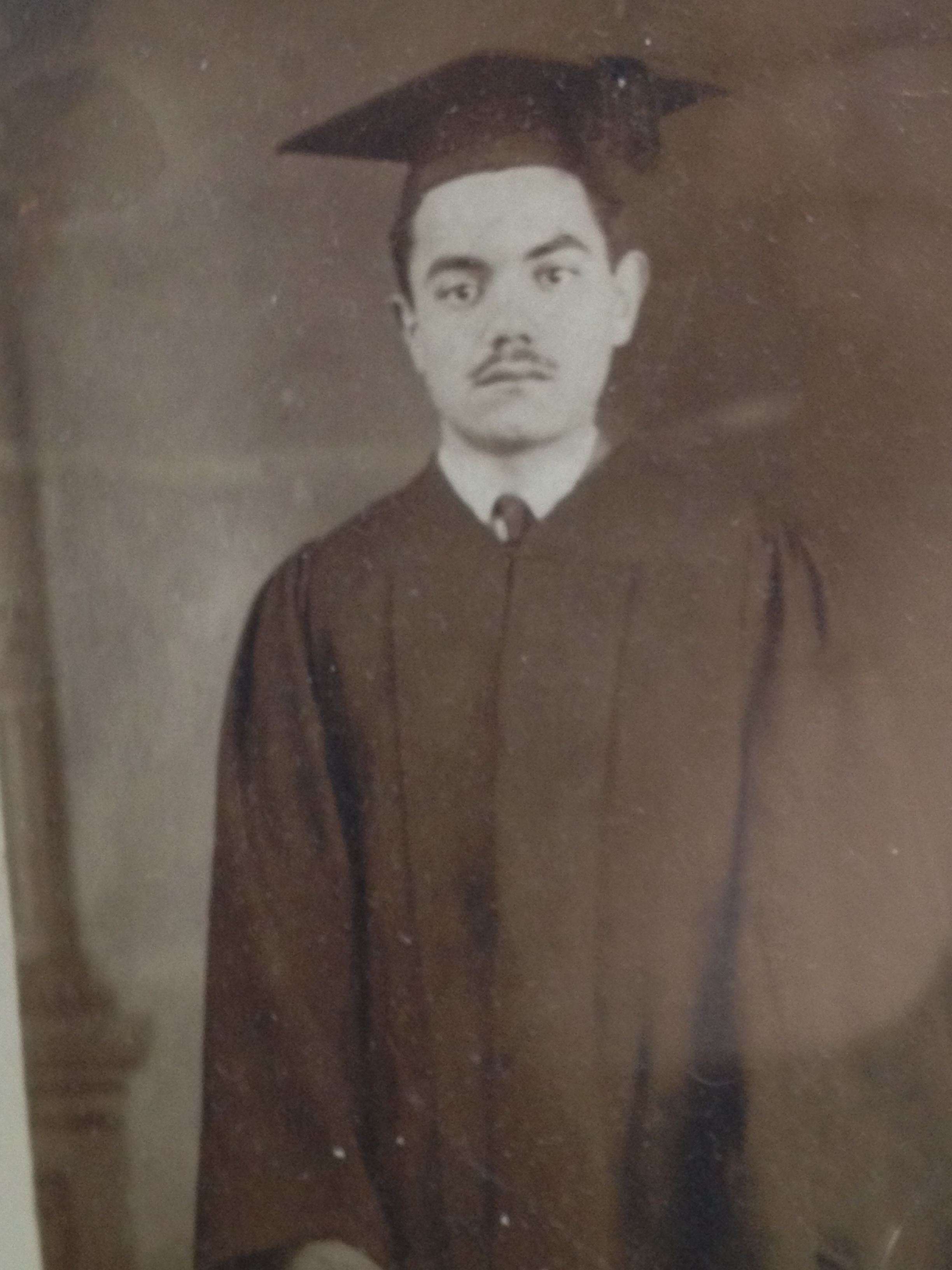
William M. Bolton--Yale Graduation-1913

William M. Bolton–Yale Graduation-1913

William M. Bolton was born in 1891 in Ukraine and came to the United States when he was six months old. He saw the advent of the automobile and the refrigerator. He wrote about his father’s trips to the icehouse in the family’s horse-pulled cart for blocks of ice to store dairy products. But he wrote nothing about the poverty in which he grew up.


Grandpa fiddled his way through Yale by joining the musician’s union to pay his college tuition and to buy the “right clothes” to go to classes with the likes of Cole Porter. I imagine that Cole Porter played his piano in the rarefied company of Yale’s sons while Grandpa played at dances in fraternity houses to which he would otherwise never be admitted. He was silent about Yale’s anti-Semitism in the early 20th century. By the time my paternal grandparents met during Grandpa’s junior year at Yale, they had deliberately forgotten that they came to America from Russia as babies.


I’m not sure what my father and grandfather would make of Thanksgivukkah, this once in a century, possibly once in a millennium holiday. They loved America fiercely and unquestioningly. They may have thought the whole idea was kitsch. Certainly the name is as cumbersome as their Judaism was to them. Or they may have felt vindicated by the fuss over the confluence of this American holiday with an ancient Jewish one. My grandparents were assimilated to the point that they traded the white and blue flame of a Hanukkah menorah for the red and green glitz of a small silver Christmas tree propped on a coffee table.


But I think I’ve figured out my grandparents’ story. When I had begun to play the violin my parents went to see Fiddler on the Roof. They came home with a recording of the show’s song that I played in an endless loop on our hi-fi. Zero Mostel boomed about a fiddler just like Grandpa, the fiddler who hovered over my childhood like a Chagall painting.


A fiddler on the roof. Sounds crazy, no? But here in our little village of Anatevka, you might say everyone of us is a fiddler on the roof trying to scratch out a pleasant, simple tune without breaking his neck. It isn’t easy.


My grandfather fiddled to keep his balance as he took on the mantle of a navy blue, Ivy League life. To start over he changed his name from Bolotin to Bolton. But despite those dramatic attempts at fitting in, I think my father and grandfather were Thanksgivukkah Jews. They aspired to have the best of what America offered. But in the end their descendants celebrate Hanukkah over Christmas.


Fiddler on the Roof shed light on part of my grandfather’s identity. He loved the record as much as I did. And it was the first time that I realized my grandparents came from shtetls like the fictional Anatevka. It feels right that their story is set to music. It feels right that Fiddler on the Roof was as American as the Boltons, or for that matter, Thanksgivukkah.


Reciting Kaddish, As a Daughter by Judy Bolton-Fasman

The night before my father’s funeral, I found a tattered prayer book from my Yeshiva days. It was small and square, the kind of prayer book I’ve seen women praying with at the kotel. Its filo-thin pages suggested a false modesty that diminishes a woman’s place in the Jewish world. That siddur was also thick with line after line of tiny Hebrew letters. I lay down on my bed and read through the Kaddish prayer for my father, something that was unheard of for a woman to do 50 years ago.

Saying the Kaddish for a loved one used to be an all boys club. No son, no Kaddish — unless you paid a man (yes, there is still such a thing) to recite the Kaddish for the 11 months a child mourns a parent. Recently, there was a case of gender segregation and Kaddish discrimination at an ultra-Orthodox cemetery in Israel. A woman named Rosie Davidian was denied the right to eulogize her father at his funeral. Ms. Davidian took her case to the Knesset to campaign for women to grieve as they see fit. An invitation quickly followed, asking her to read her father’s eulogy on a popular radio show where millions heard her words.

My father was buried on the eve of Rosh Hashanah and I had the honor of eulogizing him. The next day I was part of the overflow crowd — the common folk who didn’t pay for the pricier sanctuary tickets across the hall. One of the rabbis met my eye from the bima. She nodded in sympathy as I said the Kaddish in front of 800 people, so nakedly, so publicly for the first time.

Since leaving Jewish day school, I had wandered through the various branches of Judaism and settled on practicing Conservative Judaism. At the time of my father’s death, I decided to attend a daily Conservative minyan for 30 days to say the Kaddish for him. It was almost Thanksgiving when I realized I had gone long past my original self-imposed deadline. As I wrote in my journal:

I’m both surprised and fulfilled that the daily recitation of the Kaddish has become part of my days. In remembering my father every day, I have an ongoing dialogue with him. I have space and time to contemplate my life as a mother and a wife and a daughter.

My year of Kaddish so deeply impressed me that, ever since, I’m always on the lookout for father-daughter Kaddish stories. While researching my memoir I came upon a story that took place in 17th century Amsterdam. A man with one daughter and no sons planned ahead for his Kaddish. Before he died, he arranged for a minyan to study at his house every day for 11 months. At the conclusion of studying Torah it is customary to say a version of the Kaddish, which allowed his daughter to recite the Kaddish in an adjacent room as the male students responded “amen” to her prayer.

Despite patriarchal obstacles, the Kaddish has always belonged to women. Henrietta Szold, the daughter of a rabbi and founder of Hadassah, was the oldest child in a family of eight daughters and no sons. She declined a male friend’s offer to say the Kaddish in her place when Szold’s mother died in 1916. Szold wrote in a letter that year:

The Kaddish means to me that the survivor publicly manifests his wish and intention to assume the relation to the Jewish community that his parents had, and that the chain of tradition remains unbroken from generation to generation. You can do that for the generation of your family. I must do that for the generations of my family.

During the year after my father died, I visited Rome on vacation. It was there among the city’s more than 900 churches, I went searching for a synagogue. I was determined not to skip a day of saying the Kaddish. I went to Rome’s Great Synagogue where armed policemen surrounded the courtyard. A private security guard asked my husband, not me, what business he had there. I told the young guard, who was wearing a kippah, that I needed to say the Kaddish for my father. “Americana,” he sighed.

Inside, the daily minyan was formal — like walking into a sepia photograph — with the cantor and rabbi wearing traditional robes and hats. My husband and I had to sit separately. A divider, improvised with a row of tall potted plants as stiff as the policemen outside, walled off the women. The women talked throughout the service until I rose to say the Kaddish.

The woman next to me said, “Ladies don’t have to.”

I told her that I wanted to say the Kaddish. Although the cantor blasted through the prayer, I managed to keep up and the women said “amen” to my Kaddish.

Who will tell the women in Rome who magnified and sanctified my Kaddish that their amens were not only irrelevant, but that they could be illegal in a cemetery in Israel? And how dare anyone tell Jewish women in the name of God not to eulogize their dead or say the Mourner’s Kaddish.

This piece originally appeared in the Sisterhood Blog of the Forward as well as the paper’s print edition.

Yizkor As a Family Service by Judy Bolton-Fasman

When I was a child, I was exiled from the Yizkor service at Yom Kippur—the service in which we recall our dead and attend to mourning them formally. Call it superstition. Call it avoiding death. My grandmother would point towards the door, and out I would go with the rest of the kids until it was safe to return to the service.


I’d like to propose a new model: make the Yizkor service a family affair. Our children should learn early on that to be a Jew is to be deeply attached to memory. Jewish literature has championed memory from time immemorial. According to Rabbi Shoshana Boyd Gelfand, the verb lizkor — to remember — appears 228 times in the Torah. It’s associated with subjects and events as disparate as Shabbat, Miriam’s leprosy and Amalek’s attack on the Israelites. Gelfand’s essay appears among a wonderful collection of pieces in an anthology called, May G-d Remember: Memory and Memorializing in Judaism.

No doubt, our children see that we are a people that constantly references our time as slaves in Egypt in liturgy and worship. We are also a people for whom remembering is not abstract, but rather an active part of our identity. Rabbi Gelfand quotes Joshua Foer, author of a lovely memoir called Moonwalking With Einstein, who notes in his bid to become the 2009 USA Memory Champion that:


In Judaism, observance and remembering are interchangeable concepts, two words that are really one…. For Jews, remembering is not merely a cognitive process, but one that is necessarily active. Other people remember by thinking. Jews remember by doing.


The Yizkor service is somewhat of an anomaly to me. In a tradition that places so much value on communal life and the benefits of sharing memories of our dead, Yizkor is a highly individualized ritual that takes place within a congregation or at least among ten Jewish adults.

Rabbi Gelfand examines how memory morphs over time through Foer’s take on the neuroscience of the subject:

Memories are not static. Somehow, as memories age, their complexion changes. Each time we think about a memory, we integrate it more deeply into our web of other memories, and therefore make it more stable and less likely to be dislodged. But in the process, we also transform the memory and reshape it—sometimes to the point that our memories of events bear only a passing resemblance to what actually happened.


If you have an analytical kid like I do, the neuroscience of Yizkor not only appeals to his intellect, but also balances thinking about death with the malleability of memory. Perhaps as parents we can work our way up to Yizkor by sharing our children’s namesake with them. The idea resonates with my work as a memoirist. Yes, memories fade and mutate over time. But in some ways Yizkor is a bulwark against that phenomenon. In its methodical accounting of our dead, there is an explicit reconstruction going on. Yizkor is the time that I clearly remember my father, my grandparents. It’s also the only time of year that I can conjure my dad’s voice. For me, Yizkor is a dedicated time and space that momentarily defies biology and psychology.


 Yizkor, notes Rabbi Gelfand “provides us our own private ongoing relationship with a loved one. It encourages an evolution of that relationship as opposed to allowing it to be frozen in time. Remembering someone over and over again enhances the parts of that relationship that prove sustaining but allows us to forget those characteristics that are not.” I like the way Rabbi Gelfand points out that forgetting is a crucial part of remembering. I think she’s on to something that approaches a neuroscience of the soul.

In that spirit, I’d like to offer a customized Yizkor in which my son Adam might meaningfully participate. When Adam was born I shook off Ashkenazic tradition when I gave my son my father’s Hebrew name, Akiva. Unfortunately, the relative after whom Dad is named is forever lost. His predecessor’s name is without context. But Dad shares his Hebrew name with a martyr. Rabbi Akiva died in the second century, flayed alive in the hippodrome of Caesarea. His last words were the Sh’ma—Judaism’s signature prayer. Even an assimilated, lip-synching Jew like my father knew the six words of Judaism’s central prayer.

I want Adam to know that I’m certain my father would have liked Rabbi Akiva’s story. Akiva was a poor illiterate shepherd until the age of 40. Like my dad he married late. Like my dad he couldn’t recognize a single Hebrew letter until someone taught him as an adult.


My father’s story is an integral part of Adam’s life story. Showing him the door at Yizkor, before he has a chance to remember my father, is the antithesis of the Judaism I want to impart to him.


In Praise of Single Parents

The first thing that went wrong was the lock on the door. It didn’t work.

Our friends S and R generously lent us their Cape Cod condo the weekend of Father’s Day. They were away and Ken was on an extended business trip. I thought that a quick outing to the Cape would nicely break up the time while he was away. We unlocked the door of the condo just fine, but locking it was another story. I leaned heavily on my technologically savvy teenagers to figure out the lock’s mechanism. No dice. None of us had a clue about how to work our friends’ door.

door-lock-back

My first inclination was to call Ken who was a continent away. After all, the man can walk me through complicated computer problems over the telephone. But I quickly realized that, as talented as he is, even he could not figure out how to work a lock he had never seen. The kids and I did the next best thing. We called a locksmith who, five minutes and $65.00 later, showed us that all we had to do to lock the door was lift up the handle.

And then it hit me like a megaton of bricks—this is what single parents go through every day. They don’t have the luxury of calling on a partner to get them through a rough patch. I can remember the extensive debates Ken and I have had over the years about little things like low-grade fevers, sleepless babies and fussy toddlers. Tylenol or Advil? We had no idea what we were doing, but it was less scary to be in the dark together.

Here’s another thing about our weekend away—driving. I had to do all of it. Ken always does the driving while I snooze in the front seat. This time it was completely up to me to get my kids from Point A to Point B since neither of them has a driver’s license. That’s a lot of pressure on someone with a lousy sense of direction that doesn’t like to drive.

But one of the biggest things that I learned on that fateful weekend was that Anna and Adam weren’t thrilled to be so far from their friends. That’s right, I’m not their whole world anymore. Not even remotely. So I expended a lot of energy on trying to make them happy. Unfortunately, the two of them have very different ideas of happiness. One likes the beach; the other hates it. One likes the movies; the other is not so keen on sitting in a theatre for two hours.

I finally ditched the kids and called Ken from a coffee shop. “They’re driving me nuts,” I said breathlessly into the phone.

“I think what they’re doing is developmentally normal,” he said. “At this stage, they don’t want to hang out with us that much.”

I knew that Ken had spoken the unvarnished truth. I even accepted that truth; it was just hard to see it in action.

By the end of the weekend we had had enough of one another. My children demanded that we leave the Cape a day early. No Monday morning departure to beat the Sunday traffic for this solo driver. They couldn’t stand to be away from home for another minute. That’s when I did something I swore that I would never do as a parent: I gave them the “You do not appreciate me” speech. I hate to admit this, but it was not the first time I’ve done that.

“I am, “ I said in my best martyr-like voice, “only as good as my last favor or the last thing that I bought for you.” Then my kids got into a row with me about how that wasn’t true as we waited to be seated for brunch. People were staring.

At the table their bottled-up resentments came tumbling out. Adam was still furious that we didn’t go to his favorite beach, missing out on eating the best onion rings on the face of the earth. Anna had passed up several invitations of a lifetime that had been sent in rapid-fire text messages throughout the time we were away together. And I took out a small loan to take them to the finest restaurants and buy them the loveliest souvenirs.

“Neither of us asked you to bring us here,” Anna said. “This was all your idea,” Adam said. That’s when I really blew a gasket. “You have no idea how much I do for you.” As soon as I said it, I heard how flat and clichéd the comment sounded. Of course, my children had no inkling of everything Ken and I do for them. How could they? They’re not parents yet.

As for me, I am humbled and awed by those parents who bring up children on their own with grace, wisdom and the hard-won experience of figuring out how to lock a door.