Help, Thanks, Wow. And Amen by Judy Bolton-Fasman

Help, thanks, wow. Those are the touchstones of prayer identified by the writer Anne Lamott. Lamott is a person of faith, a Christian who has something to say to everyone. The word “inclusive” comes to mind when I think about Lamott. She’s a church-going equal opportunity ecumenist, which is why I took so much away from her new book simply called Help, Thanks, Wow: The Three Essential Prayers.

Helpthankswow

I can guess why Lamott set up three central points to rein in the overwhelming notion of prayer. She’s given her broad readership a user-friendly guide to the sacred trinity of Christianity. But she’s also given me, as a Jew, a way to think about Judaism’s formal schedule of worship. I read Help, Thanks, Wow within the framework of shacharit, mincha and ma’ariv—the set prayers for morning, noon and night that complement spontaneous prayer for reaching out to G-d.

Help-Shacharit.-Morning—Lamott describes calling out for G-d’s help as, “[t]he first great prayer.” To my mind this plea feels like a morning prayer. It’s so primal to shout, to ask, to whisper for G-d’s help.

Help me G-d. The days are so long when you are with young children. Ken travelled constantly when the kids were toddlers. Nothing struck fear in my heart quite as deeply as when I knew he would be away over a weekend. Weekdays we had a routine. Pre-school, scheduled naps, dinner at 5:30 and a couple of hours later a bath-induced sleepiness that gave way to bedtime. On the weekend time flowed like molten lava. Routines went out the window. And to top it off, I was outnumbered two to one. Twelve hours a day of non-stop hard labor.

And then my babies grew older and it got even more difficult. Help me G-d from pretzelitizing my children. “Pretzelitizing” is Anne Lamott’s word, a great word that says so much. Here’s a context for it: Help us G-d to witness the transformation of our children into the people they were meant to be before we pretzelitized them into high achievers, anxious, stressed-out automatons or “charming wired robots.”

Thanks-Mincha-Afternoon—Lamott describes the prayer of thanks as a chance for grace. And grace for her “can be the experience of a second wind, when even though what you want is clarity and resolution, what you get is stamina and poignancy and strength to hang on.” Thank you God.

I’m a morning person by necessity. Given my druthers, I’d stay up late and sleep late. With the morning obligations behind me, I welcome the afternoon. A second wind. When the kids were little, they sort of reliably napped in the afternoon when I could read or just think. Then they graduated to grammar school and my afternoon pick up made me realize how much I’d missed them during the day. Thank you, G-d for trusting me with these lovely children.

I also associate the teen years with the mincha part of my parenthood. It’s still broad daylight in terms of parenting, but there’s the heat of noon, the glare of the deep afternoon sun with which to contend. You can’t look directly at the sun in the afternoon and you can’t look straight on at your occasionally frustrating, obnoxious, glorious, I-really-wouldn’t-trade-this-kid-in teenager. Hormones, driver’s licenses, puppy love, first real love. Thankfully the teen years are a relatively short stretch of time and mincha is the shortest of the three services.

Wow-Ma’ariv-Evening—For better or for worse, another day in Kid Land signed, sealed and delivered to the annals of memory. Wow. Baby took a few steps into toddlerhood. Toddler grabbed words from here, there and everywhere and formed sentences. My boy wrote a fantastic short story with an imagination still pure and free of self-consciousness. My daughter has a fierce kick that gives her a leg up in a soccer game. Wow.

Some etymologists speculate that the word “wow” was once a blurry contraction of the words “I vow.” Here’s another lovely observation from Lamott: “The words ‘wow’ and ‘awe’ are the same height and width, all w’s and short vowels. They could dance together.” Indeed they could. Wow.

The rabbi pronouncing Ken and me husband and wife for the first time. Wow.  The look on Ken’s face as each of our children was born. Wow. Anna going off to her senior prom in a dress and hairdo to die for. Wow.  Adam writing my mother a lengthy note in her native Spanish wishing her a speedy recovery from surgery. Wow.

Wowwowwowwowwow. Strung together, the word is rhythmic, pulsating. Like a miracle it might respond to, wow has its own reverberation.

A Midnight Utterance-Amen. Amen the final word. It’s also from the Hebrew word emunah—faith.  Amen is a concise proclamation of faith in what has been expressed.  Amen completes us. Amen is certainty.

Amen is a response to this lovely, messy life that yields moment after moment of wows—moments that Abraham Joshua Heschel described as “radical amazement.”

A Deep Longing: An Interview with Michael Lowenthal, author of The Paternity Test

Michael Lowenthal’s fourth novel, [“The Paternity Test,”](http://lowenthal.etherweave.com/) is a beautifully told story that brings myriad social issues to the forefront, and also manages to be a literary page-turner.

Lowenthal’s work is hard to categorize. His first book, [“The Same Embrace,”](http://lowenthal.etherweave.com/the-same-embrace.html told the story of identical twins, one of whom became gay while the other became an Orthodox Jew. [“Avoidance”](http://lowenthal.etherweave.com/avoidance.html) explored the cloistered worlds of the Amish and the protagonist’s long-ago summer boys’ camp. [“Charity Girl”](http://lowenthal.etherweave.com/charity-girl.html) took up a little-known chapter of American history when women were incarcerated during the First World War in a government effort to contain venereal disease.

Versatility is a hallmark of Lowenthal’s work, as is the 43-year-old writer’s gift for language and depth of character. “The Paternity Test” gracefully merges gay marriage, Jewish identity, sexuality, the Holocaust, Jewish continuity and sexual fidelity in one story.

Pat Faunce and Stu Nadler have been together for a decade. Pat is a blue blood  (there’s a small street named after his family near Plymouth Rock) and a failed poet who earns his living by writing textbooks. Stu, a dashing airline pilot, is the son of a Holocaust survivor who, as Lowenthal recently described him in a conversation over coffee, “has a boy in every port. But their ‘no rules relationship’ is starting to wear on them. So in a 21st century twist on saving their ‘marriage,’ they decide to have a baby.”

The issue of Jewish continuity following the Holocaust further complicates the story. Stu’s sister, Rina, recently married Richard, a nice Jewish boy, but she cannot conceive. Meanwhile, Stu also feels the pressure of passing on the Nadler genes.

Lowenthal’s grandparents escaped the Holocaust just before deportations began in Germany. The grandson of a rabbi, has a multi-pronged answer when asked if he considers himself a Jewish writer. He said:

I was raised in a [Conservative] Jewish household, and three of my four novels prominently feature Jewish characters and Judaism-related plot elements, so yes, obviously, I’m a Jewish writer. I’m reminded of a remark by a gay writer when he was asked if there is such a thing as a gay sensibility, and, if so, what effect it has on the arts. He said, ‘No, there is no such thing as a gay sensibility, and yes, it has an immense impact on the arts.’ Maybe the same thing could be said of Jewish sensibility?

Stu and Pat’s search for a surrogate begins, as does an intense exploration of Jewish identity. After visiting various agencies and trolling surrogate sites on the Internet, they settle on Debora Cardozo Neuman. In Stu Nadler’s surprisingly traditional mindset, Jewish babies must be born to Jewish mothers and Debora fits the bill, albeit in an unusual way. A native of Brazil, she comes from a *converso*background — generations before her, Jews practiced Catholicism outwardly yet clung to their Judaism. Now Deborah follows a set of quirky habits and mysterious dietary restrictions until the community uncovers its Jewish roots.

While Stu is taken with Debora’s story, Lowenthal raises the stakes: Rina and Richard adopt, which causes Richard to lose himself in the “minutiae of Judaism. Richard pays attention to legalistic questions that shouldn’t trump choosing to raise a child in a Jewish home. For him it’s not enough. It’s better if the child is converted shortly after birth to avoid the possibility of having a *mamzer*.”

A *mamzer* is a child considered to be illegitimate if born to a woman who has conceived a child outside of her marriage. Like the plight of the *aguna* — a woman who is legally stranded in a marriage because a husband refuses to grant her a Jewish divorce or a *get* — *mamzerim* have no control over their fate or their standing in the community. While liberal branches of Judaism have done away with the *mamzer*status, Richard adheres to ultra-Orthodox tradition and in the process destroys his marriage.

“The book,” says Lowenthal, “is so much about looking from the outside with regard to parenthood, family, sexuality and Judaism. Sexuality is also very fluid in the book, which takes on an intimate situation. But intimacy is so much more important than gender and sexuality.”

Place is also important to Lowenthal. Pat and Stu relocate to a house on Cape Cod very similar to the one in which Lowenthal spent his summers. His Portuguese sounds flawless to this Spanish speaker’s ear as I ask him about the word *saudade* — a word that Debora uses when describing Pat and Stu’s need for a child.

“*Saudade* describes a deep longing for something that can never be recaptured,” he explained. “It’s about the immigrant who can’t return to his homeland because so much has changed. It’s the fantasy of family — the mythical idea of who they are.”

There’s no question that a feeling of *saudade* permeates “The Paternity Test.”Each character has his or her own *saudade* in longing for a baby. And their complex desires irrevocably change life for Stu, Pat and Debora in ways they could never imagine.

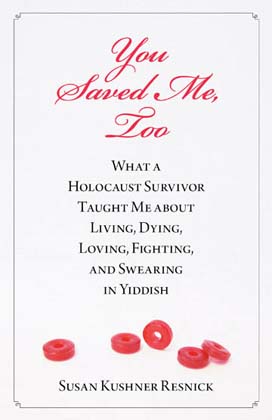
The Life You Save May Be Your Own: The Boomer and The Holocaust Survivor

Boom goes my generation with all of the energy and chaos of an atomic blast. Born between 1945 and 1964, there are seventy-six million of us in the United States. Boom goes my generation as we take our places on a historical continuum of social and political revolutions. Boom goes my generation as we take care of aging parents and the children many of us had in our thirties and forties instead of our twenties.

I write this column in my mother’s room at the Hebrew Senior Life Rehabilitation Center. Her house has just been sold. At the moment, her world has shrunk down to one bed as in, “a bed’s come available.” She’s been poked and prodded and operated on while, boom, my siblings and I chase her benefits, balance her checkbook and watch her assets dwindle until Medicare kicks in.

I also write this column after reading Susan Kushner Resnick’s funny, poignant and storied memoir about her relationship with a loveable, difficult Holocaust survivor named Aron Lieb. Boom goes my generation and some of us will blow up before we can appreciate the multi-generational relationships that can so enrich us. Kushner’s memoir is a vital reminder of how important it is to reach across the generational divide, and simply put, love each other.

The title alone—You Saved Me, Too: What a Holocaust Survivor Taught Me About Living, Dying, Fighting, Loving and Swearing in Yiddish— maps out Kushner Resnick’s book to some degree. The reader is cued into the fact that it is also a Yizkor book—A Book of Remembrance. Kushner Resnick tracked down the prototype of such a book about Zychlin—Aron’s shtetl in Poland. “This is not your first appearance in a book,” Kushner Resnick writes to her dear friend. “The other one, published when I was eleven years old [in 1974] is called The Memorial Book of Zychlin.” Boom. Most of that generation of Europe’s Jews disappeared in a pestilent cloud of Nazi genocide.

But You Saved Me, Too is a book of life as much as it is a Yizkor book. It begins with the fact that Lieb and Kushner Resnick both liked to talk to strangers. It tells the truth that their friendship rescued Kushner Resnick from a crushing post-partum depression. That was in 1997. Kushner Resnick has a baby that she leaves in babysitting at the JCC so that she can swim off her depression. She meets Aron Lieb on a lark at the same JCC. “[Aron was] my faux father, my son, my crush, and my cause.”

You Saved Me, Too is also a quixotic book. For anyone who has shepherded a parent through the murky health care system, Kushner Resnick’s advocacy for Lieb’s benefits and his dignity will resonate, deeply and painfully. Kushner Resnick is not shy about indicting the Jewish community and its leaders for Lieb’s benign neglect. In her tongue-in-cheek style, she takes on the honchos, the machors, who made empty promises to help a man who bore the ultimate tattoo of Auschwitz.

That tattoo, the number 141324, takes up residence in Kushner Resnick’s imagination. She notes the sloppiness of the letters—the tattooist must have been in a hurry to go down the long cue of people arriving at Auschwitz—the fact that, “for fifty years, every time you’d taken off your shirt at night or reached out to adjust your side-view mirror on a summer day, you saw those numbers, 141324, the brand the Nazis gave you when they thought you were theirs.”

Boom. Kushner Resnick becomes, in essence, a third-generation survivor or a 3G. She’s bent on keeping the memory of the Holocaust alive, intent on telling stories that go beyond the blue Yizkor books from Polish shtetls. “Eventually all the tattooed arms will disappear” she writes. “Then the forgetting will truly commence. … How would the numbers look on my arm? I could get the same tattoo in the same place. 141324. Whenever people asked what it meant, I could tell them about you.”

Although Kushner Resnick, is speaking metaphorically, there are 3G grandchildren who have actually tattooed their grandparents’ numbers on their arms. It’s a radical act that has stirred up as much pride as it has consternation among their survivor relatives. Those numbers are also an address of unimaginable tragedy and entrenched optimism. For all of his heartache and kvetching, Lieb survives because he has dealt with unbearable horror as much as he has thrived in the small joys of life like meeting his friends for a daily cup of coffee at McDonald’s.

With no significant family willing to care for him, Kushner Resnick becomes Lieb’s healthcare proxy and has power of attorney over his affairs. She secures his reparations and learns that she has to open a separate account so that the money is not taxed and therefore not counted as an asset. Boom. She learns that the Boston Jewish community pays mostly lip service to the survivors among them and that it’s a problem also prevalent in Israel.

Halfway through the book she questions her involvement in Lieb’s life. “I can’t write anything conclusive until I figure out why we’re together,” she says. “Some writers say they find the answers by writing their way towards them. But I need to know the last line before I type the first word.” I think I know what she means. My mother sleeps as I type these last words about Aron Lieb and Susan Kushner Resnick, the woman who made his life a blessing for the world to read.


When Bad Things Happen to Good Kids

A day on which a life changes forever always begins as ordinary – so ordinary that thereafter, daily life is a deliberate celebration.

Carolyn Roy-Bornstein writes about an ordinary day gone awry in her new memoir “Crash: A Mother, a Son, and the Journey from Grief to Gratitude.” In her engrossing narrative, Bornstein divides her life “into two unequal parts. A line, like a crack in the glass, which carves time and events into two: those that occurred before the crash and those that tumble and falter in its wake. There is the one moment after which nothing is the same. It occurs in a heartbeat.”


And so begins Roy-Bornstein’s extraordinary account of the minutes, hours and days following her son Neil’s accident with a teenage drunken driver. On the night of Jan. 7, 2003, 17-year-old Neil and his girlfriend, Trista, set off on foot for the short walk between his house and Trista’s. The driver who ran down the two of them sped away from the scene. Neil survived the accident. Trista did not. Nine years later Roy- Bornstein garnered enough perspective to tell the story of the accident that changed her family’s life with humanity and love.

Roy-Bornstein, a pediatrician practicing on Boston’s North Shore, demonstrates her gifts as a writer as she unfurls one of the illuminating quotes that introduce the book: “We must embrace pain and burn it for fuel for our journey.” In a recent interview with the Jewish Advocate, Roy-Bernstein pointed out that she and her family burned gallons of emotional fuel, particularly during the immediate aftermath when “[t]here was something called temporal lobe agitation,” said Roy-Bornstein, “which occurs in many brain-injured patients where they can become very disinhibited, very irritable and act in ways that are totally not like them.”

Neil, a shy and contemplative young man, uncharacteristically lashes out at his mother as both his parent and a doctor. This brings the reader to a poignant quote that gets to the heart of Roy-Bornstein’s story: “No amount of doctoring can prepare you for being a patient.”

She elaborates that “even though I knew it was [Neil’s] injury talking, that was very painful to go through. Months later I found him reading my diary at the dining room table. Before I could decide whether to ask him to stop or let him continue, he looked up at me and said, ‘I’m sorry I yelled at you in the hospital, Mom.’”

Roy-Bornstein’s memoir makes it very clear that first and foremost, she is a mother to Neil and her older son, Dan. And she tilts at windmills during her encounters with the healthcare system. Her frustrations are memorably dramatized in a chapter titled “He’s Gonna Be Just Fine.” Roy-Bornstein recalls, “When we were in the ER at the Brigham and Women’s Hospital, we were told by the emergency room physician that Neil was ‘gonna be just fine.’ But that has not been our experience. Almost 10 years later he still sees a therapist, suffers from anxiety and has petitioned the disabilities office at his graduate school program for a distraction free environment for test taking.”

Roy-Bornstein notes that even as a physician she was unaware of the subtle long-term effects of traumatic brain injury (TBI). After Neil’s accident, she educated herself about TBI and over the years has become a de facto ambassador for the Traumatic Brain Injury Association of Massachusetts. Her role includes educating other health care professionals as well as the general public about TBI. Roy-Bornstein’s advocacy on behalf of TBI patients and their families also extends to education about concussions: “I’m trying to get the word out about concussion and its long-term effects on kids. In July of 2010, Massachusetts instituted new guidelines for public, middle and high school students that require coaches who suspect a concussion in their student-athlete to sit them out for the rest of the game or practice. We’re trying to change the culture in youth sports and the old mantra of ‘If you can walk, you can play’ to ‘When in doubt, sit them out.’” Roy-Bornstein has shared her expertise on the subject on WBUR’s “Radio Boston” and on the lecture circuit where she educates healthcare professionals and social workers about concussion and traumatic brain injury. “It’s become my passion,” she says.

Roy-Bornstein’s passions also include advocating for victim’s rights and health issues related to teens and drinking.

“When the accident occurred there was a lot of chatter in the media about under-aged drinking and drunk[en] driving,” she notes. “A vocal minority of parents stuck by their practice of letting their teens and their friends drink in their home, believing that they were keeping them safe by taking away their keys. But even if kids aren’t drunk[en] driving they’re still drunk.”

And as Roy-Bernstein knows all too well, “Bad things happen to good kids and drunk[en] kids.”

How Children Succeed: An Interview with Paul Tough

Parenting books – love ’em or leave ’em. Most times, I leave them after perusing the table of contents. I don’t like the one-size-fits-all approach that so many of them take. But Paul Tough’s excellent new book, “How Children Succeed: Grit, Curiosity and the Hidden Power of Character,” rises to the top of the parenting book pile for its deep exploration of failure and the ways in which it builds character in our kids.

First a word about character. It’s as unique to each person as her DNA. Tough offers the revolutionary concept that character, unlike DNA, is not fixed or completely innate in a person. It is, in a word that recurs throughout “How Children Succeed,” malleable. I confess that I was initially very uncomfortable with the word malleable for its implication of weakness and undue influence. But read Tough’s book and you quickly learn that malleable is an asset.

Tough talked about character in a recent interview with [start ital.]The Advocate[end ital.], citing a chain of charter schools called KIPP and its dedicated founder David Levin. KIPP schools dole out report cards for academic performance and character assessment. “Dave is doing new and important work,” Tough said, adding:

“He has a new vision for character and it’s quite scientific in that he’s trying to figure out which character strengths make a difference in a kid’s success. And at the root of his research and thinking is the assertion that character is … a set of qualities that [enables] kids to change themselves and qualities that parents and teachers can instill.”

Tough presents living examples of low-income kids who have had the opportunity through mentoring programs, family members or discerning teachers to pause and look inward to shape and reshape their character. Kewauna Lerma was such a student. On the fast track to derailing her life, Kewauna did an about-face during her junior year of high school. She still lived at the poverty level on the South Side of Chicago, picking fights at school and struggling academically. But a spark was lighted inside of Kewauna through a mentoring program and encouragement from her mother and great-grandmother.

“Kewauna,” explained Tough, “became motivated to be a different person. It was very telling that she changed in that it came from her clear vision that she had of herself. That vision was further clarified in the program she was in as well as by her family.”

There is no question that kids mired in poverty have it tougher than children of affluence. But Tough admirably teases apart the hazards of having it too good without falling into the “poor little rich kid” syndrome.

For wisdom on the challenges faced by kids who seemingly have it all he turned to Dominic Randolph, headmaster of the tony Riverdale School in Riverdale, N.Y. – a well-off section of the Bronx. Randolph was initially the subject of a [start ital.]New York Times Magazine[end ital.]article that Tough wrote last fall. In that article, Tough explored Randolph’s claim that failure and character lead to academic success.

Advocating for failure is a radical step for a head of school where the majority of the class goes on to Ivy League and other highly competitive colleges. But that’s exactly what Randolph did when he came to Riverdale in 2009. Tough noted:

“[T]here is this way that certain high-pressure academic environments can stress kids out. They are on this treadmill versus climbing a mountain. At KIPP kids are climbing a mountain and it’s a bigger challenge than staying on that familiar treadmill. I think that’s why KIPP kids get out of college with more success and character. It’s the way you get on a life path, not the actual life path you end up on, and that makes all the difference.”

Tough points to the documentary “The Race to Nowhere” as a prime of example of affluence undoing kids. Vicky Abeles, the mother of three kids who were scorched by the heat of extreme academic competition, framed her film as a cautionary tale. I’m not a fan of the film because I think it’s slanted toward sensationalism. Tough thinks it’s a helpful example of the importance of establishing a good relationship with failure. “Affluent kids,” he said, “are in suspended animation throughout college without every hitting road bumps. Then they hit an obstacle in their 20s and they don’t have resources to deal with it.”

I think that Tough is on to something big here. We talked about post-college choices that kids who have graduated competitive colleges have made. He asserts that ironically their fear of failure steers them toward investment banking and management consulting jobs.

I wonder if our adult kids’ pervasive fear of failure hasn’t returned them to their childhood bedrooms, dissatisfied and unemployed. Yes, it’s a tough economy out there, but have we made them afraid to take chances, to bypass meaningful engagement and social justice opportunities?

Which brings me back to where I started. Perhaps character is not destiny, that it’s malleable enough to forge the kind of future that can fulfill our kids.

In the Gray Zone

I’ve been thinking a lot about color lately. Or more to the point, the presence and absence of light that make up white and black. I think all this consideration of color reflects the fact that I’ve been vacillating somewhere between hope and despair this High Holiday season. It’s a state of mind that squarely puts me in the middle of the gray zone. That’s Adam’s term for these ten intermittent days between Rosh Hashana and Yom Kippur. I clearly remember when he first mentioned the gray zone. It was fifth grade and he had just learned about the Ten Days of Awe—the days between the High Holidays. He didn’t see anything awesome about being suspended in doubt and self-criticism.

Which leads me to the conundrum at the heart of the gray zone discussions I had with him. How do you explain the High Holidays to kids without scaring the living daylights out of them? Just the images alone send me into black hibernation. No light, no consciousness. Let God add and erase names in the Book of Life without my awareness.

But that’s not exactly good role modeling. If there’s anything that should be deleted it’s our understanding of the Sunday School God that dips a feathered quill into ink and enters names as part of some macabre accounting. The God I first became acquainted with had a flowing white beard. When I was a little older, he looked exactly like my Uncle Mac of the booming voice and the rosy cheeks. Uncle Mac was God on earth. I imagine that most kids cope with God as the ultimate abstraction by pretending that He’s some version of their own Uncle Mac.In this patch of gray that Adam constructed as a little boy, it followed that God is also gray. But it’s impossible to see anything through the fog that shrouds Him. Also, note how useless it is to shine headlights in the fog. The light reflects back, illuminating nothing. Maybe that’s the hard-edged perspective of an adult.

I found a lovely children’s book called Because Nothing Looks Like God [(http://www.amazon.com/Because-Nothing-Looks-Like-God/dp/158023092X/ref=sr_1_1?s=books&ie=UTF8&qid=1347850420&sr=1-1&keywords=because+nothing+looks+like+god)] by Rabbi Lawrence Kushner and Karen Kushner that breathes life into some of my grown-up jadedness. God is in the details like a birthday cake, the band-aid that fixes a cut. Ultimately, “God looks like nothing. And nothing looks like God.” The authors challenge children to think about how many things we can’t see like the wind, or the sun drying or the joyous moments of a day at the beach. I ‘d also ask kids to think about what love does and does not look like.

But how do you explain God to a teenager whose earliest memories are singed with images of burning towers? What do you say to your children after you’ve been pulled over by airport security for a more thorough search? You’re part of the danger in this very dangerous world? Or let’s turn to the more mundane. You work hard and you study hard and still that A or that role in the play eludes you. Does God have more important matters to attend to than the disappointments in your life?  Or is God simply too distracted these days to care about your problems. “First world problems,” shrugs Adam the now-jaded teenager. That’s his default position to deal with his disillusionment.

Maybe I’m taking all of this too literally. Children grow into more sophisticated thinkers, leaving a parent like me stuck in the concreteness of pshat—the Jewish term for biblical literalism. I envy my teens who, these days, are in the thick of drash—extracting meaning from the subtext of a story or a new situation. Maybe my time in the gray zone is best spent listening to my kids explain life to me.

This is also the time of year when we read Leviticus 18 on the afternoon of Yom Kippur—a verse that many take in as pshat to condemn gay marriage. At first glance it seems odd to be worrying about forbidden unions on a day when the gates of heaven are clanging shut. (More concreteness.) But who knew that the gray zone could be conducive to a personal and loving discussion on sex education with your kids. Who shall live and who shall die can be transformed into a celebration of whom we love. Who will we love better and more thoughtfully in this New Year?

The Ba’al Shem Tov, the father of the Hasidic movement in the eighteenth century, said “there are many halls in the king’s palace and intricate keys to all the doors. But the master key to God’s house is a broken heart.” That leads up to one of my favorite sayings in the Talmud—“There is nothing more whole than a broken heart.” And there’s no better place to learn that than in the space that Adam, in his little boy wisdom, once dubbed the gray zone.

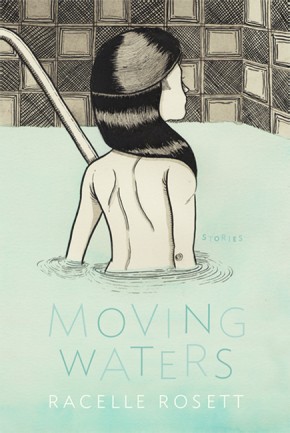
Moving Waters: Racelle Rosett’s Debut Short Story Collection

Racelle Rosett, an award-winning television writer whose credits include “thirtysomething” and “Blossom,” has just published her first volume of fiction, “Moving Waters: Stories.” Rosett’s notable successes with the short story include winning the Moment Magazine-Karma Foundation Prize for Jewish short fiction and the Lilith Fiction Prize. Her work has also appeared in “Tikkun,” “Ploughshares,” the “New Vilna Review,” and “Jewish Fiction,” among other publications.

The title story of “Moving Waters” explores sexuality in all its permutations, including the end of a marriage and the healing effects of immersing in the mikveh. Later, in “The Unveiling,” a young widow’s makeover coincides with the unveiling of her husband’s tombstone. In other stories Rosett ponders the efficacy of lamed vavniks — the 36 righteous people who keep the destruction of the world at bay — and the prohibition of saying God’s name out loud. In a recent interview with the Sisterhood, Rosett discussed her new collection of literary fiction and explained how this latest chapter in her writing life has reflected a deep examination of her Judaism.

BOLTON-FASMAN: You wrote for television for almost three decades. How has that type of writing influenced your literary voice and short stories?

ROSETT: I look for stories in the same places — in moments of transition, places where a character struggles and finds her way. But writing for television is more collaborative. The stories [in “Moving Waters”] represent a very personal exploration. In them, I was immersed in a world that held a lot of contradictions and I needed to get inside of them to make sense of it all.

Your title story is about fluidity in sexuality and individuality. Why did you lead off your collection with the image of a mikveh?

There are two answers to this question. I did a reading from “Moving Waters” for “Zeek” last fall and met a wonderful young artist named Will Deutsch, who heard the title story and shared some of his work with me. His artwork depicting immersion into a mikveh was so tied to what I was doing that I immediately imagined his work adorning the book’s cover. I loved the idea that at first glance the image looked as much like a swimming pool as a mikveh, which underscores the theme of the book that we are in two worlds at once—the ancient and modern.

I also felt drawn to the image of Deutsch’s mikveh because I felt as if I were literally stepping into a pool. I hope this is the experience for the reader in the sense of stepping into the lives of these characters and being engrossed in their world. I also hope readers will be moved to reclaim and redefine mikveh as a ritual that is relevant and useful in contemporary life. I am compelled by the idea of reclaiming and redefining mikveh as a ritual that is relevant and useful in contemporary life. In many communities Mikvah is now being used as a demarcation of transition — to heal from losses like infertility and divorce as well as celebrate new lifecycles like adoption and recovery.

Your stories reflect an intensive interest in Judaism. Can you say something about your own Judaism and how it has influenced your work?

What is most surprising to me is that like the characters in my book, Judaism became relevant to me unexpectedly. I brought Shabbat into our family lives as a way of impressing the idea of community and rest on my children. I did that to anchor them in a place where many forces are competing for their attention.

Do you consider yourself a Jewish writer in the sense that Judaism inspires and moves your stories along?

I certainly feel that [Judaism] informs the stories in “Moving Waters.” My characters embody what I most value and want to keep from my tradition. I think as you mature in your faith you’re constantly holding it up to the light and reappraising it. I was watching “Weeds” recently and there was a plot line with a rabbi and the idea of struggling with yetzer h’rah — the Evil inclination. You write from a place that is shaped by everything you are. Having said that, I may write a story or a script in which the characters are not Jewish but my belief about the world will not change.

Do you still write for television?

I do. I’ve had an ongoing role in television over the years as a consultant working with writers I love. Several months after I completed the story collection I met an extraordinary young woman and I was compelled to write a script about her that is still in the works.

What’s on your agenda this fall?

I’m doing a number of visits to temples and Jewish Book Festivals as part of a Jewish Book Council author tour. I love visiting Jewish communities and seeing their dynamic and energetic engagement. For example, I attended a service in San Francisco that, in addition to being in a beautiful setting, was entirely relevant both socially and politically. It was thrilling to see the kind of deliberate participation not held over from generational guilt but was about bringing together a community in a purposeful and joyful connection.

Family Blessings

May the Lord bless you and protect you. May the Lord illuminate His/Her countenanceupon you and deal graciously with you. May the Lord bestow favor upon you and grant you peace. Numbers 6:24-26

A few years ago when Anna was assigned to memorize the Priestly Blessing in Hebrew it was an opportunity for me. I would finally bless my children on Friday nights with those famous words without a cheat sheet, or mumbling so my kids wouldn’t realize how poor my Hebrew is.

Blessing one’s children reaches back to biblical times. In the Torah Isaac blesses his sons and Jacob blesses his children as well his grandchildren. One of Aaron’s last acts as the High Priest is to bless the children of Israel. And Moses blesses each of the tribes of Israel. During rabbinic times parents adapted this biblical practice by expressing their pride and love for their children with the Priestly Blessing.

There is nothing sweeter in this life than blessing one’s children especially on a Friday night. When Anna and Adam were little I’d drop to my knees to so that they could look into my eyes and tacitly understand that blessing them was an act of thanksgiving and humility for me.

I recently learned that there are also special hand gestures that accompany the Priestly Blessing. Like the prophets of yore, the kohanim or priests stretched their arms forward (with an outstretched arm!) with their hands palms-down. They also split their fingers so that, counting the space between the opposing thumbs, there were five spaces for each hand.

Another allusion. My reading led me to a reference from Song of Songs 2:8-9 which states that God “peeks through the cracks in the wall.” God watches, God protects, God blesses. Now when I fan my hands on Anna and Adam’s heads, the spaces between my fingers are filled with their goodness, their innocence, their strength and my fragility.

For a while my kids were very clear that this blessing business was not exactly their favorite part of our Friday night festivities. “Do it more quietly,” Anna said. “I don’t think you have all the words down,” Adam said. But I persisted and tried not to let their tween behavior dampen my joy.

Recently I hit on a time-saving method acceptable to both my children and me—blessing them together. After the initial blessing I turn to Anna and ask God to make her strong and wise like Sarah, Rebekah, Rachel and Leah. Then it’s Adam’s turn and I ask God to make him a role model like Ephraim and Menashe.

Asking God to give our daughters the laudable tributes of our foremothers is obvious, but the blessing for our sons is less so. The reference to Ephraim and Menashe comes directly from the Bible. Just before Jacob dies he blesses his grandsons with these words: “In time to come, the people of Israel will use you as a blessing. They will say, ‘May God make you like Ephraim and Menashe’.” (Genesis 48:20)

I think that Anna and Adam don’t mind being blessed these days because they like to reciprocate. My daughter is now tall enough to look me in the eye when I place my hand on her head. My son is nine inches taller than I and has to bow his head. These days they offer me a blessing too by saying the words with me.

Anna and Adam’s Shabbat blessing acquired another level of meaning when our friend Susan asked them what they thought of a blessing that asked God to make them like someone else. She pointed out a contradiction that speaks to one of my favorite midrashim about God’s challenge to Rabbi Zusya. When it came Zusya’s time to go to heaven, he had ready answers for God about why he wasn’t a great prophet like Moses or a gifted scholar like Maimonides. But he was worried that God would ask him the most difficult question of all—why wasn’t Zusya more like Zusya in this life.

Susan sent me to Marcia Falk’s Book of Blessings for an alternative blessing. The subtitle of Falk’s volume promised New Jewish Prayers for Daily Life, The Sabbath and the New Moon Festival. Falk’s didn’t disappoint. The version of her blessing for a child to simply “Be who you are—and may you be blessed in all that you do.” Falk chose these words to echo God’s announcement in

Exodus—“I am that I am”—the ultimate proclamation of authentically being.

In her commentary on her version of the blessing Falk notes that “in its specificity, this blessing seems restrictive rather than expansive: it doesn’t open out to the range of possibility and promise that ought to characterize youth.”

I appreciate Falk’s point that giving our children a strong, unlimited sense of self is crucial. But we—Anna, Adam and I—do not want to give up the ancestors. Our foremothers are not just archetypes. At different points in our lives they are us and we are them. And for me, Jacob directly blessing his grandsons rather than his sons tells me how precious and hopeful the future is. Finally, a pair of brothers in the Bible who don’t want to kill one another!

Anna and I tested each other for a week until I finally got the Priestly Blessing down in Hebrew. We also assimilated the notion that in its three straightforward lines, the beauty and genius of the blessing rests in its simplicity as well as its swift movement from the material world to the ultimate wish for peace.

The Unluckiest Poet in America

Last week The America Library of Poetry was more than “fanning the flames of literacy” at our house.  The Library, sponsor of free poetry contests for kids in kindergarten through twelfth grade, had finally picked this year’s winners. Adam was not among them.

Image

He had been so hopeful after he was notified this summer that he was still in the running for the grand prize. To confirm that he was a serious contender, his poem would appear in a volume of other entries set for publication in December. For $35 my son would forever have his own personal copy of his first work to appear in print.

September 30th.  Adam noted the date on our family calendar. It was the day the winners would be published on the Library’s Web site. He visited the site several times a day throughout September, trolling for hints of how his poem was faring in the contest. Nothing. He was nervous. I was nervous for him because I knew all too well what was coming down the pike.

It’s hard not to take rejection personally. And, boy oh boy, did my son take it personally. I was out when he logged on to the Web site on the evening of September 29th. When I checked my BlackBerry there it was—Adam’s righteous (or self-righteous) indignation that his poem was not among the winners.

My son-turned-critic berated the winning poem in his age category as “a sure sign of uncreativity (sic) and poetic weakness. You rhyme when you can’t be vivid or use figurative language.” Ouch. Who made him the poetry maven?

Welcome to my world Adam. I’ve got a collection of lovely rejection letters from editors at some of the best publications in this country. And you know what? When I started out, I clung to those hand-written two line notes like a life preserver. “Not quite right for us. But send more.” These days I get rejections mostly through email and they’re not nearly as exciting. Ten point Arial dilutes the urgency, the optimism embedded in the rushed handwriting of those earlier notes.

My near misses don’t make me all that angry anymore; they make me determined. Fiercely determined (maybe that’s constructive anger) to show every editor who has rejected me that they were flat out wrong.

In the meantime, Adam needed some perspective because frankly he is not, as he claimed in the heat of the moment, the best children’s poet in America. I know because once upon a time I thought I was the best children’s novelist not only in America, but the world. I was so sure of it that when I was nine I sent my first “book” to a legal publisher I found in the yellow pages. The CEO was charmed and he called my parents to tell them so.

I told Adam the truth about the writing life—albeit one that was dipped in maternal honey:

Congratulations! Every single accomplished and talented writer has been rejected. If he or she hasn’t been rejected he is not remembering correctly. Some of those poems were not as good as yours. But some of the poems were just as good or better. The judges are not “impaired.”  However, judges are human and they have their preferences.

I followed up with a call to home. Ken answered and I asked him if Adam was still upset. My husband had no idea what I was talking about. “He didn’t place in the poetry contest,” I said. “He hasn’t said a word to me,” Ken said. “He saves that stuff for you.”

Yes. I’m the more reactive parent, the mushier parent. While every kid needs a mushy parent, that same parent must take precautions against becoming too malleable. Adam needed to understand that he may have deserved to place in that contest, but so did the actual winners.

The Adam I came home to bore no resemblance to the raging poet who fired off that earlier e-mail. I asked if he would like to read through some of the winning poems with me. I read the Grand Prize Winner aloud and he agreed that it was a very accomplished poem. I pointed out that the poet was a senior in high school. And as for that rhyming poem that took first place in his age category? I said that I thought it worked. We read that one out loud too and he reluctantly agreed.

A few minutes after we had discussed the winning entries, Adam sent me a contrite e-mail. He explained that he felt “angry and unappreciated” when he pounded out the first message. After the disappointment passed (isn’t it great to be twelve?), he asked Ken and me never to work for The America Library of Poetry. Employees and their families are not eligible to enter the contest. Only a true writer would be so optimistic and yet such a glutton for punishment.

Congratulations, Adam. You’ve arrived.

Dear Sarai: A Letter to a Young Israeli Soldier

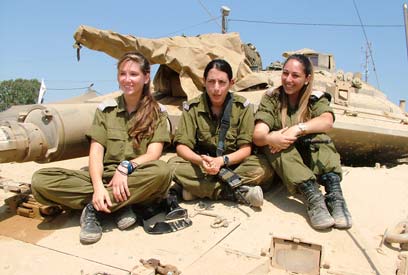
In anticipation of reviewing  a collection of linked stories coming out in September called  The People of Forever Are Not Afraid a collection focusing on three young women doing their mandatory service in the Israeli Defense Forces–I revisited an epistolary essay I wrote after I met Sarai, a young Israeli army officer. Sarai was mostly skeptical about peace for her country. But towards the end of our conversation I heard a glimmer of hope in her voice. Here’s the letter I dedicated to her after our encounter four years ago.

Dear Sarai,

There is a lot on your young shoulders. Twenty-one years old and you’re already an officer in the Israel Defense Forces.

Thank you for defending Israel. Thank you to your mother for sending you out into the world to do this work for the Jewish state, and for Jews everywhere. Back home in Boston descriptions of what you and your unit do sound surreal. People will shake their heads in disbelief as much as in admiration that your unit—18 and 19 year-old young women—monitors the Israel security barrier and the surrounding area 24 hours a day, 7 days a week.

“It’s only a job for girls,” one of your charges proudly says. “Because girls can multitask better than boys.”

Girls with long, shiny ponytails—the same ponytails I see swinging up and down the soccer field when I watch Anna play. They’re eating the same junk food teenagers everywhere eat. But these teens munch on potato chips while wearing their country’s uniform and focusing on their monitors. They blink as often as the guards at Buckingham Palace. The room where they work is uncannily silent.

I wonder what your subordinates think of the American visitors cheering on one of the girls as she follows a suspicious character and then communicates with soldiers in the field to pick him up for questioning. It’s stunning to realize that the decision is hers alone on who warrants a closer look. And it’s even more stunning to know that the soldiers on the ground have only her judgment to rely on. She’s the one who guides them if they have to crawl around brush and barbed wire to capture a suspect. If things go badly, hers is the last voice a soldier hears in his earpiece.

Sarai, your charges are only four years older than my daughter. I wouldn’t blame you if you were resentful that my daughter and her friends are relatively carefree. I can understand if it bothers you that American groups observing your work sometimes relate to it as if watching a video game. Please be patient with us. The first Gulf War was beamed into our living rooms like a remote video game. But that was in 1991. You were only 3 years old and the soldiers now in your charge were babies. None of you remember being bundled into your safe rooms.

I was so sad when you said you’ve lost all hope for peace. You chide your friends for being unrealistic, even naïve about peace between Jews and Arabs. You say it’s because you’ve seen too much. I can understand why it disheartens you to see 5 and 6 year-old Palestinian children throwing rocks through the fence at your fellow soldiers.

But your hopelessness coupled with those Arab children’s burgeoning hatred are also casualties of the Israeli-Palestinian conflict.

I’d like to share a personal story with you. When I was a little older than you I worked for a civil rights organization where my job was to monitor right-wing extremists. You have infrared cameras and the latest communications equipment to do your job. I collected my information by reading hate rags put out by the Ku Klux Klan, neo-Nazis, skinheads and Holocaust revisionists. I was 25-years old and had never encountered such raw hatred. I monitored these right-wing extremists for 3 years. I knew where every Klan cell was in the United States.

After reading so much hate material day in and day out, it skewed my vision of the world. A few hate-mongers led me to believe that the United States was a country full of racists and anti-Semites. I had to pull out of that job to get my bearings again. Maybe you need to do the same after you honor your commitment to the army.

Sarai, your name tempts me into midrash. Sarai was Sarah’s name before God changed it. Perhaps this is a before moment for you. Maybe you’re more pessimistic as a younger Sarai. But I think you’ll find your optimism again. I saw a glimmer of that optimism when I asked you why witnessing the conflict up close wouldn’t want to make you work that much harder for peace.

Even though you were stunned by the question, I saw an older, wiser Sarai briefly emerge. “I never thought about it this way,” you said. “I need some time before I can answer you.”

While you are thinking my dear Sarai, I want to leave you with a saying from the Talmud. “You are not required to finish the task, but neither are you free to absolve yourself from it.”

I know that your duties as an officer in the Israel Defense Forces wear on your soul. Remember that you don’t need to solve every problem you encounter. But please marshal your strength, your experience—and yes—your optimism to work for peace.