The ABCs of Autism

One of the greater challenges of writing this column is to convey as many aspects of parenthood as I can despite my lack of expertise in a particular parenting topic or dilemma. This means that I have to go beyond my experience as a parent to understand issues with which I’m not familiar – to step out of and look critically at my own parenthood in search of empathy and appreciation for what other parents encounter.

I’ve wanted to write about autism for a long time, but felt I didn’t have the right despite the fact that someone I love very much was diagnosed as a toddler. But the topic has so preoccupied me that I wanted to honor my relatives who have fought so hard for their autistic son to be educated in a school where he is not left in isolation for hours at a time if he becomes agitated. They fought for their son’s right to go to an out-of-district school that would properly nurture him as part of his education. After a lot of tears and angst and legal maneuvering, they won.

I read blogs and books by parents whose direct activism on behalf of their autistic children are changing the way the world understands and accepts this disorder. I think these parents’ dedication has created a historic movement that has led to groundbreaking research on the topic as well as captured an elusive empathy.

To do my job properly, I want to point to people who have shared vital, life-changing stories about the sad, surprising and beautiful ways in which autism has shaped their families. Susan Senator, a local Bostonian, is one of the most passionate and effective teachers and writers I’ve read on autism. Susan’s mothering of her severely autistic son, Nat, is brave and hard, and completely natural. Read her blog. Search out the three books she has written about autism and family life. You’ll learn so much about autism and the obstacles she’s overcome bringing her son to adulthood.

Here’s a lively example from the introduction to her Web site, susansenator.com: Leo Tolstoy once wrote, “Happy families are all alike; unhappy families are all different in their own way.” Tolstoy was wrong, especially when it comes to atypical families. My family is very different from a lot of families; yet I would say we are happy. My oldest son, Nat, now 21, has severe autism. My other two sons, Max and Ben, do not. Autism has provided a certain shape to our family structure; things have been very difficult for us, and yet autism is not a death sentence. Autism is not the end of the world; just the end of one kind of world.”

I recently discovered another go-to parent on autism on the New York Times Motherlode blog. Joel Yanofsky has chronicled his adventures – yes, I use the word intentionally to capture Yanofsky’s wonder and confusion and, at times, sense of urgency as he parents his son Jonah – in a lovely memoir called “Bad Animals.” I came to his book after reading his essay about preparing Jonah to become a bar mitzvah. It’s a piece that works so well and is so memorable for the way it melds humor and pathos:

Anyone who’s organized a bar or bat mitzvah, a communion, a sweet 16, even a relatively big birthday party knows how much there is to prepare. But when your child has autism, as Jonah does, the preparations never seem to end; nor does the worrying about everything that might go wrong. So, yes, it’s even money that on the day of his bar mitzvah Jonah will do something interesting. I’m betting that just as the rabbi is briefing him on the significance of this time-honored ritual, Jonah will give a shout-out to his favorite animals, yaks and zebras.

Hence the title of Yanofsky’s memoir – a reference to Jonah’s obsession with all things related to animals and the title of his illustrated book for a school project, which features animals arranged alphabetically in various states of bad behavior. But the genius of Yanofsky’s memoir is that his son is never an object of curiosity. Nor is Jonah a saccharine source of inspiration. He is what every child should be to a parent: the source of an indescribable love that is more than occasionally laced with frustration, amusement and pride.

As engaging as Senator and Yanofsky are – as brilliant as they are at breaking their readers’ hearts and then putting those hearts back together for them – they are at the end of the day parents who are mired in a thick alphabet soup of acronyms that stand for bureaucratic and sterile terms like Individualized Education Plans, Pervasive Developmental Disorder, Applied Behavioral Analysis. IEP, PDD, ABA – they feel like billboard-sized letters taking over space and time in hearts and minds and homes.

But Senator and Yanofsky are not Don Quixote figures tilting at inflated letters. They scale these letters to tell the world exactly what their children – their autistic children who have created unique, bright universes around which their families orbit – deserve. And it’s not an acronym: it’s a basic right called Respect.

This I Believe: A Father’s Day Column

Here’s a provocative question: Is this generation of daughters their fathers’ new sons? That was my takeaway from a book called Our Fathers, Ourselves, by Dr. Peggy Drexler. The book tracks over 120 hours of interviews with women of all ages, backgrounds and ethnicities within the United States. Drexler, who lost her own father at the age of three, investigated how fathers in this generation of women and recalibrated their expectations to be more in line with what they hoped for their sons.

Sifting through reams of well-worn truths—e.g., a father is the first man in his daughter’s life—three recurring parenting lessons shine through from the women interviewed for the book. Many of the women said that they learned perseverance from their fathers. Their dads didn’t let them give up easily whether it was learning to ride a bicycle or finishing a thesis.

Fathers and daughters who regularly engaged in conversation and did things together whether it was playing tennis, grilling burgers or going to the movies had good self-esteem. Education goes hand-in-hand with self-esteem. The fathers that encouraged their daughters to get an education were the same ones who held their daughters in high regard.

I like reading stories about relationships and that’s what initially drew me to Drexler’s book. But the book that really hooked me was an anthology compiled from essays originally recorded for the radio series, This I Believe: On Fatherhood. Thought not the most polished pieces of prose in print, these essays were intended to be spoken. When I read some of them out loud I clearly heard simplicity, truth and emotion.

Many essays talked about hard working dads who left their children lasting gifts of character and strength. One of my favorite pieces talked about a stern father who wasn’t shy about taking a belt to his son’s bottom. One day the boy accidentally burned down the family’s garage. Instead of spanking his son, his father gave him five dollars—a princely sum in the 1940s. This father told his son that he was more important to him than money, than a garage or anything else material in this world.

While I recognized aspects of myself in Drexler’s interviews, it’s the “This I Believe” format where I met other people’s dads and got reacquainted with my own father. My dad was the only father among my peer group who served in the Second World War. I was the only eight year-old around who could quote Dad’s hero, Winston Churchill.

The father of my childhood both intimidated and fascinated me. I’d look at my reflection in his General MacArthur aviator sunglasses and feel every bit the little girl that I was. He did one-armed pushups in the morning. He ate the same breakfast every weekday morning—half a grapefruit, a bowl of Special K and a cup of Sanka poured into the same mustard-colored mug with the white rim.

I loved his collection of colored pens with which he wrote checks that looked like the flag of another country—the date in red, the payee in blue, the signature in green. I especially loved the elegant check registry, as large as a coffee table book, the brown leather embossed with K. Harold Bolton.

I loved the crisp Ticonderoga pencils he used to print grocery lists on the cardboard that came with his laundered shirts. His small D’s looked like upside-down pennants. The items on his lists rarely varied—a low-calorie cottage cheese, ice milk instead of ice cream, wax paper instead of saran wrap. He set out vitamins for me every morning that included a concentrated tart chalky tablet of Vitamin C called Acerola. Our breakfast cereals had stern names like Product 19, Special K, or if Dad was in a light-hearted mood, Total. Nothing in our house glistened with sugar.

Quite unexpectedly my father and I became close friends. In my mid-20s, he and I saw each other often even though he still lived in Hartford and I was in New York. He was retired by then and came into Manhattan by train. He always dressed in a suit to visit me and he treated my friends and me to beers. When I was nursing a bad break-up, I’d come home on weekends and we’d go to the bar across from the train station. “Anything we say or drink here is just between us,” he said smiling. I noticed for the first time how much he looked like his own father. He peppered his sentences with words like shan’t. I took days off to scour classical record shops with him and search for Cole Porter sheet music for the lyrics we both loved.

Perseverance, self-esteem, education. Check, check, check. Thank you, Dad. But most importantly, by the end of his life, Dad and I believed in each other as father and daughter. Dad’s hero, Churchill, once said that although he was half-American he felt wholly British. I know what he meant. There are moments in my life when I have felt so completely K. Harold Bolton’s daughter.


Help is on the Way: Meredith Goldstein on Relationships and Jewish Identity

There is an impressive trifecta of female Jewish advice columnists based in Boston. Among them is Meredith Goldstein, the popular relationship columnist at the Boston Globe. Goldstein has an active blog on the paper’s Website called Love Letters: Sometimes Love Stinks. Let Us Help. [(http://www.boston.com/lifestyle/relationships/blog)] /

Meredith GoldsteinIn a recent conversation, Goldstein observed, “I’m following in the great tradition of Jewish women who were advice columnists. It’s not surprising that most of these advice givers are Jewish. We’re good listeners and talkers. And maybe we’re a little nosy too.”

Her local colleagues are Margo Howard—daughter of Ann Landers with a syndicated column that is as blunt as it is wise—[(http://en.wikipedia.org/wiki/Margo_Howard)]  and Robin Abrahams. [(http://robinabrahams.com/)] Abrahams is the woman behind Miss Conduct, a cross between personal advice and a discourse on formal manners that appears in the Boston Globe Sunday Magazine.

Goldstein says that each part of the trifecta distinctly approaches her job. “Robin knows what to do. Margo knows what she wants to do. I’m more intuitive. A problem can be told in many different ways for which there is a different framing.”

Goldstein receives hundreds of letters a week, five of which are published on her blog each weekday. It’s not unusual for a given conundrum to garner over 2000 comments. For print, she picks her favorite letter of the week from subjects that can range from a boyfriend repaying a loan to the best way to end a relationship. Goldstein then curates the best readers’ comments and prints them along with the letter for the Globe’s Saturday entertainment section.

Meredith Goldstein, who is 34, says she is happily single. She can also add best-selling novelist to her self-description. Last month Plume published her book, The Singles, [(http://www.amazon.com/Singles-Novel-Meredith-Goldstein/dp/0452298059/ref=sr_1_1?s=books&ie=UTF8&qid=1337026199&sr-1)]  as an original paperback. Goldstein adds her own twist to modern-day nuptials by focusing on five guests who attend a no-holds-barred country club wedding without dates. She calls these floaters “plus ones.” She admits there are autobiographical resonances in the book. A few years ago she attended the wedding of an ex-boyfriend as a plus one. The experience led her to imagine a story that focused not on the bride and groom at a wedding, but their unattached guests.

The novel is also natural movie material and was recently optioned by Lime Orchard Productions, the same company that produced A Better Life. [(http://www.imdb.com/title/tt1554091/)]

Goldstein grew up in Columbia, Maryland, a bedroom community between Baltimore and Washington DC. Her parents were the first couple on the block to get a divorce and Goldstein says the experience adds depth to her work as a relationship columnist. “Dozens of nuclear families in the Jewish community were put off by us. I grew up unaffiliated, but always had a strong Jewish identity.”

The Goldstein home was a busy one. Her mother gave piano lessons in the living room and there was a constant flow of music and people in the house. The fancy bat mitzvahs that Goldstein attended as a young teen presented her with a skewed view of Judaism until she arrived at Syracuse University. “Journalism became my identity [in college],” she noted. “But I also met broad diverse groups of Jewish women who expressed their Judaism in dance, song and even their relationships with grandparents. They were hilarious, warm and loved their families intensely even when they despised their families.”

After graduating from Syracuse’s S.I. Newhouse School of Public Communications, [(http://newhouse.syr.edu/)]Goldstein worked as a reporter at the Providence Journal and began stringing for the Boston Globe. Her freelance work for the Globe led to a full-time job covering communities north of Boston. After a couple of years she came back to the city proper as a reporter for the Globe’s living arts section. “It was the dawn of online-dating and the first generation that did not depend on a land line to communicate. I was writing a lot of trend pieces on how technology affects relationships.”

In Boston, Goldstein also gravitated to her aunt and her family who are modern Orthodox Jews. “I didn’t realize how Jewish I was until I moved to Boston. Spending time with my aunt’s family I realized that Hebrew is a different way of talking to God.” In addition to sharing holidays, Goldstein wrote a lot of The Singles in her aunt’s basement.

As for Hannah, her main character, Goldstein identifies with her confusion over her Jewish identity. Although Goldstein’s parents are both Jewish, in the book Hannah is a patrilineal Jew who embodies some of the marginalization Goldstein felt growing up. “I only felt kind of Jewish and tried to fit in. I identified, but I didn’t know how to say it.

These days Goldstein says she embraces her Judaism. At a recent conference for Jewish teenagers celebrating their own Judaism and power as young women, Goldstein encouraged each member of her audience to follow their intuition and stay true to their values when negotiating relationships.

Go the F*** to Sleep: Happy First Anniversary

Somewhere in the world there is a still-traumatized man who had the bad luck of delivering a package to me when Anna – at that time the world’s worst sleeper – had finally gone down for her afternoon nap. She was four months old and at the cusp of real sleep when a UPS man rang the doorbell to have me sign for my neighbor’s package. Anna startled awake and began to scream.

“You put her back to sleep,” I hissed at the unfortunate soul.

He tried to lob the ball back in my court. “Some people put a sign on the door that says ‘Sleeping Baby – Do Not Ring Doorbell.’”

I wasn’t buying it. I told him that if he sees a stroller on someone’s property, never ring the doorbell in the middle of the day. He muttered that he was sorry and slunk away. Anna was still crying at an unnaturally high pitch, and I had to start “the process” all over again to get her back to sleep.

I’ve heard incredible stories about children falling asleep in their car seats and transferring to their cribs without making a peep. Children who ball up their sweet little fists to rub their eyes and promptly drift off into a midday nap for three hours. What did the mothers of these children eat during their pregnancies? My children were, to put it mildly, sleep-challenged. I never had the heart to let them cry themselves to sleep, and so I was in turn very cranky with sleep-deprivation.

In our early parenthood, Ken was a stalwart follower of Dr. Ferber – the baby sleep doctor. He began the one step forward, two steps back approach of letting our children cry it out, checking on them every 15 minutes until they fell asleep in a puddle of tears and aggravation. This is popularly known as “Ferberizing” your baby. But children are wily opponents, and when Ken was away on business, they knew they had me exactly where they wanted me. They went right back to starring in their bedtime soap operas with me as the hapless stage manager.

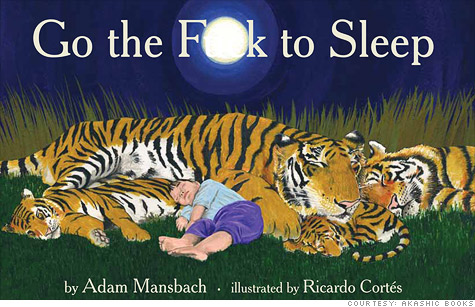
The novelist Adam Mansbach perfectly captured the frustration and exhaustion of dog tired parents in his wildly successful children’s book parody Go the F*** to Sleep. It all started with Mansbach’s insomniac 2 year-old daughter. An exhausted Mansbach jokingly posted on his Facebook wall “look out for my forthcoming children’s book Go the F*** to Sleep.”

The reaction to the posting was so positive that Mansbach played around with some verses for his still imaginary book and shared them on his Facebook wall. The book soon took shape, and he asked his friend Ricardo Cortés to illustrate the book. The result was primary colored, tranquil illustrations paired with the rhythms and quiet words of a classic children’s book. Only don’t read this book to your children. Here’s a sampling of the treacly verse punctuated with attitude as sharp as barbed wire:

The eagles who soar through the sky at rest And the creatures who crawl, run and creep. I know you’re not thirsty. That’s bull s***. Stop lying. Lie the f*** down my darling and sleep.

Before the book was published, it went viral amidst a flutter of tweets from a reading that Mansbach gave in Philadelphia. Soon after, booksellers received a PDF file of the book from the ecstatic Brooklyn-based publisher, Akashic Books. The book was forwarded until it landed in inboxes of folks who had never met a bookseller.

Go the F*** to Sleep soared to the top of Amazon’s general best-selling list. The buzz around the book was so deafening that the publisher moved up the just in time for Father’s Day last year. Film rights have been acquired, the book is to be translated into more than 12 languages, and there is an audiobook version read by the actor Samuel L. Jackson.

When I first came upon Mansbach’s book I filed it away as a column idea and moved on to final exams with Anna. Lo and behold, there was an excerpt from Mansbach’s fine literary novel, The End of the Jews, on Anna’s Biblical literature test. The book is the complicated story of three generations of one Jewish family and was lauded as “beautiful and heartbreaking and brilliant.” The passage on Anna’s test was a deep slice of life from a portrait of a marriage, remarkable for its bruising realism and painful resonance. A wife misreads her husband’s social cues, and he tortures her for days with the silent treatment. Anna’s task was to explicate the consequences of speaking up to an emotionally abusive husband versus taking the easy way out and ignoring him until his bad mood passed through like a storm cloud.

Mansbach is a smart, versatile writer. His work is remarkable for the way he understands the beguiling, frail and ugly humanity of his characters. So yes, my child, Go the F*** to Sleep. Your parents will recognize Mansbach’s vulnerable humanity as wise and sad and funny and introspective because that’s what a good writer can do in any genre.

The Highs and Lows of Etgar Keret

Etgar Keret

It’s no wonder that when Etgar Keret’s name is mentioned, the literary adjectives abound. Post-modern, fabulist, surrealist, subversive. But first and foremost, Keret loves all things Hebrew and Israeli. His ardor was in evidence at a recent appearance at Brookline Booksmith where he discussed his new book, “Suddenly, a Knock on the Door.”

“My parents never read books to me; they made up stories,” Keret said to the standing-room-only crowd. “Reading from a book is what a lazy parent would do.”

Keret’s parents, survivors of the Holocaust, presented an unconventional range of subjects in their bedtime stories. His mother’s tales were fantasies populated with unicorns and fairies and witches. His father’s stories were about drunks and prostitutes – stories that Keret noted were full of “love and warmth and compassion. They were very moral stories.”

‘My stories are much smarter than I am. They are like a dream, which is why it’s difficult to take ownership of them.’
The genesis of the elder Keret’s narratives reflected his peripatetic post-Holocaust experiences. Having been refused entry into Israel after the war, he returned to Europe to acquire arms for the Irgun – Israel’s underground resistance – on the black market. He did business with the Mafia in Sicily by day, and slept in parks at night. His new business associates noticed that he was homeless and offered him an empty room in one of their bordellos.

Keret told his audience “that the people with whom my father associated – mobsters, prostitutes – didn’t care that he was Jewish. He taught me to see a person’s character, not his position. I think that’s why my characters live on society’s margins.”

To that end, Keret’s work remains firmly outside the conventions of literature, and his process is idiosyncratic. “My stories are much smarter than I am,” he said. “They are like a dream, which is why it’s difficult to take ownership of them.”

Keret rarely works from a single idea or has a chronological plot in mind. Rather, he tugs at a thread or explores an image. “It’s all about tone. And the voice is very important. Writing for me is like surfing. I stand on the board, anticipating the next wave, and when it comes I try not to fall off.”

Keret revels in the fact that he writes in a language that was used only for prayer and Torah study for more than 2,000 years, but then updated virtually overnight. This linguistic upheaval, he said, “tells the contemporary story of the country. We needed words to catch up with 2,000 years of social development. So we imported them from other languages, derived them from the Biblical Hebrew or had to make them up. This makes the Hebrew language wild, anachronistic – a combination that is very fundamental to Israeli society.”

Keret told an anecdote from a recent trip to Korea to illustrate Hebrew as a frozen language “microwaved for modern usage.” In trying to explain Israeli society to Koreans, he told them that Jerusalem suspends public transportation on the Sabbath in accordance with Biblical law. His puzzled audience asked if Israel was like Iran? Keret countered that Israel is so liberal that a transgendered singer represented the country in an international contest. Completely confused, the Koreans asked him if Israel was like San Francisco? Keret responded that the answers to both their questions was yes, explaining that Israeli society is distinguished by both religious conservatism and social openness.

He noted that the Hebrew language also reflected these conflicting impulses of old and new – in its use of formal and colloquial speech:

“Hebrew is not exclusively a high-register language. You need to keep switching between registers to move through eras and capture the energy of the country. In my work, I move up and down in sentences, which initially confused my translator. Occasionally a translator calls to ask which register – up or down? I tell him in Hebrew it’s both.” Keret’s written version of colloquial Hebrew is central to his literary identity. During his recent teaching appointment at Wesleyan University, he was confounded when his workshop students talked about skill and craft:

“Engineers build bridges – they craft something. Pilots land planes – they have skill. I’m not a writer by skill. I can’t write ordinary things like birthday cards or a note to my neighbor. My passions overtake my abilities. I think that’s why my stories are so short.”

As for his start in writing, Keret said, “I think I was a writer long before I realized I was a writer.” He began composing stories during his army service to cope with a friend’s suicide. At Hebrew University, he wrote well into the night and was repeatedly late for morning classes. Threatened with the loss of his scholarship, Keret showed his advisor those nocturnal stories as proof that his extracurricular activities were intellectual. He not only salvaged his university career, he also established his literary reputation. A few years later, that same professor edited and published Keret’s first collection of short stories.

And thus his advice to aspiring writers: Wake up late.

Health Care from the Inside Out: Two Sisters, Two Perspectives

The first time I met Suzanne Salamon, she told my fuming mother that at 74, she was virtually a youngster in Suzanne’s geriatric practice in Boston. She also complimented my mother on her pretty green eyes, which forever put her in my mother’s corner.

Even my porcupine mother appreciated that Suzanne is a dream of a doctor – empathetic, smart and humble.

What I didn’t realize at the time of my mother’s first visit to Suzanne is that I knew her personal story through her sister Julie Salamon’s books. I had read Julie’s autobiographical novel “White Lies” about the child of Holocaust survivors whose father found meaningful work as a country doctor in a small Ohio town. Julie’s memoir, “Net of Dreams,” opens with Julie, her mother Lily (Szimi) and step-father visiting Auschwitz where her mother had been interned. Later in the trip, the trio crosses paths with Steven Spielberg who was filming “Schindler’s List” on location in Poland.

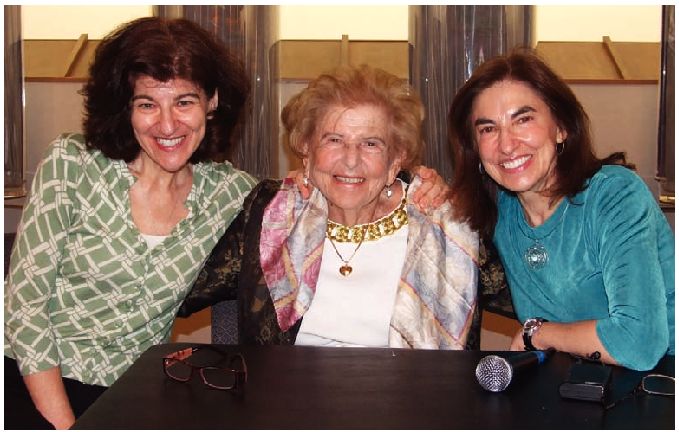
Julie, Lily and Suzanne Salamon

The sisters recently teamed up in Boston for the Hadassah-sponsored program, “Health Care from the Inside Out: Two Sisters, Two Perspectives.” Both women have collective wisdom and extended experience on the subject – Suzanne, as associate chief for clinical geriatrics at Beth Israel Deaconess Medical Center and Julie, as the author of another book, “Hospital: Man, Woman, Birth, Death, Infinity, Plus Red Tape, Bad Behavior, Money, G-d, and Diversity on Steroids.” The “hospital” of the title is Maimonides Medical Center in Brooklyn, where 67 languages are spoken and up to 705 beds are occupied at any time.

It’s clear that the sisters have early and influential memories of the power and the magic of medicine. Their presentation on the current health-care conundrum was as informative as it was compassionate. But it was also their interaction with each other – and their sweet acknowledgement of their mother, who was in the audience – that made their appearance particularly poignant.

The Salamon sisters’ physician father, Alexander (Sanyi) Salamon, had settled the family in Adams County, Ohio, after a difficult and ultimately false start in New York. The only doctor for miles, Sanyi Salamon’s patients revered him. Like many solo practitioners in rural areas, his office was attached to the house.

The sisters told a story that began late one night with a knock on the door of their family’s house. A couple had just received word that their son had died in Vietnam, and the mother was inconsolable. “I always wondered what my father did aside from tranquilizing the woman,” Suzanne said. Their stoic father never talked about his first wife and young daughter who perished in Dachau, but Suzanne wondered if he mentioned them that night to the woman. “As a mother, I looked at that story differently. As a doctor, that story taught me a lot about empathy.”

The year that Julie was at Maimonides, she observed the tension between the bottom line and patient care. “The business of a hospital comes down to people,” she said. “It’s a continuum of experiences from which emerged a lot of discussion of respect, communication or lack thereof. There are competing pressures to secure reimbursement and spend the right amount of time in a system hurrying them.” She added that the moment a patient is admitted to the hospital, the insurance company is forcing the staff to plan the discharge.

With Medicare reimbursements falling far short of actual costs, many geriatric practices are in debt. The 85 and over population is growing, and short visits for patients in their 80s and 90s are ineffective. There are complicated medical histories to sift through and difficult discussions to make about end-of-life issues, such as designating a health-care proxy, when to start palliative care and whether to insert a feeding tube.

“My job is to bring up tough subjects,” Suzanne said. To that end, she never uses euphemisms with her patients, with the exception of characterizing Alzheimer’s as memory loss. “There’s a lot less secrecy today. It’s been years since I’ve been asked to keep a devastating diagnosis from a patient,” she noted.

I looked around at the mostly senior audience and wondered how many of them had healthcare proxies? How many of them have been willing to hand over power of attorney to an adult child? I thought about the 15-year battle my sister and I recently won with our mother to help her legally with her financial issues and health challenges. Did my tablemates more easily accept help from their adult children?

At Maimonides, Julie observed a patient’s room transformed into a sacred space when the subject was end-of-life issues. Stereotypes about doctors and patients fell away as real people emerged. “Finding moments of grace can be difficult,” Julie said. “But part of what you give to your patients is your humanity,” Suzanne added.

The elder Salamons’ grace and humanity remained intact after Dachau and Auschwitz. And those tributes are in full bloom in their daughters: Suzanne Salamon, the doctor and Julie Salamon, the writer.

Confessions of a Scary Mommy

A couple of weeks ago my friend Sam complimented me when he said I articulated an 11th commandment for him in one of my columns: Honor thy Daughter and Son. I hope I don’t disappoint Sam this week with the 360-degree turn I take in confessing that I was a scary mommy when my children were younger.

In fact, I’m having vivid flashbacks to the days when I counted the hours until Ken came home from work or a babysitter relieved me for a solo trip to the grocery store. That’s because I just read Confessions of a Scary Mommy: An Honest and Irreverent Look at Motherhood – the Good, the Bad and the Scary by Jill Smokler.

The book is an offshoot of Smokler’s popular blog of the same name. She has not only chronicled her faux pas, her indignities and ultimately her intense loving moments with her three small children, she has also created an on-line community for women to anonymously post their grievous maternal sins.

What catharsis to read that I’m not the only one who gave my baby Benadryl so I could survive a three-hour flight to Florida. Yes, I too irrationally worried throughout my second pregnancy that I couldn’t possibly love another baby as much as I loved my little girl. And then I freaked out that the second little girl I was so sure I was having was actually a little boy.

Even after all of these years, it’s comforting to know that I wasn’t the only woman who was scared to have a boy. But then something even crazier occurred after Adam was born; I was completely smitten with him. Ken had to practically wrestle my baby boy from my arms when it came time for his circumcision. I was so distraught over what was about to happen to Adam that I stayed upstairs in the fetal position until the deed was done.

Like Smokler, I was never a baby person. I occasionally babysat in high school to earn pocket money and surreptitiously read the dog-eared copy of “The Joy of Sex” or “Everything You’ve Always Wanted to Know About Sex” that seemed to be in every house. In college I never thought about my future children or anyone’s actual children. And in my 20s, when my girlfriends cooed over babies being strolled down the street or holding court from a high chair in a restaurant, I just rolled my eyes.

It’s a good thing that for the vast majority of us the instinct to reproduce is innate. It’s also a good thing that it’s impossible to understand how difficult and frustrating parenthood is until you’re actually a parent. And it’s an even better thing that an intense feeling of love will sweep you away when your child falls asleep in your arms.

But in between the ridiculous and the sublime, Smokler humorously catalogs the big stuff and the not so big stuff that can drive a mother to the edge of her sanity. For example, there are the vacations. Sure, it’s easy to romanticize the days when we played the license plate game on long car rides. Remember magnetic checkers? Well, if you think really hard, I’ll bet you remember that all of that good, simple fun got boring pretty quickly.

Sure, it’s easy to be judgmental about installing DVD players in cars. But until you’ve been lost in Canada for hours and hours with two fidgety kids, you have no right to chastise me for secretly thanking a higher power that we had DVDs and a player with us. What’s that? Children should be able to entertain themselves? You’re probably one of those mothers who tried to take away her baby’s pacifier at six months. Believe me, it all works out in the end. No kid uses a pacifier once the braces go on. I was relieved to learn that I wasn’t the only exhausted mother who, once upon a time, gave her kids chicken nuggets too many times in a week. I was also relieved that I wasn’t the first woman to be jealous of her nanny. The kids adored her, and she folded laundry like she worked for the Gap. It was a nightmare.

But what tripped me up for so many years were the birthday parties. Smokler has a chapter dedicated to the Birthday Party Wars. Who comes up with the most creative theme? Orders the most memorable cake? Or, worst, bakes the best cake themselves. I remember for Anna’s third birthday, I had sand pails and shovels personalized with every kid’s name. Adorable. Original. Except chaos ensued when the kids grabbed the nearest pail because none of them could read.

So yes, I was once a scary mommy. (I probably still am). But the truth is, even though those days of early motherhood were sometimes unbearably long, the ensuing years have gone by all too quickly. That’s the confession of a scary mommy who wished she had a little more wisdom and understanding when she started out.

When Women Were Birds: Fifty-Four Variations on Voice: A Memoir by Terry Tempest Williams

Terry Tempest Williams’s new memoir begins with this stark, bleached declaration: “I am fifty-four years old, the age my mother was when she died.” The mother had bequeathed to the daughter six journals that all turned out to be blank. Not a shadow of a word on any of those pages — pages that Williams describes as “paper tombstones.” Pages that also signal an act of defiance in Mormon culture where “women are expected to do two things: keep a journal and bear children. Both gestures are a participatory bow to the past and future.”

This poetic memoir continues the work Williams, a naturalist and Utah writer, began in “Refuge: An Unnatural History of Family and Place,’’ which interweaved the story of her mother’s unsuccessful battle with cancer with a record-shattering rise of the Great Salt Lake and its destructive effect on a nearby bird refuge.

In “When Women Were Birds: Fifty-four Variations on Voice,’’ Williams explores her mother’s identity — woman, wife, mother, and Mormon — as she continues to honor her memory along with that of the string of women in her family who were stricken by breast cancer. In its 54 sections, one for each year of Williams’s and her mother’s lives, she recounts tales from her mother’s life and from her own in a lyrical and elliptical meditation on women, nature, family, and history.

It’s tempting to think of her mother’s legacy, the untouched journals, as tabulae rasae, blank slates. But Williams brings the literal translation of the Latin phrase to the forefront by inferring that her mother’s unwritten journals are erased slates — there are traces of feelings and dreams and wishes emphasized by William’s italics and capitalization of the word journal. “My Mother’s Journals are words wafting above the page.’’

Williams’s writing pays careful, crisp homage to her family who are “loyal citizens known as ‘downwinders’ ” — people who lived down wind of the Nevada nuclear test site, thus exposed to the radiation that resulted in her mother’s cancer. A year after her mother’s death in 1987, Williams protested at the site where atomic bombs were still being detonated in the desert. Her act of civil disobedience parallels her mother’s subversive act of leaving blank pages behind. The silences, the truths of women’s lives carry the power of an atom, she suggests. Williams quotes the poet Muriel Rukeyser’s famous lines: “What would happen if one woman told the truth about her life? The world would split open.”

Williams traces the personal and artistic influences in her life. “My Mother’s Journals are a creation myth,” declares Williams. Diane Tempest’s empty diaries inspire her daughter to metaphorically fill them with a creation story of her own voice. Her mother’s blank pages offer wide-open spaces for an “unruly imagination” — an imagination that continuously invents stories and shapes memory. She considers her mother’s originality and the work of artists like John Cage and Gustave Courbet and activists like Wangari Maathai. Blank pages beckon Williams to reflect on her life as a daughter, a wife, an activist, and a teacher.

Toward the end of her memoir, Williams makes an exhaustive list of wondrous, exciting possibilities for the blank pages that include clean sheets, white flags of surrender, a white tablecloth not yet set, a scrim, a stage, reviews never written.

The blank pages of Diane Tempest’s journals are full of tacit praise and gleaming admiration for her daughter’s literary gifts — gifts that Williams further understands when she opens her mother’s journals and reads “emptiness, [that] translated to longing, that same hunger and thirst, Mother translated to me. I will rewrite this story, create my own story on the pages of my mother’s journals.”

And so she has written her story, her mother’s story, the story of her clan of one-breasted women by triumphing over the empty page every day.

This review was published in the April 12, 2012 edition of the Boston Globe

Better Living Through Chemistry: My Happiness Project

Color me jaded, but when I first came across The Happiness Project by Gretchen Rubin it sounded kitschy to me. Nevertheless, a couple of years ago I was curious enough to follow Rubin’s Facebook postings, most of which exhorted me to work on my happiness every day. A simple attitude adjustment, like telling yourself that you were happy, was the first step towards true contentment. Not really convinced, but I kept on keeping on.

I tried to lighten up for a time and absorb some of Rubin’s tips for chasing away the blues by picturing a new landscape, or taking in the following advice for combating boredom:

Take the perspective of a journalist or scientist. Really study what’s around you. What are people wearing, what do the interiors of buildings look like, what noises do you hear? If you bring your analytical powers to bear, you can make almost anything interesting. (Perhaps this is a key to the success of some modern art.)

No can do. I don’t have the patience. And Rubin’s subtitle serves as a telling abridgement— Or, Why I Spent a Year Trying to Sing in the Morning, Clean My Closets, Fight Right, Read Aristotle, and Generally Have More Fun. I have to say, none of things sound like fun to me.

The Happiness Project was born on a cross-town bus ride in Manhattan when Rubin was in a funk. Then it hit her: she was going through the motions of living rather than actually living. It seems like a deceptively simple epiphany. But step back, take a deep breath, turn off the internal chatter running through your brain, and take in your surroundings. Fully live in the moment. Not so easy when a child is not doing well in school or an aging parent is losing her memory.

Let me tell you about my own complicated happiness story. I’ll begin at the end. A few weeks ago I was driving the daily loop that encompasses the 15 miles between my children’s schools. Quite suddenly it hit me that I was happy. Not a euphoric kind of happiness, but simmering contentment instead of an acid angst dwelling in the proverbial pit in my stomach.

Not so remarkable until I tell you what happened to me a decade ago. Yes, I have two great kids.  I have a loving husband whom I adore. There is a mortgage on our lovely home, a Volvo in our driveway. And then the life that I carefully built with Ken came apart for no apparent reason. In layperson’s parlance I had a nervous breakdown. My depression and panic were off the charts. I’d been through this many times, but over the years I’d always managed to climb out of the pit.

This time it was different. The psychological pain wasn’t going away. I began going to weekly psychiatric appointments with Dr. G. For two months I debated, mostly with myself during those sessions, about signing on for an anti-depressant. One day Dr. G asked me if I would take insulin if I had diabetes. When I said that I would, he followed up with another question. Would I take medication to correct a serotonin imbalance? And so my personal happiness project began.

At first I grudgingly took the medication to function. The stigma be damned! Then I gladly took the medication to have a better life. So what if I traded twenty pounds for my happiness, and yes, my sanity. I got the better end of that bargain. Underlying my decision to fill that Prozac prescription was an obligation to do everything I could to be the best for my family. Anti-depressants are not a cure-all, but in conjunction with counseling they have worked wonders for me. That said; please don’t try this at home. Self-medication is dangerous and sometimes deadly.

I share my story to tell you that depression and anxiety can happen to anyone at any time. I share my story to tell you that working out at the gym or reading up on tips to boost your happiness can’t wholly address serious medical conditions like depression and panic disorder. Mostly, I’ve decided to go public to tell you that there is medicine and therapy and, yes, love out there.

Gretchen Rubin’s book is a fun guide to de-cluttering or cleaning out your closets But there’s nothing wrong with you if a best-selling paperback, meant to provide organizing tips leavened with a little perspective, does not lead you to your personal nirvana. I don’t care how many copies of The Happiness Project have been sold. It’s not a guide to expansive living, the Physician’s Desk Reference or a cure-all. And by the way, I’m much happier since I “unfriended” Gretchen Rubin on Facebook.


Some Lessons from Trayvon Martin’s Death: Donna Britt’s Memoir Brothers (& Me) by Judy Bolton-Fasman

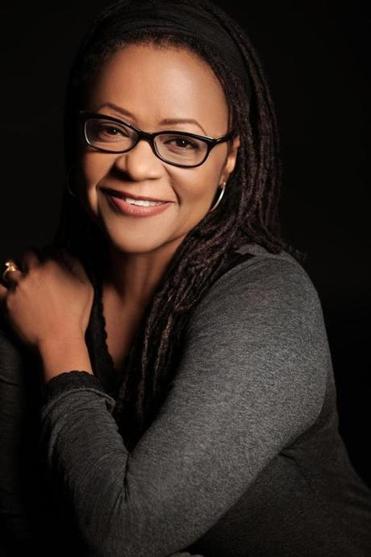
Donna Britt - Roy Cox Photography

Donna Britt is an award-winning journalist still haunted by a chillingly nondescript headline from 1977: Gary Man Shot Dead by Police. The man – Britt’s older brother Darrell – was unarmed when he was shot and killed in racially torn Gary, Ind., by two white police officers who alleged that the young man, who had no history of mental, drug, or alcohol problems, launched an unprovoked attack with “a chain, a brick, a plastic baseball, and a three-foot length of pipe,’’ accusations that the family found unfathomable.

Darrell’s death, the centerpiece of Britt’s recently published memoir Brothers (& Me), eventually launched Britt on a personal path of self-examination: the only daughter in a middle-class black family with three self-absorbed brothers and a difficult father, early acceptance of her role as a self-sacrificing caregiver, and the place of race and sex in American life and in hers.

This morning on National Public Radio she spoke as the mother of three black sons. Her two older children joined her on the interview to reflect on the senseless death of Trayvon Martin the black unarmed teenager shot by a volunteer on neighborhood watch patrol in Florida.

Britt described “the talk” that black parents have with their sons and daughters.  The delicate timing of this “preparatory explanation and warning “ happens during the shift from childhood to teen years—when young black men are perceived as dangerous and threatening.” Her sons told anecdotes about their experiences as young black with authority. But what chilled me was when Britt talked about 16-year old son, a track star who essentially gambles with his life when he goes out running.

My son is on his school’s track team too. He’s a long-distance runner who will often run a stretch of the Boston Marathon Route. As mother of a white boy, I have the relative luxury of worrying about cars, dehydration, even strangers. But no one is every suspicious of my son because of who he is. “It’s hard not to be black,” said Justin Britt-Gibbons, Britt’s oldest son.

Britt was a graduate student in journalism at the University of Michigan when Darrell was killed in a predominantly white area near the family home. In the aftermath of Darrell’s death, Britt begins somehow to blame herself. In her book she writes, “Suddenly our growing apart, a process inevitable among even the closest siblings, was unforgivable. Darrell had stopped looking for me, too, but that hardly mattered. He was gone. And he’d left me with a question: How could I have stopped paying attention?’’

From that day on Britt paid scrupulous, aching attention to the men in her world. She became the mother of three sons – the middle one named for her dead brother. When she arrived at The Washington Post in the late 80s, she resurrected Darrell 12 years after his death in an extended essay that put “flesh on my ghost.’’ Steeped in memories of Darrell, she continued to think long and hard about the black man’s plight in American society: “As the sister, friend, daughter, and lover of brothers, I knew everything that deeply affects American men affects black men more harshly. Being human is wrenching for everyone. Yet the level of hostility and suspicion directed at black men is so palpable, their culturally inflicted wounds so raw, I understood how a decent brother might be drawn to anything that eased the pressure.’’

That piece, along with other writing assignments for the Post’s well-regarded features section, brought her to the attention of the paper’s top editors and led to an offer for one of journalism’s plum jobs as a columnist. I was a Baltimore to Washington DC commuter in the early 90s, and Britt’s personal, deep writing voice kept me company on those train rides. She wrote about balancing her family life with deadlines. She wrote about young black men like Trayvon Martin, like her sons. She was every woman while also uniquely herself.

This morning on National Public Radio, Donna Britt acknowledged that we’ve made some progress since that day in 1977 when her brother Darrell was randomly shot by police. But still, “racism is in the water and the air. Like sexism we absorb them. It takes time, love and forgiveness to make those shifts permanent.”

In Brothers (&Me) she presciently writes that love is “the glue that binds a soul’s warring selves, the meeting place at which our opposites melt into and become part of each other.’’ I’m sure that’s also part of Britt’s talk to her young black sons.