Better Living Through Chemistry: My Happiness Project

Color me jaded, but when I first came across The Happiness Project by Gretchen Rubin it sounded kitschy to me. Nevertheless, a couple of years ago I was curious enough to follow Rubin’s Facebook postings, most of which exhorted me to work on my happiness every day. A simple attitude adjustment, like telling yourself that you were happy, was the first step towards true contentment. Not really convinced, but I kept on keeping on.

I tried to lighten up for a time and absorb some of Rubin’s tips for chasing away the blues by picturing a new landscape, or taking in the following advice for combating boredom:

Take the perspective of a journalist or scientist. Really study what’s around you. What are people wearing, what do the interiors of buildings look like, what noises do you hear? If you bring your analytical powers to bear, you can make almost anything interesting. (Perhaps this is a key to the success of some modern art.)

No can do. I don’t have the patience. And Rubin’s subtitle serves as a telling abridgement— Or, Why I Spent a Year Trying to Sing in the Morning, Clean My Closets, Fight Right, Read Aristotle, and Generally Have More Fun. I have to say, none of things sound like fun to me.

The Happiness Project was born on a cross-town bus ride in Manhattan when Rubin was in a funk. Then it hit her: she was going through the motions of living rather than actually living. It seems like a deceptively simple epiphany. But step back, take a deep breath, turn off the internal chatter running through your brain, and take in your surroundings. Fully live in the moment. Not so easy when a child is not doing well in school or an aging parent is losing her memory.

Let me tell you about my own complicated happiness story. I’ll begin at the end. A few weeks ago I was driving the daily loop that encompasses the 15 miles between my children’s schools. Quite suddenly it hit me that I was happy. Not a euphoric kind of happiness, but simmering contentment instead of an acid angst dwelling in the proverbial pit in my stomach.

Not so remarkable until I tell you what happened to me a decade ago. Yes, I have two great kids.  I have a loving husband whom I adore. There is a mortgage on our lovely home, a Volvo in our driveway. And then the life that I carefully built with Ken came apart for no apparent reason. In layperson’s parlance I had a nervous breakdown. My depression and panic were off the charts. I’d been through this many times, but over the years I’d always managed to climb out of the pit.

This time it was different. The psychological pain wasn’t going away. I began going to weekly psychiatric appointments with Dr. G. For two months I debated, mostly with myself during those sessions, about signing on for an anti-depressant. One day Dr. G asked me if I would take insulin if I had diabetes. When I said that I would, he followed up with another question. Would I take medication to correct a serotonin imbalance? And so my personal happiness project began.

At first I grudgingly took the medication to function. The stigma be damned! Then I gladly took the medication to have a better life. So what if I traded twenty pounds for my happiness, and yes, my sanity. I got the better end of that bargain. Underlying my decision to fill that Prozac prescription was an obligation to do everything I could to be the best for my family. Anti-depressants are not a cure-all, but in conjunction with counseling they have worked wonders for me. That said; please don’t try this at home. Self-medication is dangerous and sometimes deadly.

I share my story to tell you that depression and anxiety can happen to anyone at any time. I share my story to tell you that working out at the gym or reading up on tips to boost your happiness can’t wholly address serious medical conditions like depression and panic disorder. Mostly, I’ve decided to go public to tell you that there is medicine and therapy and, yes, love out there.

Gretchen Rubin’s book is a fun guide to de-cluttering or cleaning out your closets But there’s nothing wrong with you if a best-selling paperback, meant to provide organizing tips leavened with a little perspective, does not lead you to your personal nirvana. I don’t care how many copies of The Happiness Project have been sold. It’s not a guide to expansive living, the Physician’s Desk Reference or a cure-all. And by the way, I’m much happier since I “unfriended” Gretchen Rubin on Facebook.
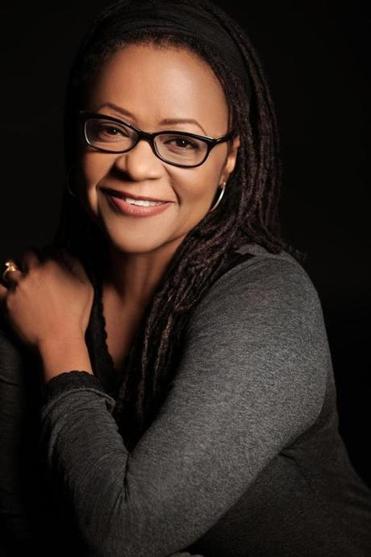
 

Some Lessons from Trayvon Martin’s Death: Donna Britt’s Memoir Brothers (& Me) by Judy Bolton-Fasman

Donna Britt - Roy Cox Photography

Donna Britt is an award-winning journalist still haunted by a chillingly nondescript headline from 1977: Gary Man Shot Dead by Police. The man – Britt’s older brother Darrell – was unarmed when he was shot and killed in racially torn Gary, Ind., by two white police officers who alleged that the young man, who had no history of mental, drug, or alcohol problems, launched an unprovoked attack with “a chain, a brick, a plastic baseball, and a three-foot length of pipe,’’ accusations that the family found unfathomable.

Darrell’s death, the centerpiece of Britt’s recently published memoir Brothers (& Me), eventually launched Britt on a personal path of self-examination: the only daughter in a middle-class black family with three self-absorbed brothers and a difficult father, early acceptance of her role as a self-sacrificing caregiver, and the place of race and sex in American life and in hers.

This morning on National Public Radio she spoke as the mother of three black sons. Her two older children joined her on the interview to reflect on the senseless death of Trayvon Martin the black unarmed teenager shot by a volunteer on neighborhood watch patrol in Florida.

Britt described “the talk” that black parents have with their sons and daughters.  The delicate timing of this “preparatory explanation and warning “ happens during the shift from childhood to teen years—when young black men are perceived as dangerous and threatening.” Her sons told anecdotes about their experiences as young black with authority. But what chilled me was when Britt talked about 16-year old son, a track star who essentially gambles with his life when he goes out running.

My son is on his school’s track team too. He’s a long-distance runner who will often run a stretch of the Boston Marathon Route. As mother of a white boy, I have the relative luxury of worrying about cars, dehydration, even strangers. But no one is every suspicious of my son because of who he is. “It’s hard not to be black,” said Justin Britt-Gibbons, Britt’s oldest son.

Britt was a graduate student in journalism at the University of Michigan when Darrell was killed in a predominantly white area near the family home. In the aftermath of Darrell’s death, Britt begins somehow to blame herself. In her book she writes, “Suddenly our growing apart, a process inevitable among even the closest siblings, was unforgivable. Darrell had stopped looking for me, too, but that hardly mattered. He was gone. And he’d left me with a question: How could I have stopped paying attention?’’

From that day on Britt paid scrupulous, aching attention to the men in her world. She became the mother of three sons – the middle one named for her dead brother. When she arrived at The Washington Post in the late 80s, she resurrected Darrell 12 years after his death in an extended essay that put “flesh on my ghost.’’ Steeped in memories of Darrell, she continued to think long and hard about the black man’s plight in American society: “As the sister, friend, daughter, and lover of brothers, I knew everything that deeply affects American men affects black men more harshly. Being human is wrenching for everyone. Yet the level of hostility and suspicion directed at black men is so palpable, their culturally inflicted wounds so raw, I understood how a decent brother might be drawn to anything that eased the pressure.’’

That piece, along with other writing assignments for the Post’s well-regarded features section, brought her to the attention of the paper’s top editors and led to an offer for one of journalism’s plum jobs as a columnist. I was a Baltimore to Washington DC commuter in the early 90s, and Britt’s personal, deep writing voice kept me company on those train rides. She wrote about balancing her family life with deadlines. She wrote about young black men like Trayvon Martin, like her sons. She was every woman while also uniquely herself.

This morning on National Public Radio, Donna Britt acknowledged that we’ve made some progress since that day in 1977 when her brother Darrell was randomly shot by police. But still, “racism is in the water and the air. Like sexism we absorb them. It takes time, love and forgiveness to make those shifts permanent.”

In Brothers (&Me) she presciently writes that love is “the glue that binds a soul’s warring selves, the meeting place at which our opposites melt into and become part of each other.’’ I’m sure that’s also part of Britt’s talk to her young black sons.

Just Love Them: Mayim Bialik and Attachment Parenting by Judy Bolton-Fasman

In all the years that I’ve been writing and thinking about kids and parenting, the best piece of advice I got was from my dear, late father in-law, Dennis. We had just brought Anna home from the hospital, and I was panicked. How in the world was I going to raise this tiny, vulnerable girl to womanhood? “Just love her,” Dennis said. “The rest will fall into place.”

Anna is almost a legal adult. Adam is not too far behind. For these past 18 years, I’ve just loved them.

Parents in various cultures bring up their children in distinctive ways. My Connecticut grandma and Cuban abuela had very different ideas about caring for an infant. Grandma thought that I shouldn’t be held too much and that I should “cry it out” until I fell asleep from exhaustion. Abuela wanted to hold me day and night, feed me on demand and let me nap in her arms. But for all the different ways we care for our children, many of us can relate to some of the values of “attachment parenting.”

Mayim Bialik, the actress and scientist, is a passionate advocate of attachment parenting in her new book, Beyond the Sling. You may remember Bialik from the movie “Beaches,” in which she played the Bette Middler character as a child. Bialik went on to star in her own television show, “Blossom,” in the ’90s and now appears in the sitcom, “The Big Bang Theory.”

Bialik – who studied Hebrew and Judaism and pursued a doctorate in neuroscience – cites eight basics for attachment parenting:

• Natural childbirth

• Exclusively feeding a baby breast milk

• Taking the time to formulate sensitive and thoughtful responses to your children

• Bonding through touch

• Co-sleeping

• Consistent parenting by a primary caregiver

• Gentle positive discipline, which means no corporal punishment

• Balancing your needs with those of your child

Bialik comes across as a supportive, informative friend, but that doesn’t dilute her fervency. For example, she’s an unequivocal proponent of natural childbirth. However, a drug-free delivery or a home birth is not an option for everyone. Sometimes there are complications like preeclampsia or gestational diabetes, both of which I had. My water also broke six weeks before Adam’s due date. Bialik considers extenuating circumstances, acknowledging that what worked for her and her family may not be safest or right for another family.

Much has been written about the salutary effects of breastfeeding for mother and child. Bialik anticipates the health and psychological challenges of nursing a baby. She acknowledges that there can be obstacles, but her message is to keep trying to do the best you can. I think she’s on target with that advice.

Sensitive and thoughtful responses to your children may seem obvious in parenting. Getting into that mindset connects with gentle and positive parenting. No hitting. No excuses. The one exception in my experience was the time a 2- year old Anna ran into the street, and I patted her bottom with some force. (I did not spank her). She was surprised, but not in any pain. What did hurt were her feelings. Afterward, she remembered not to approach the street without an adult.

But raise your hand if encouraging your children has sometimes crossed into pressuring them. I’ll raise two hands. And I’ll give you a textbook example of a mistake that I recently made. Adam came home last week with a nice report card. But I couldn’t leave well-enough alone. I suggested that maybe next term he could turn a couple of those B pluses into A’s. At first glance, it seems as if I took Adam’s hard work for granted. What I really did was to take my son for granted, and that was just plain wrong. Bonding through touch has always been a big issue for me. In my mind it links up to co-sleeping, which Ken wasn’t thrilled about when our children were babies. Our kids squirmed and kicked a lot. Nevertheless, I undid all of his scheduling and behavior modification around sleep when he was on business trips.

There are also controversial assertions in Beyond the Sling. For example, Bialik and her husband chose not to have their children vaccinated – a subject that has been addressed by others with much greater knowledge than I. She notes that her two young sons have never been on an antibiotic. Instead she pays careful attention to her sons’ body cues and manages their health accordingly. While her children’s well-being is a blessing, we all know that at times children need serious medical intervention. Bialik, the neuroscientist, points out that thousands of years of evolution have hardwired us to protect and raise our children. She emphasizes that a parent’s intuition is the first and best line of defense in childrearing. She also captures the bittersweet arc of a child gradually moving from dependence to independence.

Time with small children is fleeting. Just love them. That’s the charming, enduring subtext of Beyond the Sling.

Longing for Home in the Middle East: Anthony Shadid’s House of Stone

My Dear Children:

I just read a memoir in which one of the many things I learned was that the Arabic word for house – bayt – is achingly close to the one in Hebrew – bayit. The book is called “House of Stone: A Memoir of Home, Family, and a Lost Middle East,” by Anthony Shadid.

Like me, Shadid grew up in two languages, with two translations of the world around us. He was a Lebanese American whose Arabic was as proficient as my Spanish. As it was for me with Spanish, the more time he spent immersed in Arabic – particularly in Lebanon – the more the words came back to him until he was practically fluent again.

Sadly, Mr. Shadid died last month covering the conflict in Syria for The New York Times. He succumbed to an asthma attack. He was only 43. Not only did he leave behind a body of sterling Pulitzer-prize-winning journalism, he also left his completed memoir of renovating his great-grandfather’s home in Marjayoun, a small town nestled in the hills of southern Lebanon. Renovate is not quite the right word for Shadid’s project. Renovate is what we did to our kitchen. But Shadid didn’t exactly rebuild the house, either. He writes that there was meaning and “an elegance of movement as the house hurtled towards its end and a new beginning.”

Anthony Shadid with his son in front of his great-grandfather's house in Lebanon

A house of stone is strong and proud. Its very material is “the yeast of the earth.” You can make the case that he restored the house to its original Levantine glory. But he did more than that: He wanted to live in this house as a way to reclaim his history while breathing new life into it.

The house had marble stairs buffed until they actually reflected the emotions of the occupants. Marble evokes elegance, antiquity, history. Did you know that your grandmother’s house in Cuba had marble stairs, too?

I remember her telling me how she scrubbed those floors until she saw her face mirrored back. Houses can be so intimate, so personal, so bound-up in identity.

When Shadid looked across the valley from his great-grandfather Isber Samara’s balcony, he crossed decades to make sense of the life that came before and after his sepia-photographed ancestor. Shadid was searching for those elusive sparks that illuminate both purpose and fate in short, intense bursts of insight.

Like your own ancestors from Greece and Turkey, the Ukraine and Poland, Isber had set his sights on America for his family. He sent his children, but never emigrated himself. Isber’s children settled in Texas and Oklahoma. The family worked together peddling, and then opened a dry goods store. Did you know that you had a great-great uncle who settled for a time in Galveston, Texas, running a small grocery store in the early 1900s?

Like Shadid, I have a love-hate relationship with the Diaspora, too. When your relatives have lived in four countries in just two generations, you begin to wonder if your family is “forever doomed to departures.” Where exactly is home anyway?

Shadid literally italicizes his family history. Paragraphs like that usually distract me. But trust me, these extended passages are well worth the time. Isber Samara lived and prospered in the Ottoman Empire, as did your great-grandfather’s family. My people, your people, lived in Ankara. They made their money in silver, and they educated their boys to become Torah scholars.

History was as continuous and borders were as seamless for my grandfather, Jacobo Alboukrek, as they were for Isber Samara. But the Ottoman Empire crumbled and crushed Jacobo’s family. Their Armenian friends and neighbors were disappearing. The Jews were afraid they were next. Some of them joined relatives already settled in Cuba. The rest of the family settled in Palestine.

Shadid longs for the open borders of the Ottoman Empire. Borders that enhanced the beauty and culture of Lebanon. He sees the memory come to life in the tiles that he picks for his home in Marjayoun. The tiles are called cementos, and Shadid goes to a store in Beirut to buy them from the Maalouf Trading Company. Doesn’t that sound like a name right out of Lawrence of Arabia?

Shadid takes time to describe both the artistry of these tiles and the history they awaken in him. For him, these decorative tiles in geometrics and floral, accented in purples and greens and yellows, remind him of “borders that were still for a time, crossable.”

For now, let’s leave politics alone. For the most part, Shadid does. “The Levant is no more,” he writes, “but I had been reminded – by the grace of the triple arches, the dignity and pride of the maalimeen [artisans who worked on the house], and … Isber’s sorrow and sacrifice – that behind the politics, there were prayers still being said with hope for what draws us together.”

Focus on that hope. Focus on the humanity that draws us together. Focus on the similarities between bayt and bayit. For in the end, they mean the same thing.

Love, Mom

Beren Academy Boys’ Basketball Team Forfeits Game for Shabbat by Judy Bolton-Fasman

I get the feeling that the Board members of the Texas Association of Private and Parochial Schools—TAPPS—don’t meet a lot of people who are different then they are. Apparently, it’s impossible for those folks to understand that not everyone celebrates the Sabbath on a Sunday. Enter the Robert M. Beren Academy Boys’ Varsity Basketball—known as the Stars—to shake up the TAPPS Board’s world.

Perhaps it’s the first time that anyone at TAPPS has seen that serious athletes can also be observant Jews. Beren’s players tear up a court with their yamulkas pinned firmly in place. And for the first time in its 42-year history, this Modern Orthodox day school in Houston has made it to the play-offs in their division. Imagine the boys’ excitement when they realized they would be going to the semifinals in Dallas this weekend. Imagine their disappointment when they realized that their playoff game in Dallas was scheduled for 9PM on March 2, Friday night—erev Shabbat. Imagine their heartbreak when their appeal to TAPPS to move the game start time to earlier in the afternoon was unilaterally denied.

Yes, unilaterally denied. TAPPS acted alone when its Board decided to sideline Beren Academy. According to Beren Academy’s head of school, Rabbi Harry Sinoff, the heads of school of the opposing teams had no objection to accommodating the Stars. In fact, just the week before, Beren moved their quarterfinals game against a local Catholic high school to 2pm on a Friday afternoon. Our Lady of the Hills Catholic High School had no trouble understanding that playing basketball on Shabbat is not an option for the Beren Academy boys.

If there was ever a perfect case for the Anti-Defamation League to broker, this was it. The director of ADL’s Southwest’s regional office in Houston wrote a letter to Edd Burleson, TAPPS’ director, which read in part:

Many of the private and parochial schools that are TAPPS members are faith-based institutions where religion is their guiding principal. As such, it is incumbent upon TAPPS to ensure that its members do not have to choose between observing their religious holy days and competing in championship activities. By asking a member school to participate on their Sabbath day, TAPPS will send the message to the Beren Academy team and all other teams whose faith prohibits Sabbath activities, that their religious principles are not valued and that they are not equal members of the TAPPS family.

But the hard truth is that at best TAPPS is sending mixed signals about religious observance and sportsmanship. In 2010, the Association accommodated the Arlington Burton Adventist Academy whose students also observe the Sabbath from Friday sundown to Saturday sunset. The Seventh Day Adventist school had reached the soccer finals in its division and, with TAPPS’ approval, secured a location to play its soccer game after the Sabbath.

When I spoke to Burleson on the phone he said that the logistics for the Seventh Day Adventists’ participation in the soccer finals was simpler, involving only four schools. Logistics? This isn’t a military operation—it’s a high school basketball game. Burleson explained that, “In that case the one school that observed the Sabbath and their opponents were adamant that all of the qualifying teams play.” Okay, so where is Our Lady of the Hills this week? The Stars team has been forced to forfeit Friday night’s upcoming game and the Catholic high school will be taking Beren’s place.

Burleson went on to qualify the Arlington Burton decision. “The [TAPPS] Board made an exception when it allowed [Arlington Burton] to play. Afterwards the Board felt that they had made a mistake and they do not want to make the same mistake again.” Of course they don’t. Who wants to repeat an act of grace and empathy more than once?

This is not the first time that Sabbath observance has been an issue for a Jewish day school. In my backyard, the Modern Orthodox Maimonides School in Brookline faced a similar conflict in 2009 when the school’s mock trial club had reached the national championships in Atlanta. The competition’s organizers initially refused to change the Saturday date, but the school enlisted the help of the Justice Department and two days before the competition, the mock trial organization allowed Maimonides to schedule its appearance on Thursday.

“I’ve been bombarded with hate mail over this issue,” Burleson said. He sounded a bit incredulous. While it’s not right that Burleson has been the target of some folks’ frustration and venom over the incident, it’s not surprising that intolerance and ignorance lead to unpleasant things like hate mail.

Rabbi Sinoff wisely put the TAPPS fiasco in perspective. “Even though the start times for this weekend’s tournament in Dallas haven’t been changed, we’ll still celebrate Shabbat like we always have.”

Amen and Shabbat Shalom.

The Other Wes Moore: One Name Two Fates by Judy Bolton-Fasman


Lately, I’ve been thinking a lot about Wes Moore’s memoir, The Other Wes Moore: One Name, Two Fates. If Moore’s memoir had not actually happened, it would be a neat parable of two radically different lives that originated at the same starting point.

But this is not a There but for the Grace of God Go I story. Moore’s story may appear to be the very embodiment of the symbiotic relationship between fate and choice. But really this is a story about locating and then tapping into free will to beat the odds.

Here’s the book’s stark premise: Around the time that the author Wes Moore became Johns Hopkins University’s first Rhodes Scholar in 13 years and the university’s first-ever African-American Rhodes scholar, another Wes Moore—a contemporary—was wanted for the murder of a police officer in an armed robbery for which he would eventually go to jail for life. That was 2000.

“One of us is free and has experienced things that he never even knew to dream about as a kid,” the author Wes Moore writes in his memoir. “The other will spend every day until his death behind bars. … The chilling truth is that his story could have been mine. The tragedy is that my story could have been his.”

The two men grew up in the same tough West Baltimore neighborhood, but irony does not hang over this book like a dark cloud. Wes Moore, the author, went to Oxford, was a decorated war hero who served in Afghanistan and was a White House Fellow. And yes, the other Wes Moore is serving a life sentence without parole and became a grandfather at the age of 33. Two paths began at the same point, but diverged. The road taken, the road not taken—each of them men spent time on both roads.

The Wes Moores converge on the same destination. Through prison visits and letters, the two Moores bared their souls to one another and laid out their lives side by side. Poverty was both the level playing field and the catalyst that propelled these two men in opposite directions. Both of them grew up without their fathers—author Wes’ father died when he was four, prisoner Wes never met his father. Both were grief stricken. But one mourns the death of a loving father, while the other seethes over his absent one.

The author’s mother was a teacher who kept careful track of her son’s growing apathy toward school and attraction to life on the streets. She moved her family to the Bronx when Wes was a young teenager to be near loving grandparents at the ready to help Wes and his sisters. Wes won a scholarship to Riverdale Country Day School, but he couldn’t connect to his rich white classmates. He missed school and failed most of his classes.

The Rhodes Scholar Wes Moore had a mother who never gave up on him. She bought her son Mitch Albom’s book about a Michigan basketball team, and his spark for reading caught on fire. She scraped together tuition money to send him to a military school in Pennsylvania where he thrived and became one of the youngest officers in the history of the school. The other Wes Moore’s mother did her best to protect Wes from the streets. She did that and more while trying to make rent and put food on the table. It’s heartbreaking that when someone bothered to teach the other Wes Moore to read, he soared up to college level.

There were other aching near misses in the other Wes Moore’s life. His mother enrolled at Johns Hopkins in the early 80s, determined to get an education that would have propelled her into the middle class. Government cuts abruptly ended her college career. Wes himself went through a year-long Job Corps program, earning high scores on his GED and training as a carpenter. But there was no job to be had afterwards, and the money to be made on the streets was too tempting.

You may be thinking “The Other Wes Moore” sounds like a fascinating story—an important call to arms to reform society—even offering a comprehensive appendix of resources at the end of the book to help at-risk youth. You may also wonder if these men’s stories have resonance for a reader beyond the book.

I lived in Baltimore for five years during the 90s. My husband worked at Johns Hopkins Medical School in rough, jagged West Baltimore. When I drove through those streets, I was always overwhelmed by the stories I didn’t know. And I’d think about one of my favorite quotes from Rabbi Hillel of the Talmud: If I am not for myself, who will be for me? If I am not for others, what am I? And if not now, when?


Le Bébé et le Gun-Toting Père: Pamela Druckerman Meet Tommy Jordan by Judy Bolton-Fasman

It seems the French do so many things better than Americans. The cooking is superior. Chicken nuggets? Non! The women are skinnier even though they eat their weight in cheese annually. And now we find out that the French are more successful parents. At least according to Pamela Druckerman, an American journalist who lives in Paris with her husband and three children. She details her anecdotal findings in her new book, “Bringing up Bébé: One American Mother Discovers the Wisdom of French Parenting.”

The book is a breezy cross between parenting manual and personal memoir. The takeaway is that French parents don’t sweat the small stuff and their kids are better adjusted for it. For example, I was impressed that French babies “do their nights” far earlier than their American counterparts, sleeping through the night on average at six weeks old. I guess French babies don’t get “le colic.”

French parents’ success continues by cultivating patience in their children. From the beginning, French children are taught to tolerate frustration whether it be discovering ways to amuse themselves or waiting until a parent finishes a phone call. The French are also visibly less child-centric. Play kitchens and matchbox cars don’t take over a living room in Paris. At least not the ones Druckerman has seen.

About halfway through Druckerman’s book, it suddenly hit me that she should meet Tommy Jordan. He’s the guy who tried to teach his very American teenager a lesson by shooting up her laptop. Furthermore, he videotaped his serious lapse in judgment for the world to see. It wasn’t so much the shooting that scared me (although that was very disconcerting), but it was Jordan’s eerie calmness on camera – a saccharine-like calm studded with emotional landmines that could go off at any moment.

The catalyst for this brouhaha was daughter Hannah’s rude Facebook post in which she bitterly complained about her chore-laden life. Laced with adjectives unfit to print here, Hannah was sick of cleaning up after her siblings and making coffee for her parents. As she points out, her family has a cleaning lady and her name is Maria, not Hannah.

Jordan was also miffed that the day before he read Hannah’s post he had put time and money into fixing his daughter’s laptop, for which she didn’t offer a single word of appreciation. The man clearly was pushed to the brink. What else could he do, but shoot his kid’s laptop at point blank range nine times? I don’t know what 18 million-plus viewers felt when they watched the gratuitous shoot up on YouTube, but I couldn’t shake the feeling that I was witnessing a crime.

If my daughter had written a churlish screed like Hannah’s, I’d be pretty angry, too. By the way, someone should tell Hannah that emptying the dishwasher and making the bed does not qualify as indentured servitude. But here’s where Pamela Druckerman could be useful to Tommy Jordan. First, it’s helpful that they have some cultural commonalities. I don’t think his cigarette smoking would put her off. Everyone smokes in Europe. (I can generalize too, Ms. Druckerman.) And they both like hats. Druckerman appeared on the Today show wearing a beret to emphasize the oh-so-Frenchness of her book. As for Jordan, he sports a ten-gallon hat.

My guess is that mistakes were made with Hannah from the beginning. She probably didn’t do her nights until she was at least 1 – embarrassingly late for a French child not to be sleeping through the night. She was probably never told to be sage. (In French, the word sage rhymes with Taj). Druckerman explains that when French parents urge their children to be sage, they are telling them much more than just to be good. They are exhorting their children to use their discreet judgment and to be in control of their emotions. For example, if Jordan had told his daughter to be sage early and often, she might not have impulsively posted that letter on Facebook.

As for Hannah’s appalling language, the French have solved that problem, too. Preschoolers have their own swear words. That’s right, there’s a lightly scatological phrase particular to kids that allows them to use naughty language in a controlled (there’s that word again) and, albeit, civilized way. I’m sure Jordan would not have minded Hannah’s foul language nearly as much if she were using parent-sanctioned epithets. Hannah’s overall rudeness might have been considerably less offensive if she were taught at a very early age to look an adult in the eye and politely greet them. “Hello” and “goodbye” in France get top billing with “please” and “thank you.” (I’m with the French on that one). Yes Hannah, that means that Maria the cleaning lady must be properly greeted and seen off.

As I think about it, maybe Druckerman should first use French parenting techniques on Tommy Jordan. After all, he acted like the more petulant child.

Your Brain on Adolescence by Judy Bolton-Fasman

When Anna was a little girl, she once asked me if she had to hate me when she became a teenager. “Of course not,” I told her. I wanted her to love me unconditionally. I wanted her to love me forever.

But unconditional love for a parent is not that helpful for transitioning into adulthood. The better answer is, “Yes, you’re supposed to hate me once in a while. It’s part of a healthy teen’s developmental separation from her parents.” But bear in mind parent teen relationships are not black and white. There are many shades of gray between love and hate.

A recent study out of the University of Virginia found that allowing a child to argue with a parent calmly is important preparation for her to cope with peer pressure down the line. Specifically, the study found that 13- and 14-year olds who backed down from an argument with a parent were more prone to succumb to bad influences when it came to alcohol and drug us at 15 or 16.

Helping teens to argue fairly and effectively is often a two-step forward, one-step back process. I know for the sake of my children I must have the last word on a sensitive topic such as drinking at parties or teaching them about sexually transmitted diseases. This is tough stuff so a dialogue – albeit one that is managed by a parent – is essential for allowing kids to talk through these difficult subjects.

When I’ve stepped back and listened, I often like what I hear from my kids. They’ll tell me that they have sound judgment and hang out with a group of like-minded friends. They’re right, but I’ll necessarily counter that there are strict under-age drinking laws in this state. Or that one careless physical encounter can saddle them with a chronic, or even fatal, illness.

Then there are the complicated mechanisms of the teenage brain. Over the past decade, researchers have found that a teenager’s wild mood swings and penchant for risky behavior are not just about raging hormones. The adolescent brain – particularly the prefrontal cortex that is responsible for rational thinking – is developing at lightning speed during the teenage years, causing dramatic changes in behavior. Complementary research on the adolescent brain has also found that teenagers don’t necessarily underestimate risk. Rather, they overestimate the reward that comes with dangerous activities.

Throw into the mix that many of us have prolonged our kid’s childhoods by giving them a free pass on making adult decisions. National Public Radio recently reported that a number of parents negotiate job salaries and apartment leases for their recent college graduates. This kind of interference short-circuits the evolutionary hardware that allows young adults to accumulate the hands-on experience to make thoughtful decisions. On the other end of the spectrum, a recent article in The Wall Street Journal pointed out that with puberty starting earlier and adulthood starting later for our children, emotional and physical maturity might not be in harmony until the late 20s.

“If you think of the teenage brain as a car,” wrote Alison Gopnik, a psychology professor at the University of California at Berkeley, “today’s adolescents acquire an accelerator a long time before they can steer and brake.”

This temporary brain disconnect brings about a couple of 21st century parenting conundrums. How do you deal with a 10-year old going through puberty when adulthood is so far off? How do you cope with a child approaching 30 who has postponed life in favor of shelter and dependence?

With the first stirrings of puberty, it’s important to avoid what Laura Kastner, a clinical psychologist and author of “Getting to Calm: Cool-Headed Strategies for Parenting Tweens + Teens,” calls “co-flooding” –adding to the high emotions with which your teen has already “flooded” a conversation. Simply put, don’t spar with your child. Have a full-fledged conversation and listen to each other. Even when parents offer praise with constructive criticism, a teen just hears that as blah, blah, blah. Sometimes it’s simply better to set the rules. When you tell your child that he can’t attend a party where trouble is likely to brew, make sure that he knows that it doesn’t reflect your level of trust in him. Your daughter should know that even though not every piece of clothing is going to flatter her, in no way does that detract from her beauty.

And then there’s a parent’s default argument – the one with a snappy catch-phrase that stops a discussion from veering further off course. Mine is: “Save it for the Supreme Court.” Even if my kids make more sense than I do, I’m still in charge. And I’m in charge because their brains are still developing and syncing, making them the most misunderstood of all people: teenagers.

The Children Who Brave The Homefront: Military Families by Judy Bolton-Fasman

There is one standing order that I’ve given my children with which they have never argued. When we see a woman or man in uniform, we go up to them and thank them for their service to our country. No exceptions. A few years ago Adam and I had a stark and unforgettable encounter with a veteran. We were out for lunch when we saw a young man in a wheelchair pull up to the table across from us. There was something about his demeanor that made me think this young man wasn’t in a wheelchair because he was reckless. And then I saw the Semper Fi sticker on the back of his chair.

“This man is a Marine,” I said to Adam.

My son didn’t have to be told what came next. He knew I’d learned it from my own father, a World War II veteran. Adam accompanied me to the man’s table. “I used to be a Marine,” the man said softly. We told him once a Marine, always a Marine. Adam shook the man’s hand and said, “Thank you for your service.”

“Any time, buddy,” said the Marine. “Any time.” His mother had tears in her eyes.

My children and I don’t know anyone personally whose sibling or parent is serving in Iraq and Afghanistan. All the more urgent for my kids to acknowledge a soldier. All the more urgent for them to seek out information in articles and books that will help them understand what families in our country sacrifice when a loved one in the Armed Forces is in harm’s way.

Novelist and playwright Laura Harrington published a novel in the past year that should be mandatory reading for parents and teens alike. It’s easy to remember the title, Alice Bliss. And it’s impossible to forget the eponymous protagonist. Alice is 15 and the older of two daughters. You see the deep father-daughter bond Matt and Alice share – a bond that’s already there when she’s a younger girl helping her father shingle a roof, trusting him as he coaches her through a bout of vertigo.

Matt, a National Guard reservist, signs on to fight in Iraq because he believes it’s the right thing to do. His patriotism is unquestionable, but there’s also a bit of the adventurer in his decision to ship out. Alice knows this about her dad in the same way that she knows that he can fix anything in the world.

When you read this quiet, contemplative novel, be prepared to be both enlightened and moved to tears. The book further piqued my curiosity about children with a parent deployed in a war zone. During the decade-long fights in Afghanistan and Iraq, the military has spent millions of dollars to train hundreds of American school counselors and psychologists to help children cope with the fear, confusion and the unthinkable. What if a parent returns with a physical injury? What if he or she needs psychological help? Or what happens if a parent doesn’t return at all?

As I surfed the Internet for information about kids with deployed parents, I imagined Alice Bliss doing the same thing in the bedroom she shared with her little sister. Skipping from link to link, I thought of my father refusing to answer a factual question. “Look it up,” he’d always reply. If I had been around when he served in World War II, how would I have borne his absence?

I eventually landed on a recent article in The New York Times that reported on the accommodations public schools near bases make for military families. If only fictional, Alice had been so lucky. Harrington is so good at capturing Alice’s isolation in her upstate New York community. She inhabits her character’s adolescent soul. When Alice is running off her fear and anxiety in a cross-country meet, we’re also short of breath and bumping up against hopelessness. Reading “Alice Bliss” is a visceral experience.

According to the Times, the public schools near Camp Lejeune, a military base in North Carolina, coordinate support services through the Marines with programs like the While You Wait Club. It’s a crowded club. Some 15,000 children in the area, including those of reservists, meet to talk, to journal, to draw – to do just about anything to make the waiting bearable. With a little luck and vigilance, counselors and teachers may catch a spiraling depression or notice mounting anxiety. According to a study published in the Journal of Pediatrics and Adolescent Medicine, pediatric behavioral disorders steadily increase while a parent is deployed.

Maybe the study states the obvious, but the courageous Alice Bliss and her creator demonstrate that the obvious quickly becomes complex. Alice is a great character – an all-American girl that a military teen needs in her corner. She’s everyone’s daughter. And the Marine Adam and I greeted at lunch is everyone’s son

Pretty in Pink: Peggy Orenstein on the New Girlie-Girl Culture By Judy Bolton-Fasman

For the past two decades Peggy Orenstein has had her finger on the pulse of contemporary girl culture. The author of three acclaimed books on girlhood as well as a poignant memoir about her arduous journey to motherhood, Orenstein takes on mass marketing and the Disney machine in—Cinderella Ate My Daughter: Dispatches From the Front Lines of the New Girlie-Girl Cultureher latest book just published in paperback.

Orenstein sends her dispatches from places as varied as toy fairs and the toddler-tiara pageant circuit. She doesn’t claim to be covering uncharted territory in these venues, but to be exploring these landscapes anew with a pink lens. For pink is the predominant color in this mega-industry of anointing Disney princesses and the glittery hoopla that comes with the coronation.

I love Orenstein’s unique take on “there is nothing new under the sun” when she writes that 5 year-old beauty contestants are like “museum portraits I had seen of eighteenth-century European princesses—little girls in low-cut gowns, their hair piled high, their cheeks and lips rouged red—that were used to attract potential husbands, typically middle-aged men, who could strengthen the girls’ families’ political or financial positions.” How different is that mindset from a mother telling her 6 year-old daughter that, “one of the judges is a man so be sure you wink at him.”

I spoke with Orenstein when her book was published in hardcover and she noted that the “Disneyfication” of the princess phenomenon boosted the company’s sales to 4 billion dollars last year. Here’s another statistic that astounded me: ‘Tween girls spend 40 million dollars a month on beauty products. These girls are doing a lot more than using Bonne Belle’s Lip Smackers. Ten year-olds are buying fruit-scented Nair to get rid of unwanted body hair. Eight to 12 year-olds are convinced that they need the anti-wrinkle cream that Wal-Mart markets to them. Wrinkles at 12? ? These are examples of a trend descriptively referred to as ‘kids getting older younger’ or KGOY.”

How did this insanity begin? When did it escalate? Here’s the short answer. Parents and grandparents have bought the complete princess package. For starters, a Disney survey reported that parents equated the word princess with safe. Accordingly, Disney has created a world where an infant’s onesie announces her royal status. From there it goes on to elaborate costumes that emulate princesses from Cinderella to Tiana—the first African-American princess in the Disney lineup. Companies dip DVD players, cameras and the more standard purses and jewelry boxes in pink.

In the midst of this marketing blitz, Orenstein acknowledged that as a Jewish woman she bristles at the word “princess.” “It was a slur for me growing up. It wasn’t something you aspired to. It brought up issues connected with materialism, which is why my traditional Jewish mother didn’t let me have a Barbie. She felt Barbie focused too much on clothes and looks.”

Orenstein, the mother of 8 year-old Daisy, is personally on the frontlines of girl culture. Daisy occasionally appears in Cinderella Ate My Daughter and it seems she’s a wonderful chip off the old block. When a girl layered in pink—pink helmet, pink bicycle—challenges Daisy’s preference for a green dragon helmet and neutral colored bike, Daisy tells her that her choices work for boys and girls.

Orenstein points out that Daisy is a little girl who’s as comfortable in overalls as she is in party dresses. Girls as well as boys are among her close friends. She’s also a little girl with a Japanese-American father who asks her mother why a Jewish person can be called a Jew, but a Japanese person cannot be called a JAP. Daisy will someday learn that the same racial epithet extends to Jewish women as well. Orenstein explains to her that, “meanings shift over generations.” The play on words leads Orenstein and me back to our conversation about the Jewish American Princess stereotype. “I think calling women JAPs ,” she says, “was a way for Jewish men to express self-hatred, discomfort with ethnicity and their own difference.”

Orenstein’s commitment to Jewish girls has also extended to serving as a curriculum consultant for Rosh Chodesh, It’s a Girl Thing. “It was important to me that a bat mitzvah not be seen as a bar mitzvah in drag, but as an aspect that belongs just to our daughters. I don’t want my Jewish womanhood to be generic or adapted from men.”

And how does Orenstein cope as a mother with this engulfing princess culture that attracts our girls like a moth to a flame? “I fight fun with fun. You can’t say no to everything, but you can give your girl broader choices to articulate her desires and her need to express herself as a girl.”